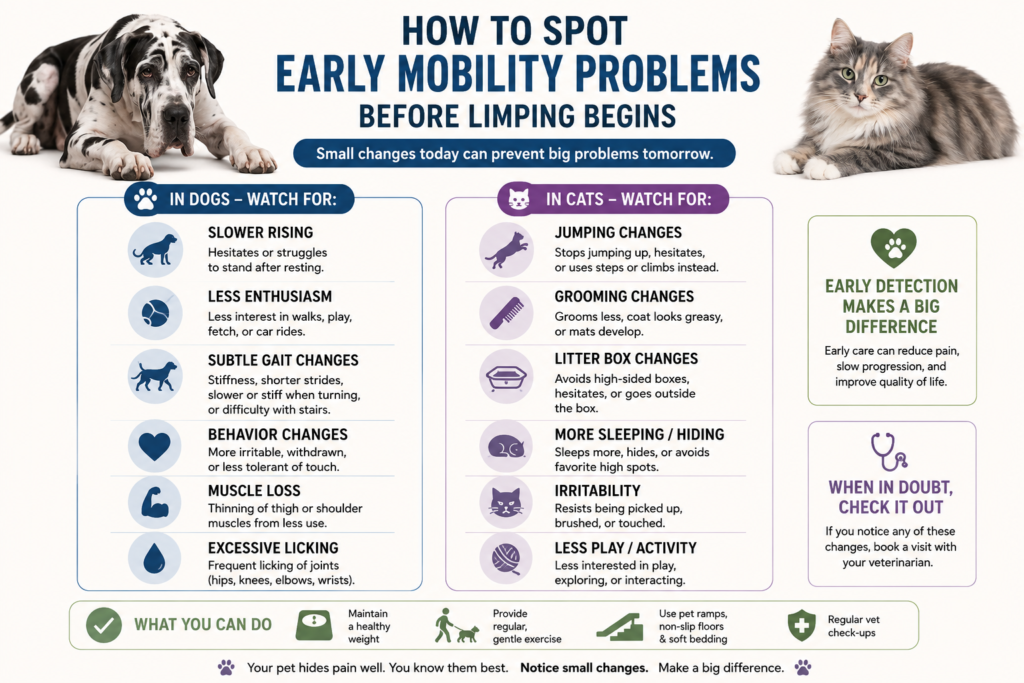
How to Spot Early Mobility Problems Before Limping Begins
Joint disease in dogs and cats is one of the most underdiagnosed chronic health conditions in companion animals. Many pets experience pain silently for months — or even years — before owners notice obvious limping or difficulty walking. By the time visible lameness develops, substantial joint degeneration and chronic inflammation may already be present. Veterinary pain specialists and orthopedic researchers increasingly emphasize that subtle behavioral changes are often the earliest indicators of musculoskeletal pain, especially osteoarthritis (OA).
Osteoarthritis is not simply “old age.” It is a progressive inflammatory disease involving cartilage deterioration, synovial inflammation, bone remodeling, and chronic pain sensitization. It affects both dogs and cats, including younger animals with genetic predispositions, previous injuries, obesity, or developmental orthopedic disease. Studies show that radiographic evidence of osteoarthritis can be found in a surprisingly high percentage of older pets — including cats that outwardly appear normal.
Understanding the hidden signs of discomfort allows earlier intervention, better pain control, slower disease progression, and improved quality of life.
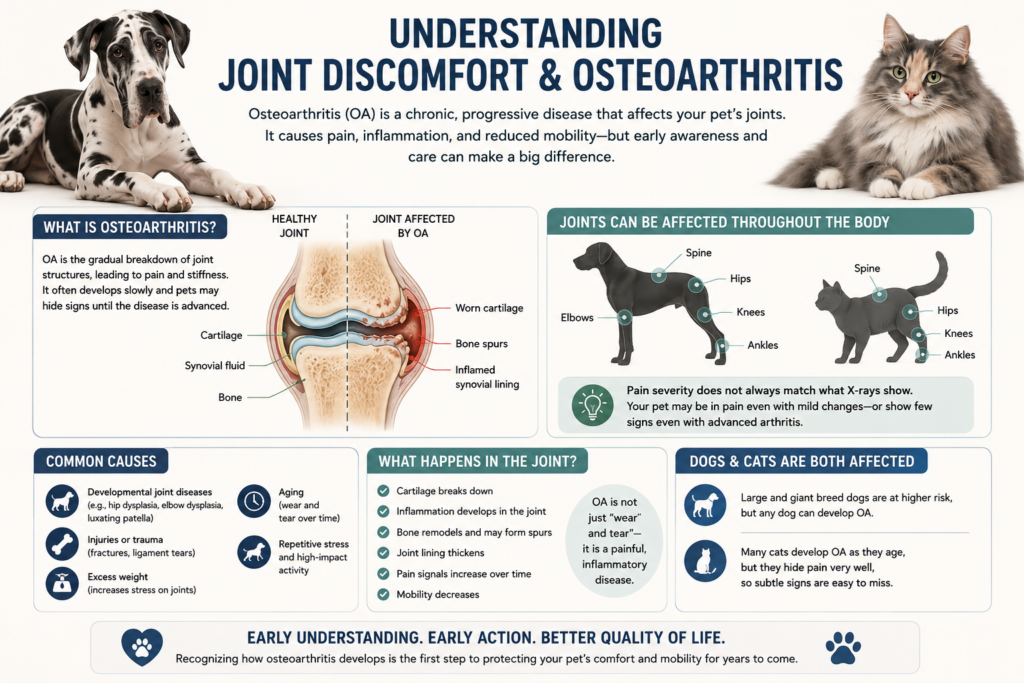
Understanding Joint Discomfort and Osteoarthritis
Osteoarthritis develops when joint structures gradually deteriorate. The disease affects:
- Articular cartilage
- Synovial membranes
- Ligaments
- Subchondral bone
- Joint capsules
- Surrounding muscles
The process creates chronic inflammation and pain that worsen over time. Unlike acute injuries, OA pain is often low-grade and intermittent initially, which is why many owners overlook it. Pets instinctively compensate and mask pain as a survival behavior.
Common causes include:
In Dogs
- Hip dysplasia
- Elbow dysplasia
- Cruciate ligament disease
- Luxating patella
- Previous fractures or trauma
- Obesity
- Aging
- Repetitive athletic stress
In Cats
- Age-related degeneration
- Previous unnoticed injuries
- Obesity
- Congenital joint abnormalities
- Chronic inflammatory disease
Cats are especially challenging because they rarely limp dramatically. Instead, they reduce activity and adapt their behavior gradually.
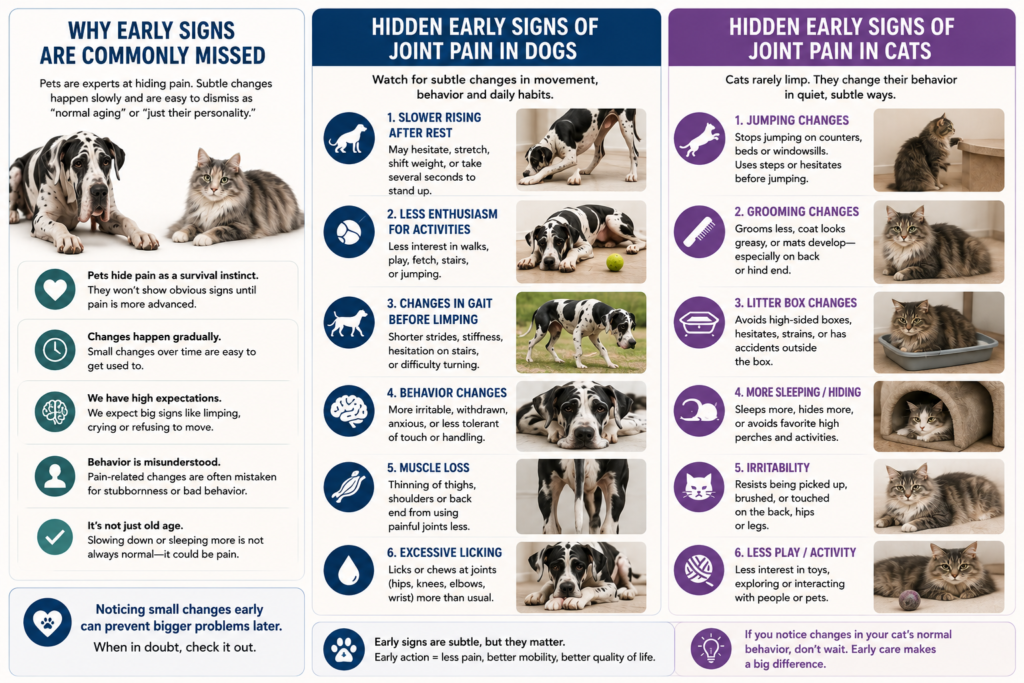
Why Early Signs Are Commonly Missed
Owners often expect severe limping, crying, or obvious pain before suspecting joint disease. However, chronic pain usually presents subtly.
Veterinary pain guidelines now emphasize that:
- Reduced activity is often pain-related
- Behavioral changes are medical clues
- Slowing down is not “normal aging”
- Cats especially hide pain exceptionally well
The AAHA Pain Management Guidelines stress that veterinarians must assess posture, gait, behavior, and owner observations together rather than relying solely on overt lameness.
Hidden Early Signs of Joint Pain in Dogs
1. Slower Rising After Rest
One of the earliest and most overlooked signs is stiffness after lying down.
Dogs may:
- Hesitate before standing
- Stretch excessively
- Shift weight repeatedly
- Take several seconds to stabilize
Owners frequently mistake this for “getting older.”
Morning stiffness or stiffness after naps strongly correlates with developing osteoarthritis
2. Reduced Enthusiasm for Activities
Dogs in early pain often:
- Lag behind on walks
- Stop wanting long play sessions
- Avoid stairs
- Hesitate jumping into cars
- Lose enthusiasm for fetch
Importantly, many dogs still perform these activities if encouraged — but more slowly or reluctantly.
This reluctance reflects pain anticipation rather than laziness.
3. Changes in Gait Before Limping
Subtle gait changes can appear long before a visible limp.
Watch for:
- Shortened stride
- “Bunny hopping”
- Toe dragging
- Weight shifting
- Swaying hips
- Stiff turns
- Slower stair climbing
Many dogs compensate by redistributing weight, masking lameness until disease becomes advanced.
4. Behavioral Changes
Pain changes mood and social behavior.
Dogs with chronic discomfort may:
- Become irritable
- Withdraw socially
- Sleep more
- Avoid touch
- Dislike grooming
- Seem anxious
- Show reduced tolerance toward children or other pets
Pain-related aggression is medically recognized and should never be dismissed as purely behavioral.
5. Muscle Loss
Muscle atrophy can develop surprisingly early.
Owners may notice:
- Thinner hind legs
- Reduced thigh muscle
- Narrowing over hips or shoulders
This occurs because painful limbs are used less frequently.
6. Excessive Licking
Dogs may repeatedly lick painful joints due to discomfort and inflammation.
Commonly affected areas:
- Wrists
- Knees
- Hips
- Elbows
Chronic licking sometimes gets mistaken for skin allergies instead of underlying orthopedic pain.
Hidden Early Signs of Joint Pain in Cats
Cats rarely show classic limping. Instead, they modify their behavior.
This makes feline osteoarthritis significantly underdiagnosed worldwide. Studies suggest many senior cats have radiographic OA even when owners report “normal aging.”
1. Jumping Changes
This is among the most important feline pain indicators.
Cats may:
- Stop jumping onto counters
- Use intermediate surfaces
- Hesitate before jumping
- Miss jumps
- Climb instead of leap
Owners often interpret this as reduced athleticism rather than pain.
2. Grooming Changes
Pain affects flexibility.
Cats may:
- Develop greasy coats
- Mat around the lower back
- Groom less frequently
- Overgroom painful areas
Reduced grooming is especially associated with spinal and hip discomfort.
3. Altered Litter Box Habits
Painful cats may:
- Avoid high-sided litter boxes
- Urinate outside the box
- Hesitate squatting
- Vocalize during elimination
These signs are commonly mistaken for behavioral problems.
4. Increased Sleeping or Hiding
Cats in chronic pain often reduce activity quietly.
You may notice:
- More sleeping
- Reduced social interaction
- Hiding
- Less exploration
- Avoiding elevated resting spots
5. Irritability During Handling
Cats with arthritis frequently resist:
- Being picked up
- Brushing
- Nail trimming
- Back or hip touching
Pain-related sensitivity is extremely common.
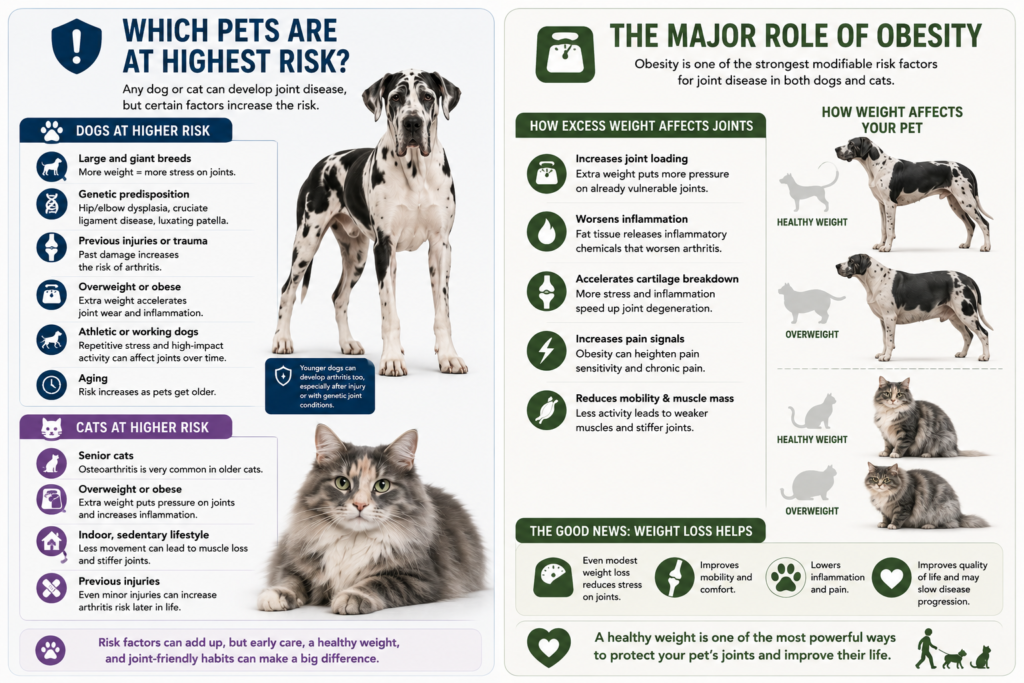
Which Pets Are at Highest Risk?
Dogs at Higher Risk
- Large and giant breeds
- Labrador Retrievers
- German Shepherds
- Golden Retrievers
- Rottweilers
- Bulldogs
- Overweight dogs
- Sporting and working dogs
Cats at Higher Risk
- Senior cats
- Overweight cats
- Indoor sedentary cats
- Cats with prior injuries
However, younger pets can absolutely develop OA — especially after orthopedic injuries or developmental joint disease.
The Major Role of Obesity
Obesity is one of the strongest modifiable risk factors for joint disease.
Excess fat:
- Increases joint loading
- Worsens inflammation
- Accelerates cartilage breakdown
- Reduces mobility
- Increases chronic pain signaling
Fat tissue also produces inflammatory cytokines that worsen OA progression.
Even modest weight loss significantly improves mobility and pain scores in dogs.
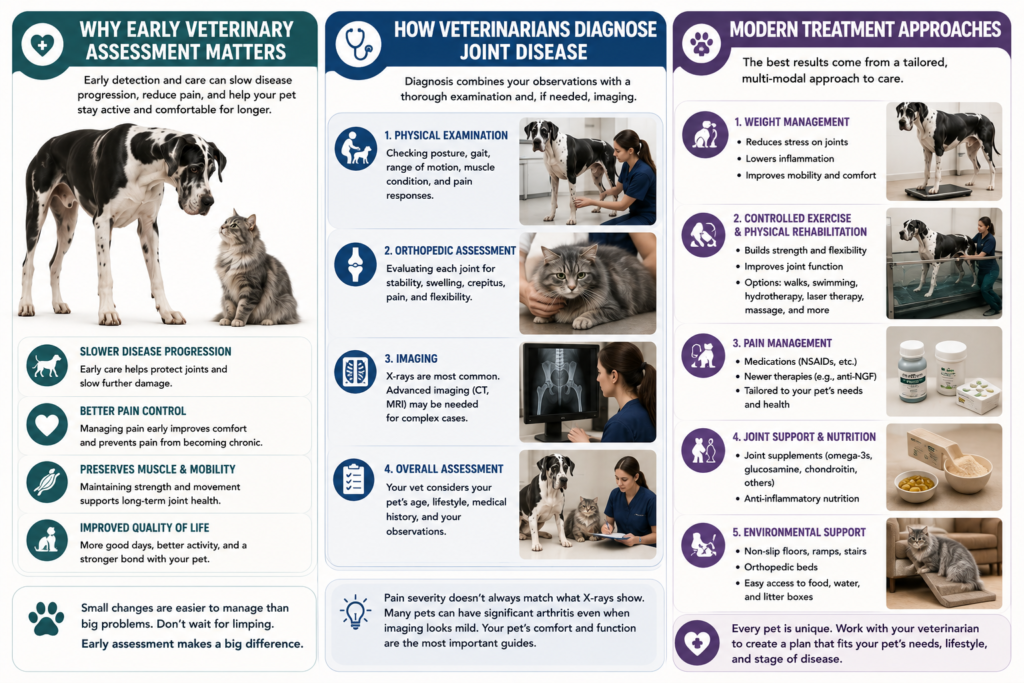
Why Early Veterinary Assessment Matters
Early diagnosis allows:
- Slower disease progression
- Better pain control
- Preservation of muscle mass
- Improved mobility
- Reduced long-term degeneration
Veterinarians now increasingly use structured pain assessment tools and owner questionnaires to identify subtle chronic pain earlier.
How Veterinarians Diagnose Joint Disease
Diagnosis typically includes:
Physical Examination
Veterinarians assess:
- Joint range of motion
- Muscle symmetry
- Pain responses
- Posture
- Gait abnormalities
Orthopedic Assessment
This may identify:
- Joint thickening
- Instability
- Crepitus
- Reduced flexibility
Imaging
Common tools include:
- X-rays
- CT scans
- MRI in complex cases
Importantly, pain severity does not always match radiographic severity. Clinical signs remain critically important.
Modern Treatment Approaches
Current veterinary medicine strongly recommends multimodal management.
1. Weight Management
This is foundational therapy.
Even small reductions in body weight can significantly reduce joint stress.
2. Controlled Exercise
Appropriate movement helps:
- Maintain muscle
- Lubricate joints
- Preserve mobility
Best exercises include:
- Leash walks
- Swimming
- Underwater treadmill therapy
- Gentle mobility exercises
Sudden high-impact exercise should generally be avoided.
3. Physical Rehabilitation
Veterinary rehabilitation may include:
- Hydrotherapy
- Laser therapy
- Therapeutic exercises
- Balance training
- Massage
- Range-of-motion work
Evidence increasingly supports rehabilitation as part of OA management.
4. Pain Medications
Veterinarians may prescribe:
- NSAIDs
- Anti-nerve growth factor monoclonal antibodies
- Adjunctive analgesics
Modern biologic therapies targeting nerve growth factor have emerged as important OA treatments in dogs and cats.
Owners should never administer human pain medications without veterinary approval, as many are toxic to pets.
5. Joint Supplements
Evidence varies between products, but commonly used ingredients include:
- Omega-3 fatty acids
- Glucosamine
- Chondroitin sulfate
- Green-lipped mussel
- Undenatured type II collagen
Some studies suggest omega-3 fatty acids may help reduce inflammatory mediators associated with OA.
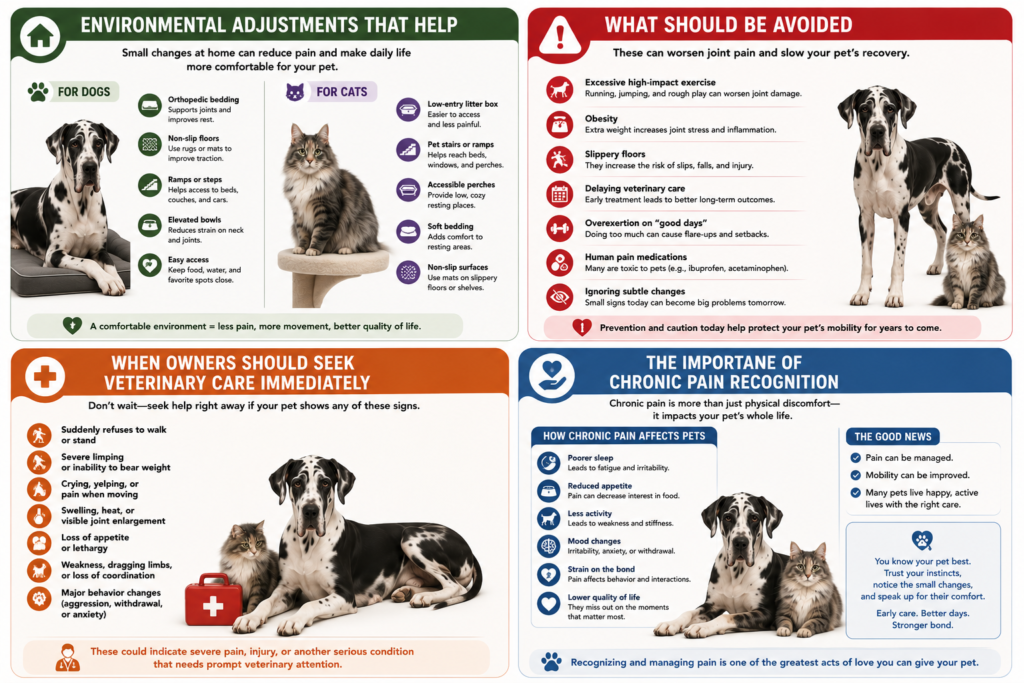
Environmental Adjustments That Help
For Dogs
- Orthopedic bedding
- Non-slip flooring
- Ramps
- Elevated feeding bowls
- Step assistance into cars
For Cats
- Low-entry litter boxes
- Pet stairs
- Accessible resting spots
- Soft bedding
- Non-slip surfaces
Environmental modification is strongly recommended in veterinary pain guidelines.
What Should Be Avoided
Avoid:
- Excessive high-impact exercise
- Obesity
- Slippery floors
- Delaying veterinary evaluation
- Overexertion on “good days”
- Human painkillers
- Ignoring subtle behavioral changes
Early intervention consistently produces better long-term outcomes than waiting for severe lameness.
When Owners Should Seek Veterinary Care Immediately
Consult a veterinarian promptly if your pet:
- Suddenly refuses to walk
- Cries during movement
- Shows severe limping
- Stops eating
- Has swollen joints
- Develops paralysis or dragging limbs
- Shows major behavioral changes
Acute orthopedic injuries and neurological disease can resemble arthritis and require urgent assessment.
The Importance of Chronic Pain Recognition
Modern veterinary medicine now recognizes chronic pain as both a physical and emotional welfare issue.
Untreated pain affects:
- Sleep
- Appetite
- Mobility
- Mood
- Human-animal bonding
- Overall lifespan quality
The shift in veterinary medicine has moved from reactive pain management to proactive pain recognition and early intervention.
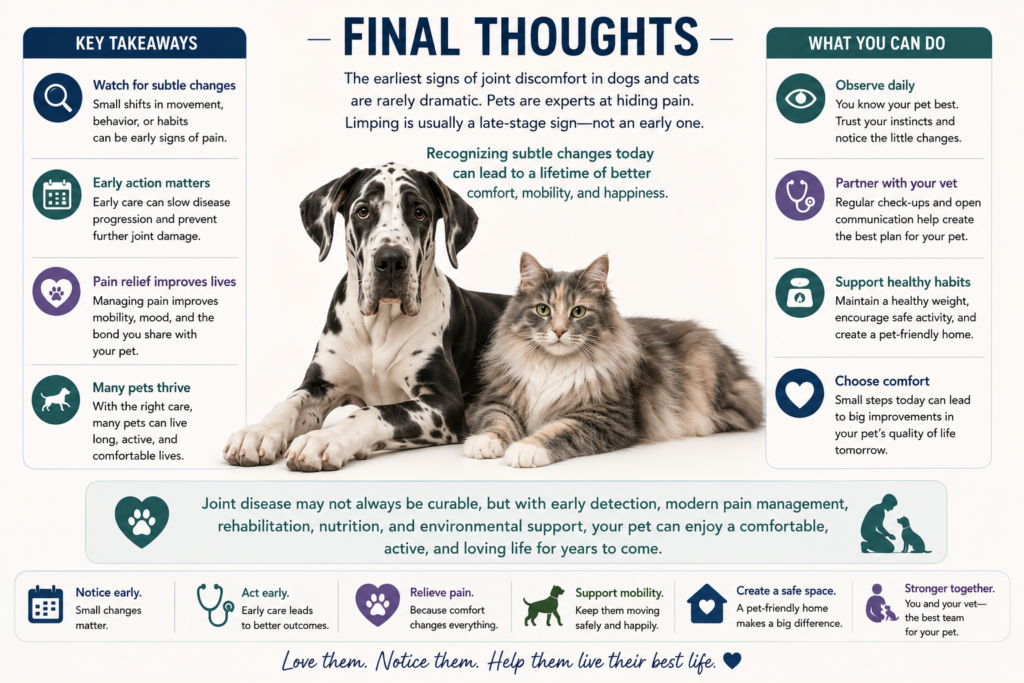
Final Thoughts
The earliest signs of joint discomfort in dogs and cats are rarely dramatic. More often, they appear as subtle changes in movement, behavior, grooming, sleeping habits, or activity levels.
Pets are remarkably skilled at hiding chronic pain. Limping is usually a late-stage sign — not an early one.
Recognizing these hidden clues allows owners to seek veterinary care earlier, reduce suffering, preserve mobility, and dramatically improve long-term quality of life.
Joint disease may not always be curable, but with early detection, modern pain management, rehabilitation, nutritional support, and environmental modifications, many pets can continue living comfortable, active, and emotionally fulfilling lives for years.