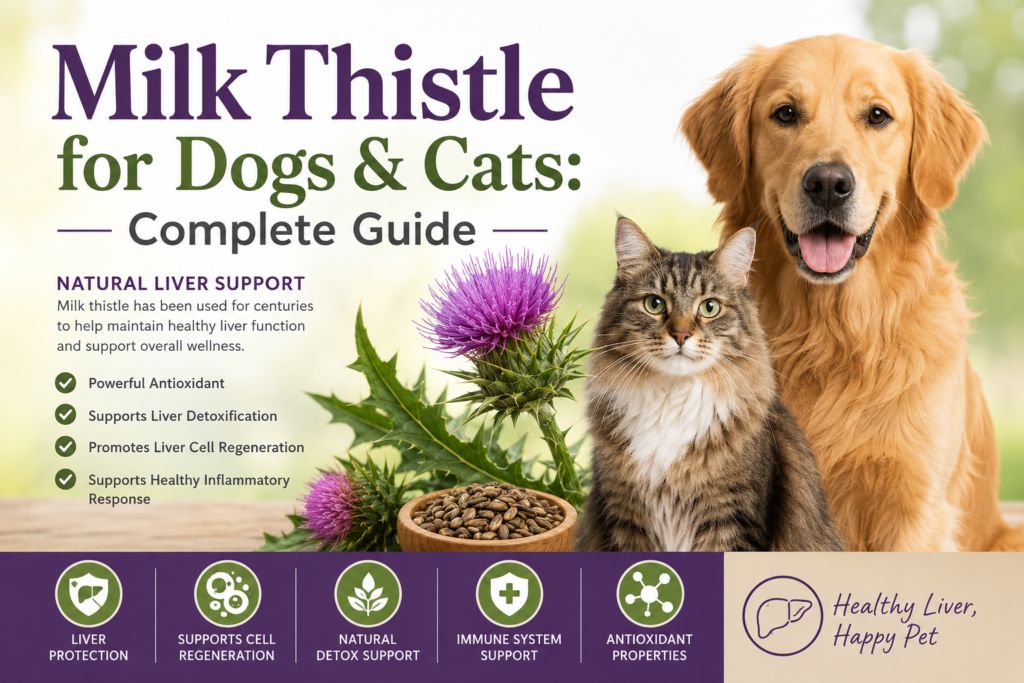
What Is Milk Thistle?
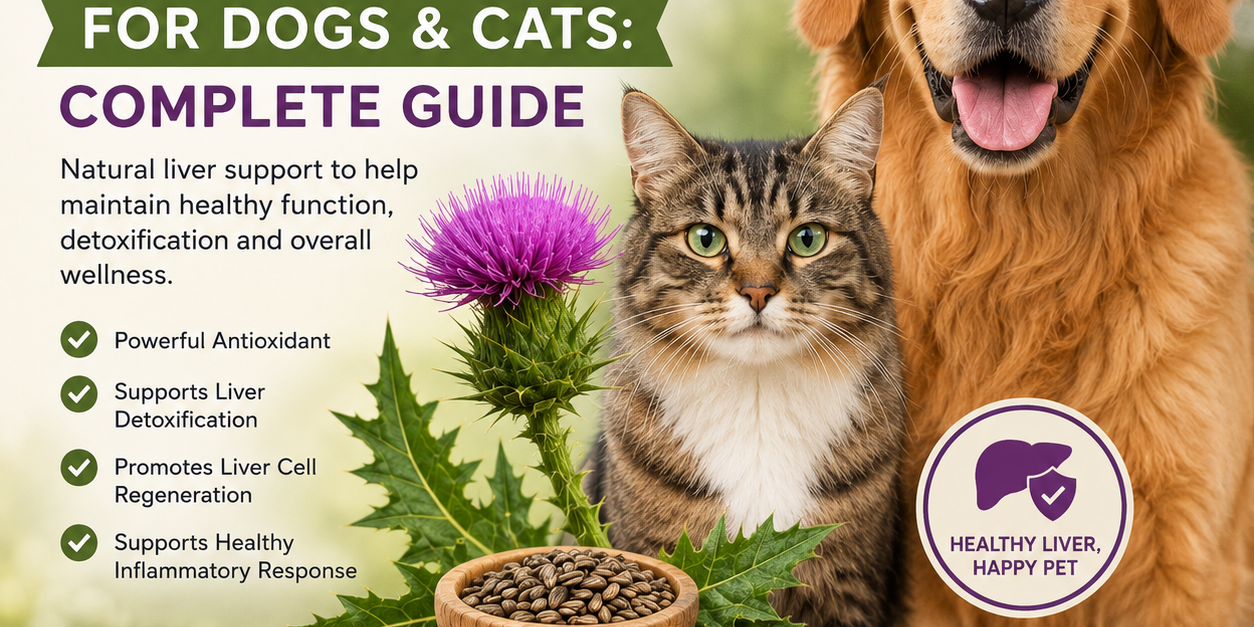
Milk thistle (Silybum marianum) is a flowering herb belonging to the daisy family. Native to the Mediterranean region but now cultivated worldwide, milk thistle has been used for centuries as a natural liver-supporting botanical.
The most important active compounds within milk thistle are collectively known as silymarin, a mixture of flavonolignans that includes:
- Silybin (also called silibinin)
- Isosilybin
- Silychristin
- Silydianin
Among these compounds, silybin is considered the most biologically active and has been extensively studied for its liver-protective properties.
In veterinary medicine, milk thistle is commonly used as a supportive supplement for dogs and cats experiencing liver stress, aging-related changes, medication-related liver burden, or recovery from illness.
While milk thistle is not a cure for liver disease, it is widely regarded as one of the most researched herbal ingredients for supporting healthy liver function in companion animals.
How Does Milk Thistle Work?
The liver performs hundreds of essential functions within the body, including:
- Processing nutrients
- Metabolizing medications
- Detoxifying waste products
- Producing bile
- Regulating blood chemistry
- Supporting immune function
When the liver is exposed to toxins, medications, inflammation, or age-related stress, normal liver function may become compromised.
Milk thistle supports liver health through several mechanisms.
1. Antioxidant Protection
Free radicals are unstable molecules that can damage cells and tissues.
Silymarin acts as a potent antioxidant, helping neutralize free radicals before they damage liver cells.
This antioxidant activity may help protect the liver from:
- Environmental toxins
- Oxidative stress
- Aging-related cellular damage
- Inflammatory processes
2. Cell Membrane Protection
Research suggests that silymarin may help stabilize liver cell membranes.
This protective effect may reduce the ability of certain toxins to enter liver cells and cause damage.
As a result, milk thistle is often used as part of supportive care following toxin exposure under veterinary supervision.
3. Support for Liver Regeneration
One of the most unique characteristics of milk thistle is its ability to support healthy liver-cell regeneration.
Studies suggest that silymarin may stimulate protein synthesis within liver cells, helping support repair and renewal of damaged tissues.
Because the liver possesses remarkable regenerative capabilities, supporting this natural process may be beneficial during recovery from illness or injury.
4. Anti-Inflammatory Activity
Chronic inflammation can contribute to liver dysfunction.
Milk thistle may help modulate inflammatory pathways, potentially reducing excessive inflammatory responses within liver tissues.
5. Support for Glutathione Production
Glutathione is often referred to as the body’s master antioxidant.
Silymarin may help maintain healthy glutathione levels, enhancing the liver’s natural detoxification systems.
Potential Benefits of Milk Thistle for Dogs & Cats
While individual results may vary, milk thistle is commonly used to support:
Liver Health
The primary reason pet owners and veterinarians use milk thistle is to help maintain normal liver function.
Recovery Support
Milk thistle is often included in supportive wellness plans for pets recovering from:
- Illness
- Surgery
- Medication use
- Liver stress
Antioxidant Support
The antioxidant properties of silymarin may help combat oxidative stress associated with aging and environmental exposure.
Senior Pet Wellness
As pets age, normal liver function may gradually decline.
Milk thistle may provide additional nutritional support for senior dogs and cats.
Medication-Related Liver Support
Some medications are processed through the liver and may place additional demands on hepatic function.
Veterinarians sometimes recommend liver-support supplements containing milk thistle during long-term medication use.
Scientific Studies on Milk Thistle
Milk thistle is among the most extensively researched herbal ingredients for liver health.
Human Clinical Research
Numerous human studies have investigated silymarin’s effects on:
- Chronic liver disease
- Alcohol-related liver injury
- Drug-induced liver stress
- Non-alcoholic fatty liver disease
Results generally indicate that silymarin possesses antioxidant, anti-inflammatory, and hepatoprotective properties.
Veterinary Research
Although veterinary studies are more limited than human research, available evidence is encouraging.
Canine Liver Support
Several veterinary studies have evaluated silymarin-containing formulations in dogs with elevated liver enzymes and chronic liver conditions.
Researchers observed improvements in certain liver-health markers and oxidative stress indicators when milk thistle was incorporated into treatment plans.
Toxicity Support Research
Milk thistle has received attention for its potential role in supporting recovery following exposure to liver toxins.
Some veterinary toxicologists include silibinin-containing products as part of comprehensive treatment protocols under professional supervision.
Antioxidant Effects
Research consistently demonstrates that silymarin exhibits strong antioxidant activity, which may contribute to its protective effects on liver tissues.
What the Evidence Currently Suggests
Current evidence indicates that milk thistle:
- Supports healthy liver function
- Provides antioxidant protection
- May assist liver-cell recovery
- Helps maintain normal inflammatory balance
However, milk thistle should not be considered a replacement for veterinary diagnosis or treatment.
Food Sources of Milk Thistle
Unlike nutrients such as vitamins or minerals, milk thistle is not naturally abundant in typical pet diets.
The primary source is the milk thistle plant itself.
Parts used include:
- Seeds
- Seed extracts
- Standardized silymarin extracts
Most commercial pet supplements utilize concentrated extracts because naturally occurring levels in the raw plant can vary significantly.
Can Dogs and Cats Obtain Milk Thistle from Food?
Not realistically.
Traditional pet foods generally do not contain meaningful amounts of milk thistle.
If supplementation is desired, it is usually provided through:
- Powders
- Soft chews
- Capsules
- Tablets
- Liquid formulations
Standardized extracts are preferred because they provide more consistent silymarin concentrations.
Is There a Milk Thistle Deficiency?
Technically, no.
Milk thistle is not classified as an essential nutrient.
There is no recognized nutritional deficiency syndrome caused by inadequate milk thistle intake.
Unlike taurine, vitamin A, zinc, or lysine, milk thistle is considered a supplemental botanical rather than a required nutrient.
Signs That a Pet May Benefit from Liver Support
Although pets cannot become deficient in milk thistle itself, certain signs may indicate that veterinary evaluation of liver health is warranted.
These signs may include:
- Reduced appetite
- Vomiting
- Weight loss
- Increased thirst
- Increased urination
- Lethargy
- Poor coat quality
- Digestive disturbances
- Yellowing of the eyes or gums (jaundice)
These signs are not specific to liver disease and should always be assessed by a veterinarian.
Dosage Discussion
There is currently no universally accepted dosage guideline for milk thistle in dogs and cats.
Appropriate amounts depend on factors such as:
- Species
- Body weight
- Health status
- Product concentration
- Standardization level
- Veterinary recommendations
Because products vary significantly in silymarin concentration, dosage should be based on the active ingredient rather than simply the amount of milk thistle powder.
General Veterinary Usage Ranges
Published veterinary references often cite silymarin ranges between:
Dogs
- Approximately 10–20 mg/kg body weight daily
Cats
- Similar ranges may be used under veterinary guidance
However, actual recommendations vary considerably depending on the specific formulation.
Standardized Extracts vs Whole Herb
Standardized extracts are generally preferred because they provide:
- Consistent potency
- Reliable silymarin content
- Better quality control
Whole-herb preparations may contain substantially lower concentrations of active compounds.
Why Veterinary Guidance Matters
Liver disease can involve numerous underlying causes, including:
- Infection
- Toxins
- Metabolic disorders
- Cancer
- Inflammatory conditions
Simply increasing supplement intake may not address the root problem.
A veterinarian can determine whether milk thistle is appropriate and whether additional treatment is needed.
Veterinary Considerations
Milk thistle is generally considered safe for most dogs and cats when used appropriately, but several considerations should be kept in mind.
Existing Liver Disease
Pets with diagnosed liver disease should be managed under veterinary supervision.
Milk thistle is typically used as supportive care rather than a standalone treatment.
Medication Interactions
Because the liver metabolizes many medications, milk thistle may theoretically influence the metabolism of certain drugs.
Pet owners should inform their veterinarian about all supplements being administered.
Diabetes
Some research suggests that silymarin may influence glucose metabolism.
Pets with diabetes should use supplements only with veterinary guidance.
Pregnancy and Nursing
Limited safety data exists regarding use during pregnancy and lactation in companion animals.
Veterinary consultation is recommended before use.
Product Quality
Not all milk thistle products are created equal.
When selecting a supplement, look for:
- Standardized silymarin content
- Transparent labeling
- Third-party quality testing
- Veterinary-formulated products
- Reputable manufacturers
Safety and Side Effects
Milk thistle has a strong safety profile and is generally well tolerated.
Occasional side effects may include:
- Mild digestive upset
- Loose stools
- Flatulence
- Temporary appetite changes
These effects are typically mild and self-limiting.
Serious adverse reactions are uncommon.
Frequently Asked Questions (FAQs)
Can dogs take milk thistle?
Yes. Milk thistle is widely used in dogs as a nutritional supplement to support liver health and antioxidant status.
Can cats take milk thistle?
Yes. Cats may also receive milk thistle under veterinary guidance, particularly when liver support is desired.
Is milk thistle safe for long-term use?
Many veterinarians utilize milk thistle for extended periods when ongoing liver support is needed. Long-term use should still be monitored by a veterinary professional.
Can milk thistle cure liver disease?
No.
Milk thistle is a supportive supplement and should not be considered a cure for liver disease or liver failure.
How long does it take to work?
Results vary depending on the pet’s condition and overall health status. Some pets may receive milk thistle for weeks to months as part of a broader wellness plan.
Can healthy pets use milk thistle?
Yes.
Many pet owners use milk thistle as part of a proactive wellness approach, particularly for senior pets or animals exposed to increased metabolic stress.
Is milk thistle the same as silymarin?
Not exactly.
Milk thistle refers to the plant, while silymarin refers to the active complex extracted from the plant’s seeds.
Should milk thistle be given with food?
Many supplements are administered with meals to improve tolerance and reduce the chance of digestive upset.
Always follow the product’s feeding instructions.
Final Thoughts
Milk thistle remains one of the most widely recognized and scientifically studied herbal ingredients for liver support in dogs and cats. Its active compounds, particularly silymarin and silybin, provide antioxidant, anti-inflammatory, and hepatoprotective benefits that may help maintain normal liver function and support recovery from metabolic stress.
Although milk thistle is not an essential nutrient and pets cannot become deficient in it, the ingredient has earned an important place in veterinary nutrition due to its ability to support one of the body’s most vital organs. Whether used for senior pet wellness, antioxidant support, medication-related liver care, or as part of a veterinarian-directed liver health program, milk thistle can be a valuable addition to a comprehensive nutritional strategy.
As with any supplement, product quality, proper dosing, and veterinary oversight remain essential for achieving the best outcomes for your pet.