A Scientific Guide to the Causes, Skin Barrier, Itch–Lick Cycle and When Veterinary Care Is Needed
Paw licking is one of the most common behaviours noticed by dog owners. Occasional licking after walking, grooming or exposure to moisture may be completely normal. However, persistent, repetitive or excessive paw licking is usually a clinical sign rather than a disease in itself.
A dog may lick its paws because of itching, inflammation, irritation, pain, infection, injury, parasites, allergies or, in some cases, behavioural or compulsive factors.
This distinction is important.
Paw licking should not automatically be interpreted as evidence of “dry skin,” food allergy or infection. The same visible behaviour can arise from very different underlying mechanisms. Veterinary dermatology therefore approaches paw licking as a symptom requiring identification of the underlying cause. Pododermatitis—the medical term for inflammation affecting the paws—has a broad differential diagnosis that includes infectious, allergic, parasitic, traumatic, irritant, immune-mediated, metabolic and neoplastic diseases.
The most useful way to understand persistent paw licking is to consider the interaction between:
Underlying trigger → inflammation/itch or pain → licking → mechanical skin damage → barrier disruption → microbial imbalance or infection → increased inflammation → more licking
This creates what can be described as an itch–lick cycle.
Paw Licking Is a Symptom, Not a Diagnosis
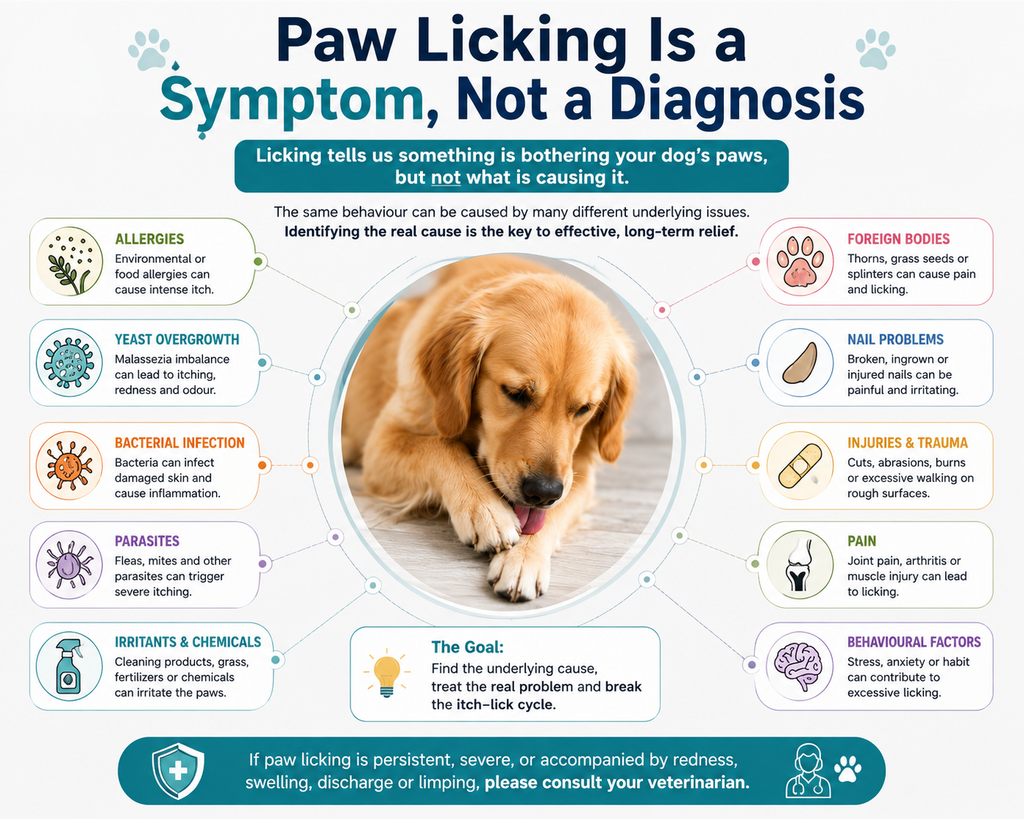
A dog licking its paw does not tell us what caused the problem.
The same behaviour can occur with:
- Environmental allergies
- Food-related adverse reactions
- Flea or mite infestation
- Yeast overgrowth
- Bacterial infection
- Contact irritation
- Foreign bodies
- Cuts or abrasions
- Nail injuries
- Burns
- Interdigital inflammation
- Dry or damaged skin
- Joint or limb pain
- Immune-mediated disease
- Hormonal/metabolic disease
- Tumours
- Behavioural or compulsive licking
Veterinary dermatology therefore places considerable emphasis on history, physical examination and appropriate diagnostic testing rather than treating the licking behaviour alone. The AAHA 2023 guidelines recommend a structured dermatological work-up for dogs with allergic skin disease, including investigation for parasites and infections before attributing the clinical signs to allergy alone.
Why Are the Paws Such a Common Target?
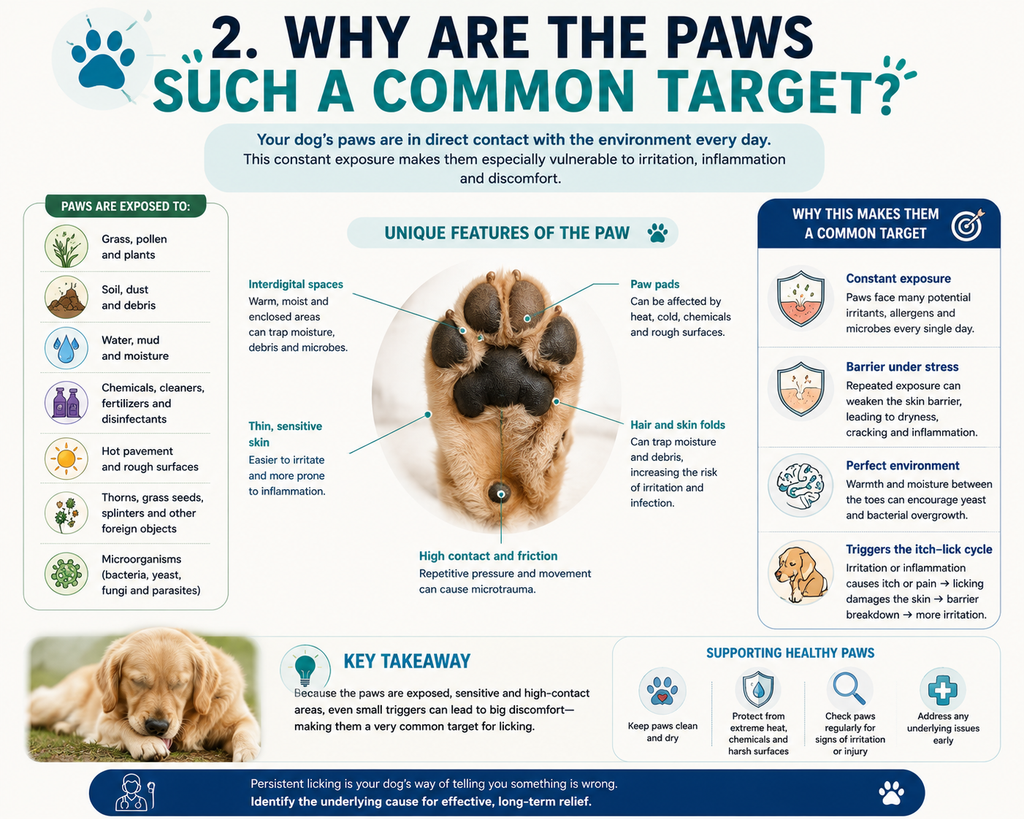
The paws are exposed to an unusually large number of potential physical, chemical and biological challenges.
Every day, a dog’s paws may encounter:
- Grass
- Soil
- Pollen
- Dust
- Water
- Mud
- Cleaning chemicals
- Fertilizers
- Rough surfaces
- Hot pavement
- Plant material
- Foreign objects
- Microorganisms
The interdigital spaces are also relatively enclosed areas where moisture, debris and microorganisms can accumulate.
The paw therefore represents an important interface between the dog’s body and its environment.
When the skin barrier is compromised or inflammation develops, sensory nerve endings can be stimulated, producing pruritus (itch), discomfort or pain.
The dog then responds naturally by licking, chewing or biting the area.
The Major Causes of Paw Licking
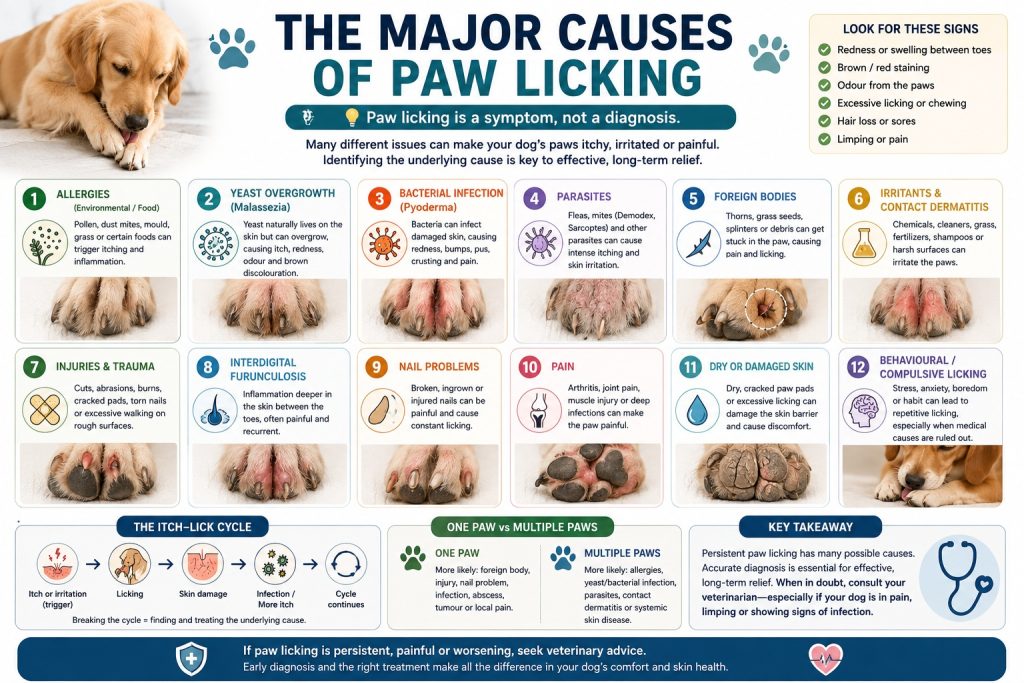
Environmental Allergies and Canine Atopic Dermatitis
One of the most important causes of chronic paw licking is allergic skin disease.
Canine atopic dermatitis (CAD) is a chronic inflammatory and pruritic skin disease involving genetic predisposition, immune dysregulation, epidermal barrier abnormalities, environmental allergen sensitisation and changes in the skin microbiome.
Common environmental triggers can include:
- Pollens
- Grass
- Mould
- House dust mites
- Other environmental allergens
The paws are a recognised site of clinical involvement in canine atopic dermatitis. Historical and subsequent dermatological studies consistently identify the paws, face, ears, extremities and ventrum among commonly affected regions.
Dogs with atopic dermatitis may therefore repeatedly lick or chew their feet because the skin is intensely itchy.
Importantly, allergy is not simply “an allergy to something touching the paw.”
Atopic dermatitis involves a complex interaction between:
Genetic susceptibility + skin barrier dysfunction + immune dysregulation + allergen exposure + microbiome changes
The result can be chronic or recurrent inflammation.
The Skin Barrier and Why It Matters
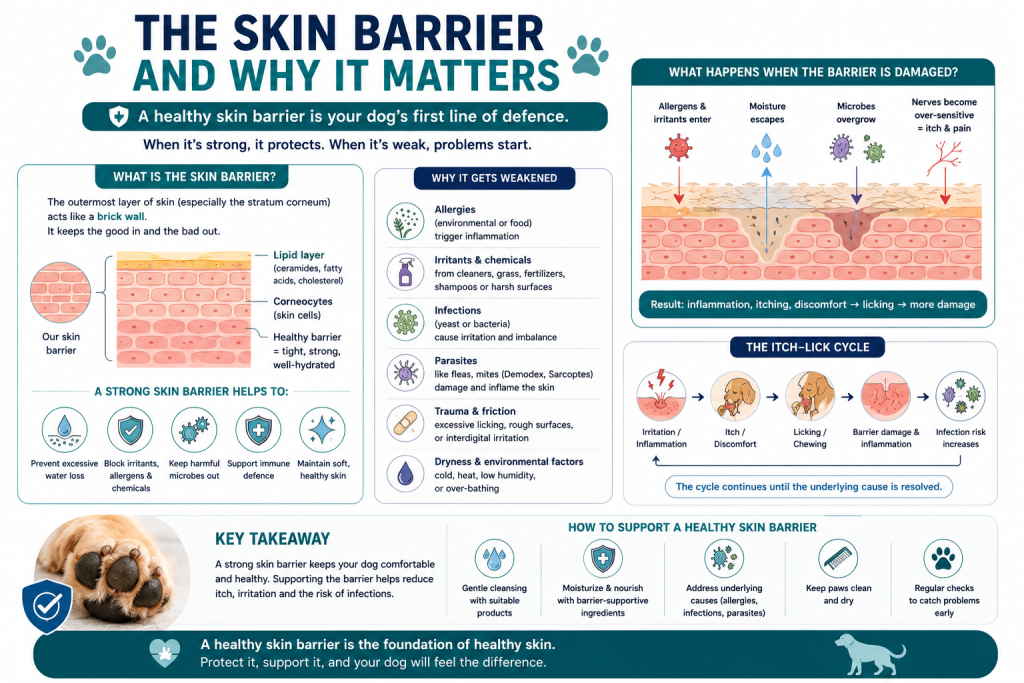
The outermost layer of the skin, particularly the stratum corneum, acts as a physical and biochemical barrier.
It helps:
- Reduce excessive water loss
- Prevent penetration of environmental substances
- Restrict microbial invasion
- Maintain appropriate hydration
- Support normal immune defence
Research in dogs with atopic dermatitis has demonstrated abnormalities in skin-barrier function.
One study found significantly increased transepidermal water loss (TEWL) in both lesional and non-lesional skin of dogs with atopic dermatitis, accompanied by reduced ceramide content.
Another study comparing 150 dogs found significantly higher TEWL in untreated atopic dogs than healthy controls, with lower TEWL in dogs whose disease was controlled.
Research has also demonstrated altered ceramide composition in non-lesional skin of dogs with atopic dermatitis.
This is significant because the skin barrier is not simply a passive covering.
A compromised barrier can allow greater interaction between the skin and environmental substances and can contribute to inflammatory processes.
A 2025 review summarising newer evidence describes alterations in the lipid layer and connections between corneocytes that may increase penetration of environmental allergens.
Yeast Overgrowth and Malassezia Dermatitis
Another major cause of paw discomfort is Malassezia dermatitis.
Malassezia organisms can be normal members of the canine skin microbiome. Their presence does not automatically mean that a dog has an infection.
The problem occurs when conditions allow excessive proliferation and/or an inflammatory response.
Malassezia-associated dermatitis is particularly associated with underlying diseases such as allergic dermatitis.
A 2024 evidence-based review describes canine Malassezia dermatitis as a chronic, relapsing and pruritic condition and emphasises that identifying and treating the underlying disease is essential for optimal management.
Clinical signs may include:
- Redness
- Itching
- Greasy skin
- Brown or dark discoloration
- Odour
- Hair loss
- Thickening
- Recurrent inflammation
Why does this matter for paw licking?
The relationship can look like:
Allergy → inflammation → impaired barrier → favourable environment for yeast → yeast-associated inflammation → increased itch → paw licking
Malassezia therefore may be:
a secondary complication rather than the original cause.
This distinction is extremely important.
The presence of yeast does not necessarily mean the dog “caught a yeast infection.” It may indicate an underlying skin disorder that has created favourable conditions for yeast proliferation.
Bacterial Infection and Pyoderma
Bacterial skin disease can also contribute to paw licking.
Dogs normally carry numerous microorganisms on their skin. Disease can occur when the skin environment changes sufficiently to allow bacterial overgrowth or infection.
A common organism involved in canine skin disease is Staphylococcus pseudintermedius.
Research examining the canine atopic dermatitis microbiome has found decreased bacterial diversity and increased proportions of Staphylococcus species, particularly S. pseudintermedius, during disease activity.
Experimental allergen exposure has also been shown to produce bacterial dysbiosis, including increased S. pseudintermedius at sites where allergic lesions developed.
Merck Veterinary Manual notes that warm, moist areas such as the feet can have higher bacterial populations and can be more susceptible to infection when the normal skin environment becomes disrupted.
Clinical signs may include:
- Redness
- Swelling
- Pustules
- Crusting
- Discharge
- Odour
- Pain
- Hair loss
- Increased licking
The Microbiome–Skin Barrier Connection
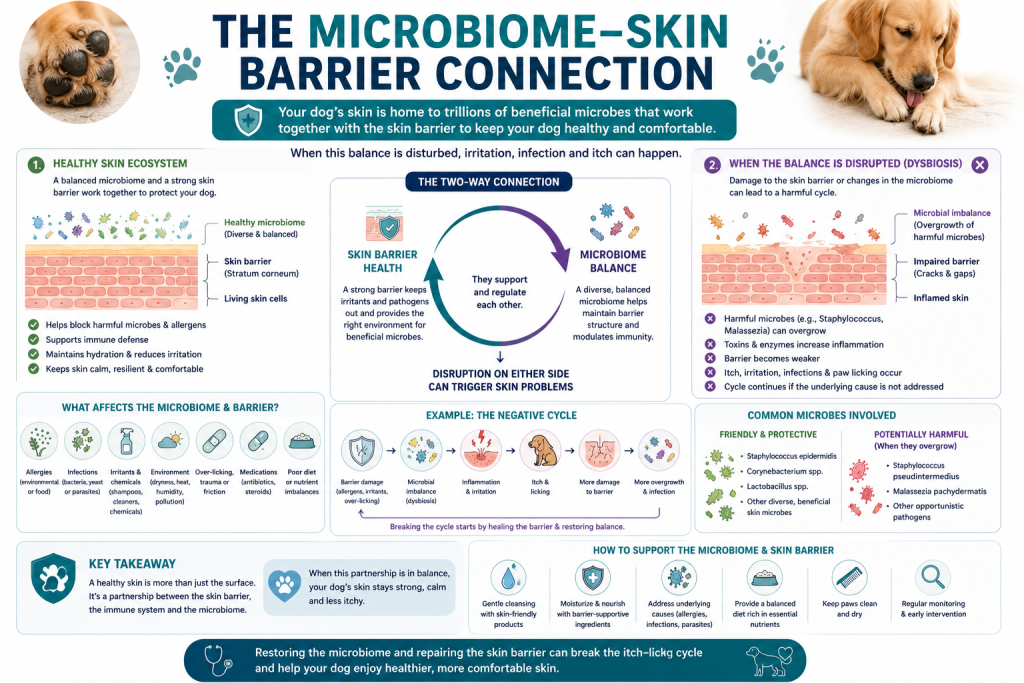
Modern veterinary dermatology increasingly recognises that the skin barrier and microbiome cannot be considered completely separate systems.
The skin supports a complex microbial ecosystem.
A healthy microbial community can help maintain ecological balance and contribute to host defence.
In canine atopic dermatitis, research has demonstrated changes in microbial diversity and increased abundance of potentially pathogenic organisms.
The relationship appears to be bidirectional:
Barrier dysfunction → altered microbial environment
and
microbial dysbiosis → inflammatory signalling and further skin disruption
A 2023 review concluded that skin-barrier dysfunction and cutaneous microbial dysbiosis are important components of canine atopic dermatitis, although the precise sequence of events remains incompletely understood.
This is an important scientific qualification:
The microbiome is involved, but researchers are still determining exactly which abnormalities are primary and which are consequences of inflammation.
Foreign Bodies
Not every case of paw licking is an allergy or infection.
A foreign object may be physically irritating or penetrating the paw.
Examples include:
- Grass awns
- Thorns
- Splinters
- Plant material
- Small pieces of debris
- Other penetrating material
A particularly important clue is:
Sudden onset + one paw + persistent licking
rather than:
Long-term recurrent licking + multiple paws
Interdigital lesions can also result from foreign material embedded within the skin. Merck notes that solitary or unusual lesions may require surgical exploration to locate foreign bodies such as grass lawns.
Interdigital Furunculosis
Interdigital furunculosis is a deeper inflammatory condition involving the skin between the toes.
It can be associated with:
- Follicular trauma
- Abnormal conformation
- Hair penetration
- Foreign bodies
- Demodicosis
- Allergic dermatitis
- Irritant dermatitis
- Bacterial infection
Merck describes traumatic implantation of keratin hair shafts as an important trigger in predisposed dogs, with secondary bacterial infection occurring commonly.
This is another example of why the underlying cause matters.
A dog with recurrent interdigital lesions may have an underlying allergic skin disorder that needs to be addressed rather than simply treating each lesion individually.
Parasites
Parasites should always be considered when investigating significant itching.
Relevant causes include:
- Fleas
- Sarcoptes mites
- Demodex mites
- Other ectoparasites
Demodicosis can be associated with pododermatitis, and secondary bacterial infection can complicate severe disease.
The 2015 ICADA guidelines specifically recommend ruling out conditions that can mimic or overlap with canine atopic dermatitis, including parasites, using appropriate diagnostic testing such as flea combing and skin scraping.
This is important because a dog should not be labelled as having “allergies” simply because it is itchy.
Contact and Irritant Dermatitis
The paw can also become inflamed following contact with irritating substances.
Potential examples include:
- Cleaning chemicals
- Detergents
- Disinfectants
- Fertilizers
- Certain plants
- Grooming products
- Shampoos
- Other chemicals
There is a distinction between:
Irritant contact dermatitis
The substance directly damages or irritates the skin.
Allergic contact dermatitis
The immune system reacts to a particular substance following sensitisation.
The distribution can provide clues.
VCA notes that contact-related pododermatitis can particularly affect the underside of the paw, although the entire paw may become involved.
Physical Trauma
Physical injury is another major category.
Examples include:
- Cuts
- Abrasions
- Punctures
- Burns
- Torn nails
- Broken nails
- Excessive running
- Rough surfaces
- Hot surfaces
A dog may lick an injured paw because licking is directed toward an area experiencing pain or discomfort.
This is especially important when licking begins suddenly following exercise or outdoor activity.
Pain Rather Than Itch
A common mistake is to assume:
licking = itching
This is not always true.
Dogs may lick because an area is painful.
Possible causes include:
- Nail injury
- Abscess
- Interdigital lesion
- Deep infection
- Joint pain
- Arthritis
- Soft-tissue injury
- Foreign body
A dog that is licking its paw and limping should therefore be evaluated differently from a dog that has four mildly itchy paws but is otherwise comfortable.
Dry or Damaged Skin
Dryness can contribute to discomfort, although it should not automatically be assumed to be the underlying cause of chronic paw licking.
Potential contributors include:
- Environmental conditions
- Excessive washing
- Chemical exposure
- Repeated licking
- Mechanical abrasion
- Underlying dermatological disease
Cracks or microdamage can make the skin more vulnerable to further irritation.
However, persistent or severe paw licking should not be diagnosed as “dry skin” without considering the broader differential diagnosis.
The Itch–Lick Cycle
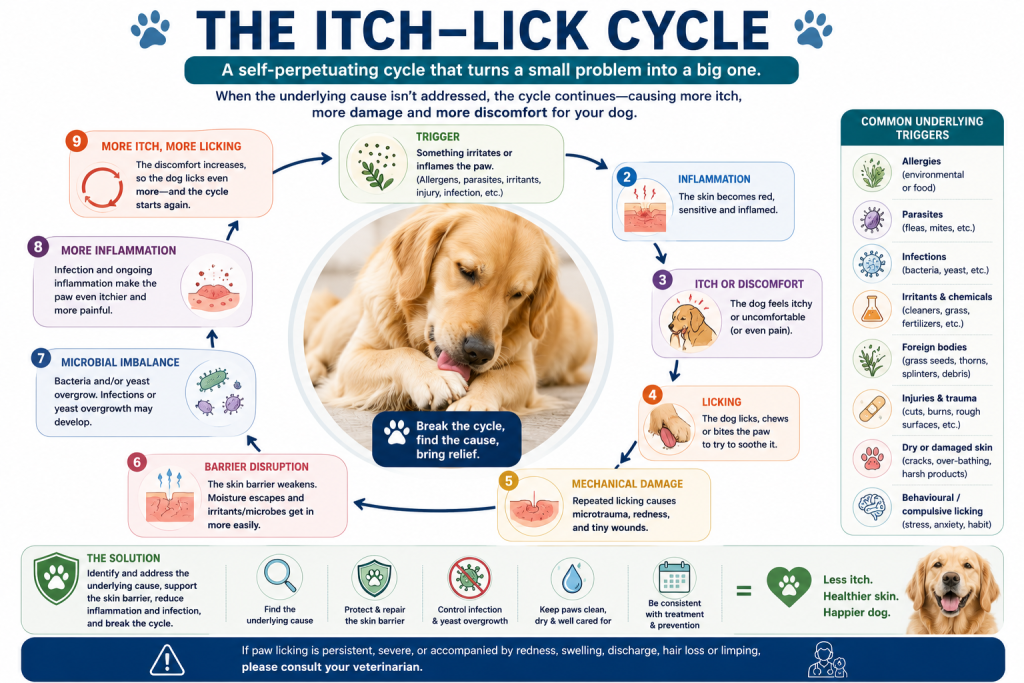
One of the most important concepts for understanding chronic paw licking is the self-perpetuating cycle.
Step 1 — Trigger
Something initiates discomfort:
allergen / parasite / irritant / infection / injury / foreign body
↓
Step 2 — Inflammation
The skin becomes inflamed.
↓
Step 3 — Itch or pain
The dog experiences discomfort.
↓
Step 4 — Licking
The dog licks or chews the paw.
↓
Step 5 — Mechanical damage
Repeated tongue contact can traumatise the skin.
↓
Step 6 — Barrier disruption
The skin becomes increasingly compromised.
↓
Step 7 — Microbial changes
Bacteria and/or yeast may proliferate or become clinically significant.
↓
Step 8 — Increased inflammation
The additional inflammation creates more itch or discomfort.
↓
Step 9 — More licking
The cycle repeats.
This concept is supported by clinical observations of canine allergic disease, skin-barrier dysfunction and secondary microbial dysbiosis.
Behavioural and Compulsive Licking
Behaviour can play a role, but it should generally be considered after physical causes have been investigated.
Stress, anxiety, boredom or compulsive behaviour can contribute to repetitive licking.
However, the relationship between physical and behavioural causes is not always either/or.
A dog might initially develop an itchy paw because of allergy.
The dog repeatedly licks the paw.
The licking causes inflammation.
The damaged skin becomes infected.
The infection causes additional pain and itch.
Eventually, the dog continues licking even after the original trigger has changed.
VCA describes acral lick dermatitis as potentially involving both physical and psychological factors, with medical conditions such as allergies, infection and joint pain capable of initiating licking behaviour.
Therefore:
“It’s behavioural” should not be used as a shortcut to avoid investigating physical disease.
One Paw Versus Multiple Paws
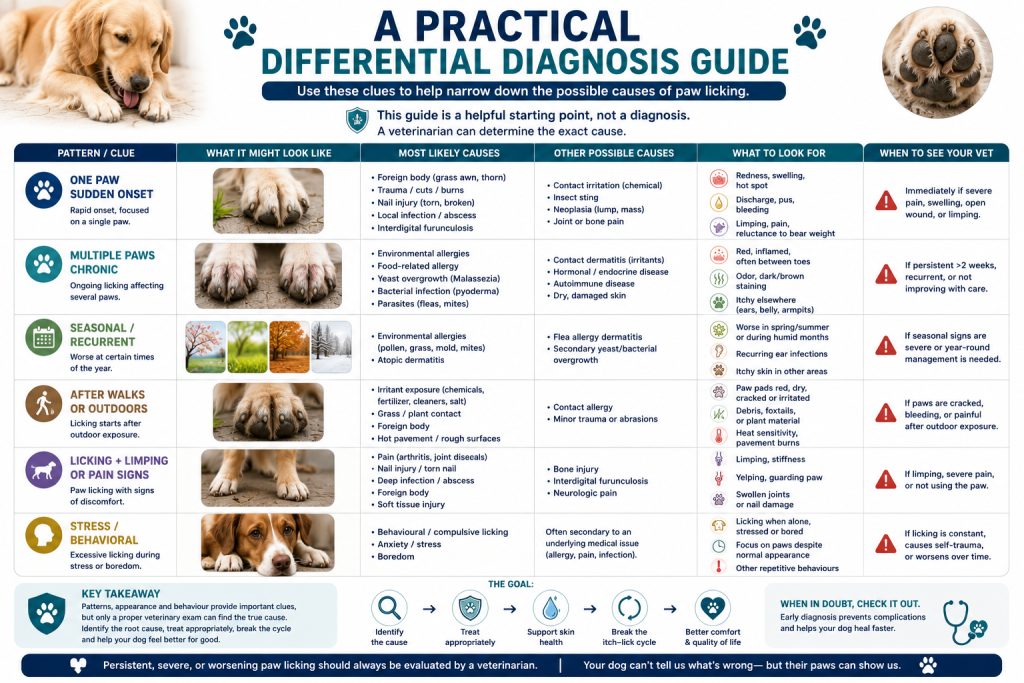
The distribution of the problem can provide useful diagnostic clues.
Predominantly one paw
Consider more strongly:
- Foreign body
- Trauma
- Nail injury
- Local infection
- Abscess
- Interdigital lesion
- Burn
- Localised pain
- Neoplasia
Multiple paws
Consider more strongly:
- Environmental allergy
- Food-related adverse reaction
- Parasites
- Generalised infection
- Contact dermatitis
- Generalised skin disease
This is not an absolute diagnostic rule.
However, it is a useful clinical clue when combined with history and physical examination.
VCA notes that tumours often involve one foot, while immune-mediated and allergic conditions can involve multiple feet.
What the Appearance of the Paw Can Tell You
Redness
Can occur with:
- Allergy
- Irritation
- Infection
- Trauma
- Inflammation
Swelling
Can occur with:
- Infection
- Foreign body
- Interdigital furunculosis
- Trauma
- Allergic inflammation
Brown/rust-coloured fur
Often reflects chronic licking and saliva staining, although yeast involvement can also contribute.
The colour itself does not identify the underlying cause.
Odour
Can increase suspicion of microbial overgrowth, particularly yeast or bacterial disease.
Pus/discharge
Raises concern for infection or abscess.
Cracks
Can occur with mechanical damage, dryness, irritation or underlying skin disease.
Nodules
Require closer investigation because they may represent inflammatory lesions, abscesses, foreign-body reactions or, less commonly, neoplasia.
Ulcers or crusting
Broaden the differential diagnosis and may warrant veterinary investigation.
How Veterinarians Investigate Persistent Paw Licking
A proper investigation begins with history.
Important questions include:
- When did the licking begin?
- Is it seasonal?
- Is it present throughout the year?
- Is one paw affected or several?
- Does it occur after walks?
- Is there limping?
- Is there an odour?
- Has there been a recent change in diet?
- Is the dog itchy elsewhere?
- Are the ears affected?
- Has flea prevention been used?
- Has the dog recently been exposed to chemicals or cleaning products?
- Has treatment been attempted?
- Did previous treatment work?
- Are there recurrent infections?
The AAHA guidelines recommend a structured diagnostic approach rather than assuming allergy from pruritus alone.
Depending on the case, veterinarians may use:
Cytology
Used to identify:
- Bacteria
- Yeast
- Inflammatory cells
Skin scraping
Useful for investigating mites such as Demodex.
Flea examination
Used to assess ectoparasite involvement.
Culture
May be appropriate in selected bacterial or fungal cases.
Food elimination trial
May be required when food-related disease is suspected.
Biopsy
May be necessary for unusual, severe, recurrent or non-responsive lesions.
Imaging
May be appropriate where foreign bodies, bone or joint disease are suspected.
VCA describes cytology, skin scraping, hair plucking, cultures, biopsy, blood/urine testing, food trials and radiographs among possible diagnostic approaches depending on the presentation.
Why Treating the Symptom Alone May Not Be Enough
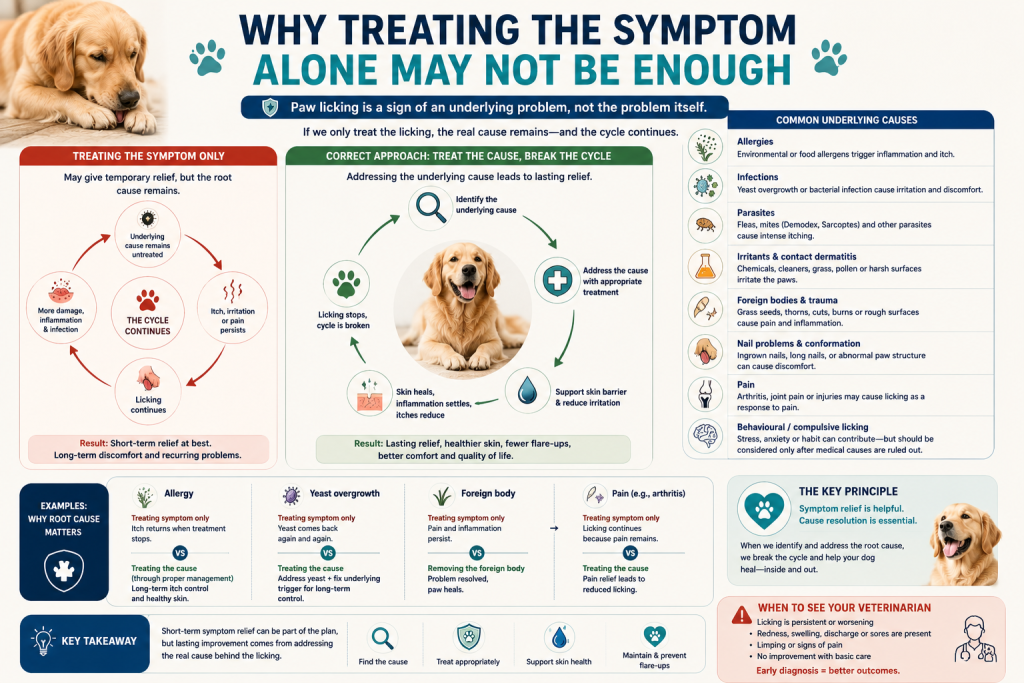
Suppose a dog is licking because of environmental allergy.
A topical product may help support the skin, but the underlying allergic disease remains.
Similarly:
Foreign body → remove foreign body
Bacterial infection → diagnose and appropriately treat infection
Yeast dermatitis → address yeast and underlying trigger
Parasites → appropriate parasite control
Food allergy → dietary investigation
Atopic dermatitis → long-term multimodal management
Nail injury → address the injury
The central principle is:
Successful long-term management depends on identifying and addressing the underlying cause.
This is particularly important for chronic or recurrent disease.
The 2024 Malassezia review similarly emphasises that treating the underlying disease is essential for optimal long-term management.
Where Skin-Care Support Fits Into the Picture
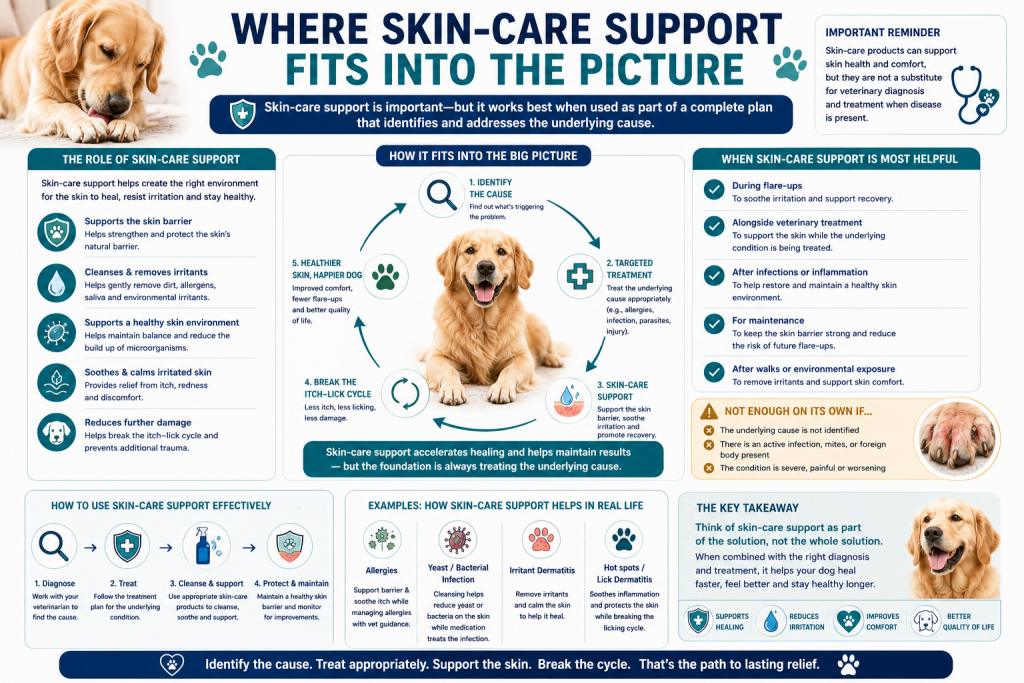
Skin-supportive care has an important role in maintaining healthy skin and assisting the management of irritated skin, but it should not be presented as a replacement for diagnosis or veterinary treatment when disease is present.
The scientific rationale is strongest when considering:
- Skin-barrier support
- Reduction of environmental contamination
- Gentle cleansing
- Maintenance of appropriate skin hygiene
- Support of compromised skin
- Reduction of additional irritation
Research has demonstrated that skin-barrier abnormalities are associated with canine atopic dermatitis, including altered ceramides and increased transepidermal water loss.
Clinical research has also investigated topical barrier-supportive formulations. For example, a randomized placebo-controlled pilot study of a topical emulsion containing ceramides, essential fatty acids and 18-beta-glycyrrhetinic acid found a transient reduction in pruritus in some dogs, but did not demonstrate sustained efficacy as a monotherapy.
That finding illustrates an important principle:
Supportive topical care can have value, but chronic allergic disease generally requires a multimodal approach.
When Paw Licking Requires Veterinary Attention
Owners should seek veterinary assessment when paw licking is:
- Persistent
- Increasing in frequency
- Associated with significant redness
- Associated with swelling
- Associated with discharge or pus
- Associated with bleeding
- Associated with an open wound
- Associated with limping
- Associated with significant pain
- Focused intensely on one location
- Accompanied by a lump or nodule
- Associated with nail damage
- Recurrent despite basic care
- Accompanied by widespread itching
- Accompanied by recurrent ear infections
- Not improving
- Getting progressively worse
Particular caution is warranted when there is severe pain, deep swelling, a draining lesion, significant lameness, or a persistent solitary lesion.
A Practical Differential Diagnosis Guide
The Most Important Takeaway for Dog Owners
A dog licking its paws is telling you:
“Something about this area is bothering me.”
It does not necessarily tell you why.
The cause may be:
ITCH
from allergy, parasites or infection
IRRITATION
from chemicals, environmental exposure or damaged skin
PAIN
from injury, infection, foreign body or musculoskeletal disease
INFLAMMATION
from allergic or immune-mediated disease
MICROBIAL IMBALANCE
from yeast or bacterial overgrowth
or, less commonly,
BEHAVIOURAL/COMPULSIVE LICKING
The most effective approach is therefore to identify the trigger and break the cycle rather than simply suppressing the visible behaviour.
The Itch–Lick Cycle in One Sentence
A useful way to remember the process is:
Something irritates or inflames the paw → the dog licks it → repeated licking damages the skin barrier → microbial and inflammatory problems may develop → the paw becomes even more uncomfortable → the dog licks it even more.
Breaking this cycle requires understanding what started it in the first place.
Conclusion
Persistent paw licking is a multifactorial clinical sign with a broad differential diagnosis.
Allergic disease is an important contributor, particularly in dogs with chronic or recurrent involvement of multiple paws. However, infection, parasites, contact irritation, foreign bodies, trauma, nail disease, pain, interdigital disease and behavioural factors must also be considered.
Modern research increasingly demonstrates that canine skin disease involves interconnected changes in:
the immune system → skin barrier → microbiome → inflammation → clinical signs
rather than a single isolated abnormality.
For this reason, persistent paw licking should not automatically be labelled as “dry skin” or “allergy.”
The scientifically appropriate approach is:
Identify the underlying trigger → assess inflammation and infection → protect the skin barrier → reduce further irritation → address the underlying disease → monitor for recurrence.
Supportive skin care can form part of this strategy, but it should complement—not replace—appropriate veterinary diagnosis and treatment when disease is suspected.
Medical Disclaimer
This educational material is intended for general pet-health education and should not be used as a substitute for veterinary examination, diagnosis or treatment. Persistent, severe, painful, recurrent or worsening paw licking should be evaluated by a veterinarian, particularly when accompanied by swelling, discharge, wounds, bleeding, lameness or significant skin lesions.
Scientific References and Further Reading
- AAHA Management of Allergic Skin Diseases in Dogs and Cats Guidelines (2023). American Animal Hospital Association.
- Olivry T, et al. Canine atopic dermatitis: detailed guidelines for diagnosis and allergen identification. BMC Veterinary Research. The ICADA guidelines emphasise ruling out other causes of pruritus and using appropriate diagnostic testing.
- Olivry T, et al. Review: Clinical and histological manifestations of canine atopic dermatitis. Veterinary Dermatology.
- Gentry CM. Updates on the Pathogenesis of Canine Atopic Dermatitis and Feline Atopic Skin Syndrome: Part 2, the Skin Barrier, the Microbiome, and Immune System Dysfunction. Veterinary Clinics of North America: Small Animal Practice, 2025.
- Shimada K, et al. Increased transepidermal water loss and decreased ceramide content in lesional and non-lesional skin of dogs with atopic dermatitis. Veterinary Dermatology, 2009.
- Bradley CW, et al. Characterization and quantification of ceramides in the nonlesional skin of canine patients with atopic dermatitis compared with controls. Veterinary Dermatology.
- Bradley CW, et al. Longitudinal Evaluation of the Skin Microbiome and Association with Microenvironment and Treatment in Canine Atopic Dermatitis. Journal of Investigative Dermatology.
- Hobi S, et al. Malassezia dermatitis in dogs and cats. The Veterinary Journal, 2024.
- Bond R, et al. Biology, diagnosis and treatment of Malassezia dermatitis in dogs and cats: Clinical Consensus Guidelines of the World Association for Veterinary Dermatology. Veterinary Dermatology, 2020.
- Guillot J, Bond R. Malassezia Yeasts in Veterinary Dermatology: An Updated Overview. Frontiers in Cellular and Infection Microbiology, 2020.
- Morris DO, et al. Evidence-based veterinary dermatology: a systematic review of interventions for Malassezia dermatitis in dogs. Veterinary Dermatology.
- Merck Veterinary Manual. Interdigital Furunculosis in Dogs.
- Merck Veterinary Manual. Pyoderma in Dogs.
- VCA Animal Hospitals. Pododermatitis in Dogs.
- VCA Animal Hospitals. Compulsive Disorders and Acral Lick Dermatitis in Dogs.