Understanding Epiphora in Dogs and Cats Through Veterinary Science
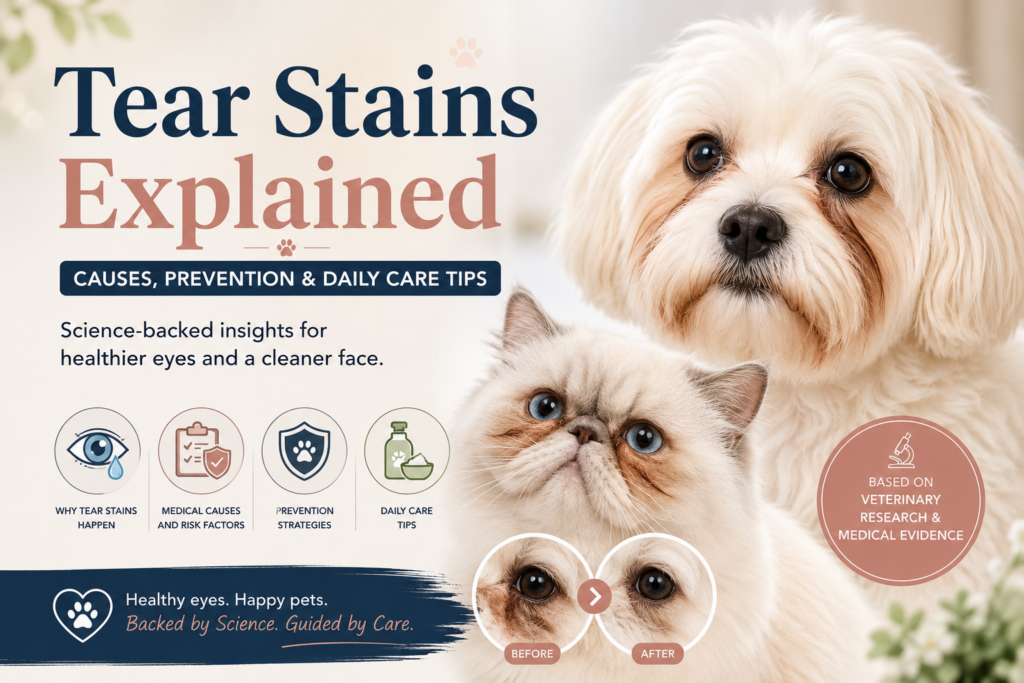
Tear stains are one of the most common cosmetic concerns seen in dogs and, less commonly, cats. These reddish-brown streaks beneath the eyes are especially noticeable in light-colored pets such as Maltese, Shih Tzus, Poodles, Bichon Frisés, Persian cats, and Himalayan cats.
Although tear staining is often harmless, persistent staining may sometimes indicate underlying medical issues involving the eyes, tear ducts, skin, allergies, anatomy, or chronic inflammation. Veterinary ophthalmologists refer to excessive tearing as epiphora, a condition that occurs when tears either overflow from the eyes or fail to drain properly through the normal tear duct system.
Modern veterinary research shows that successful management of tear stains requires identifying and addressing the underlying cause rather than simply removing the discoloration cosmetically.
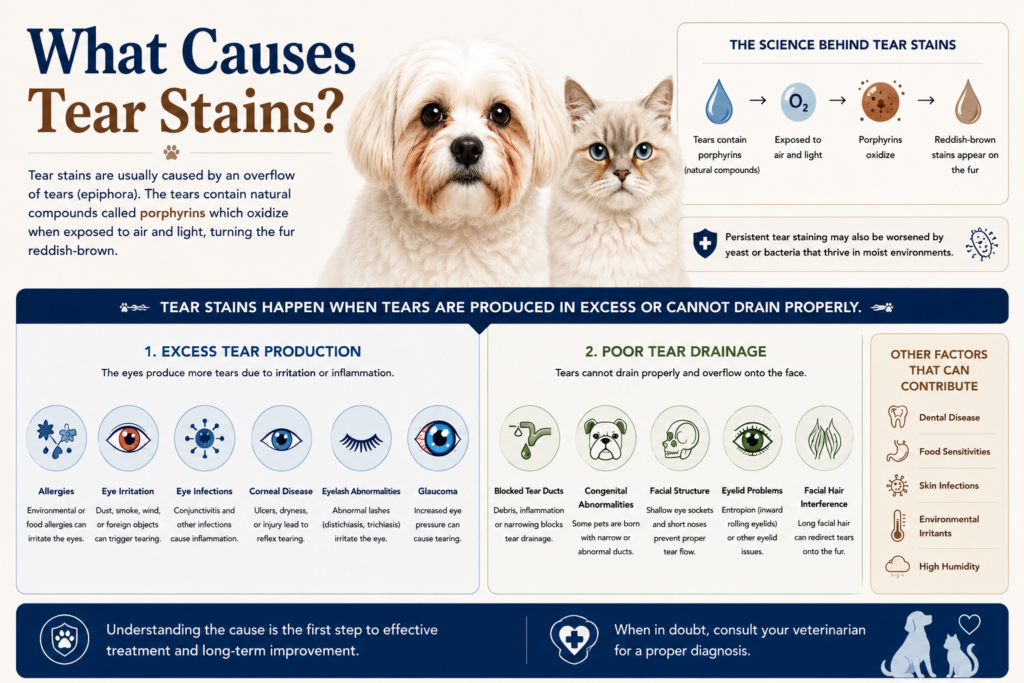
What Causes Tear Stains?
The reddish-brown discoloration associated with tear stains is primarily caused by compounds called porphyrins.
Porphyrins are iron-containing molecules produced naturally during the breakdown of red blood cells. These compounds are excreted through bodily secretions including tears, saliva, urine, and sweat. When tears remain on the fur for prolonged periods, porphyrins oxidize after exposure to air and light, creating the characteristic rust-colored staining seen around the eyes.
Veterinary ophthalmology sources also note that chronic moisture around the eyes can contribute to secondary yeast or bacterial overgrowth, worsening discoloration and causing odor or skin irritation.
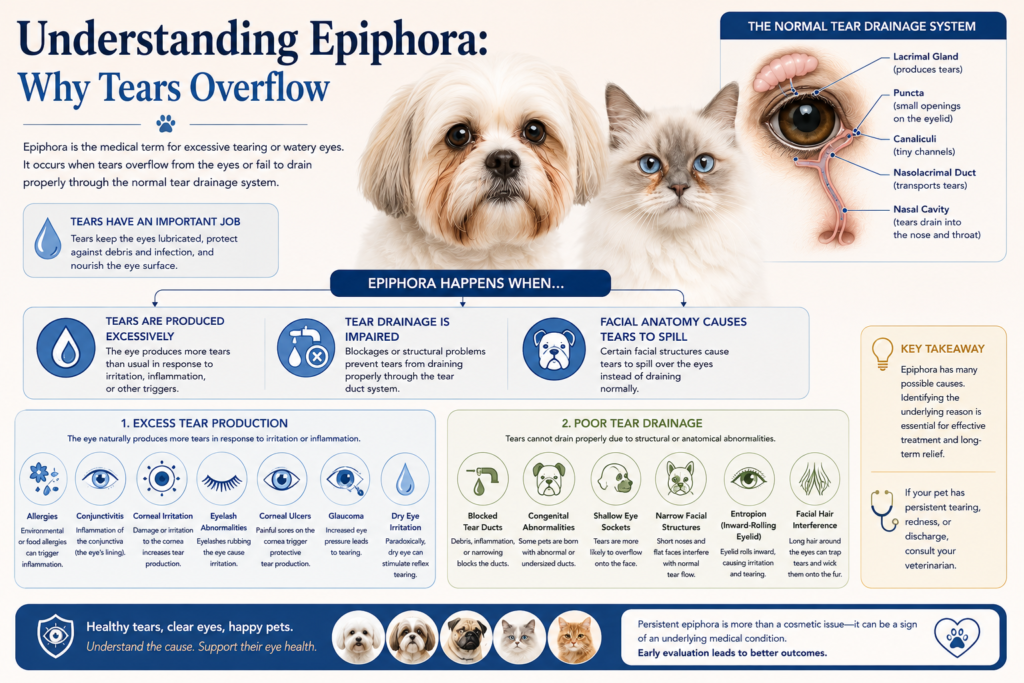
Understanding Epiphora: Why Tears Overflow
Under normal conditions, tears lubricate and protect the eye before draining through tiny openings called puncta into the nasolacrimal ducts.
Epiphora occurs when:
- Tears are produced excessively
- Tear drainage is impaired
- Facial anatomy causes tears to spill onto the fur instead of draining normally
Veterinary literature identifies two major categories of epiphora:
1. Excess Tear Production
The eye naturally produces more tears in response to irritation or inflammation. Common causes include:
- Allergies
- Corneal irritation
- Conjunctivitis
- Foreign material in the eye
- Corneal ulcers
- Eyelash abnormalities
- Glaucoma
- Dry eye irritation paradoxically stimulating reflex tearing
2. Poor Tear Drainage
In some pets, tears cannot drain properly due to structural or anatomical abnormalities, leading to overflow onto the face. Common causes include:
- Blocked tear ducts
- Congenital tear duct abnormalities
- Shallow eye sockets
- Narrow facial structures
- Inward-rolling eyelids (entropion)
- Facial hair interfering with tear flow
These mechanisms are well documented in veterinary ophthalmology literature.
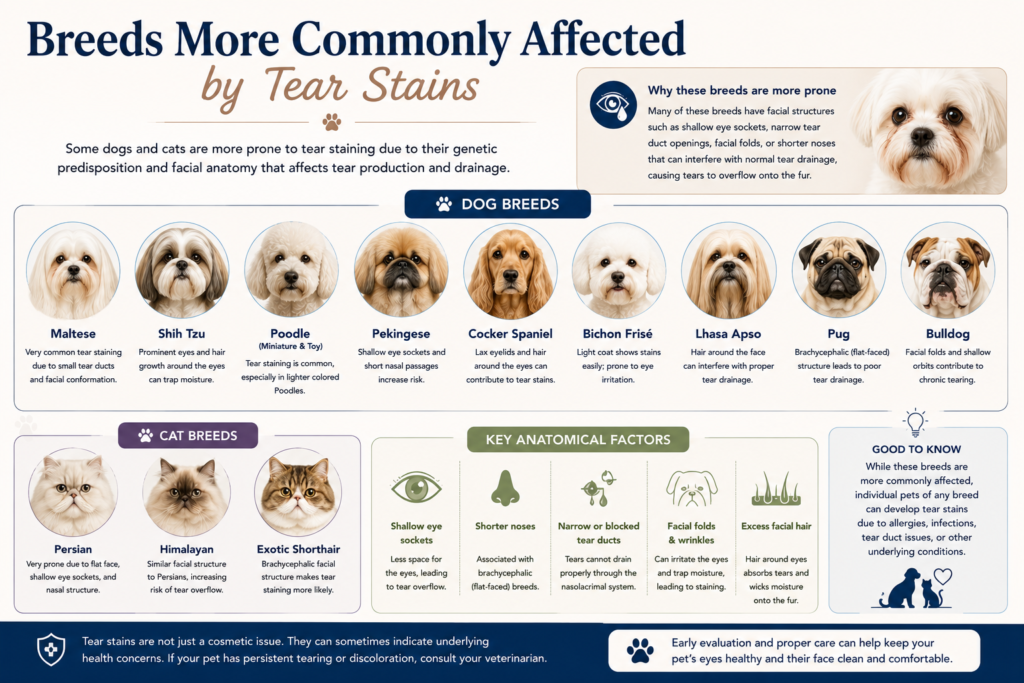
Breeds More Commonly Affected
Certain dog and cat breeds are genetically predisposed to tear staining because of their facial anatomy.
Veterinary sources consistently report higher prevalence in:
Dogs
- Maltese
- Shih Tzu
- Poodle
- Pekingese
- Cocker Spaniel
- Bichon Frisé
- Lhasa Apso
- Pug
- Bulldog
Cats
- Persian
- Himalayan
- Exotic Shorthair
Brachycephalic (“flat-faced”) breeds often have shallow eye sockets, shortened nasal passages, facial folds, and altered tear drainage pathways that predispose them to chronic tearing.
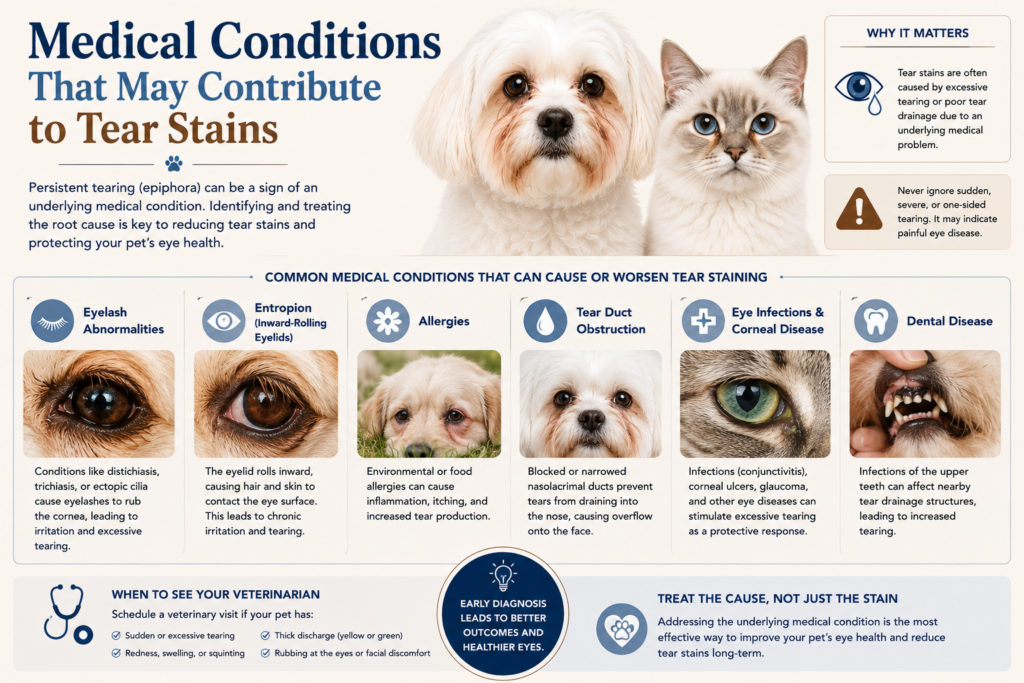
Medical Conditions That May Contribute to Tear Stains
Although many cases are primarily cosmetic, chronic tear staining should never automatically be dismissed as harmless.
Veterinary ophthalmologists warn that excessive tearing may indicate underlying eye disease requiring treatment.
Potential medical causes include:
Eyelash Abnormalities
Conditions such as distichiasis, trichiasis, or ectopic cilia cause eyelashes to rub against the cornea, triggering irritation and tearing.
Entropion
An inward rolling of the eyelid that causes hair and skin to contact the eye surface. This condition commonly leads to chronic irritation and epiphora.
Allergies
Environmental allergens such as pollen, mold, dust, and food sensitivities may increase inflammation and tear production.
Tear Duct Obstruction
Blocked nasolacrimal ducts prevent normal tear drainage, causing overflow onto facial fur.
Eye Infections and Corneal Disease
Corneal ulcers, conjunctivitis, glaucoma, or infections can stimulate excessive tearing as part of the eye’s protective response.
Dental Disease
Dental root infections near the upper jaw may interfere with tear drainage structures in some dogs.
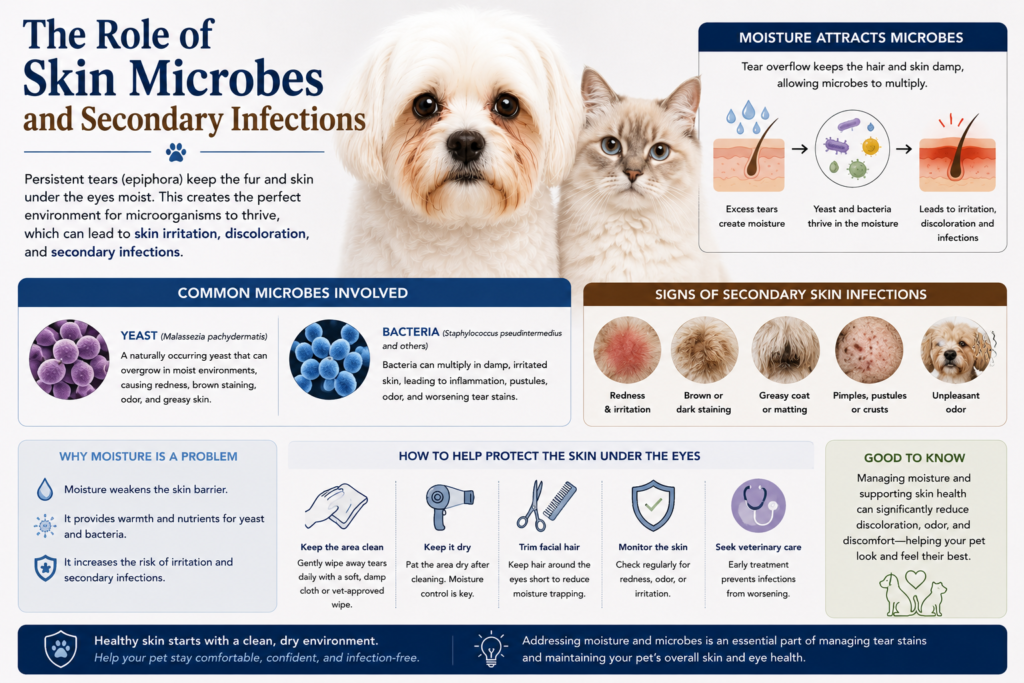
The Role of Skin Microbes and Secondary Infections
Chronic moisture beneath the eyes creates an ideal environment for yeast and bacterial overgrowth.
Veterinary dermatology sources report that persistent dampness may lead to:
- Moist dermatitis
- Skin irritation
- Odor
- Secondary infections
- Fur matting
This explains why some pets develop darker staining and unpleasant odor around the eyes over time.
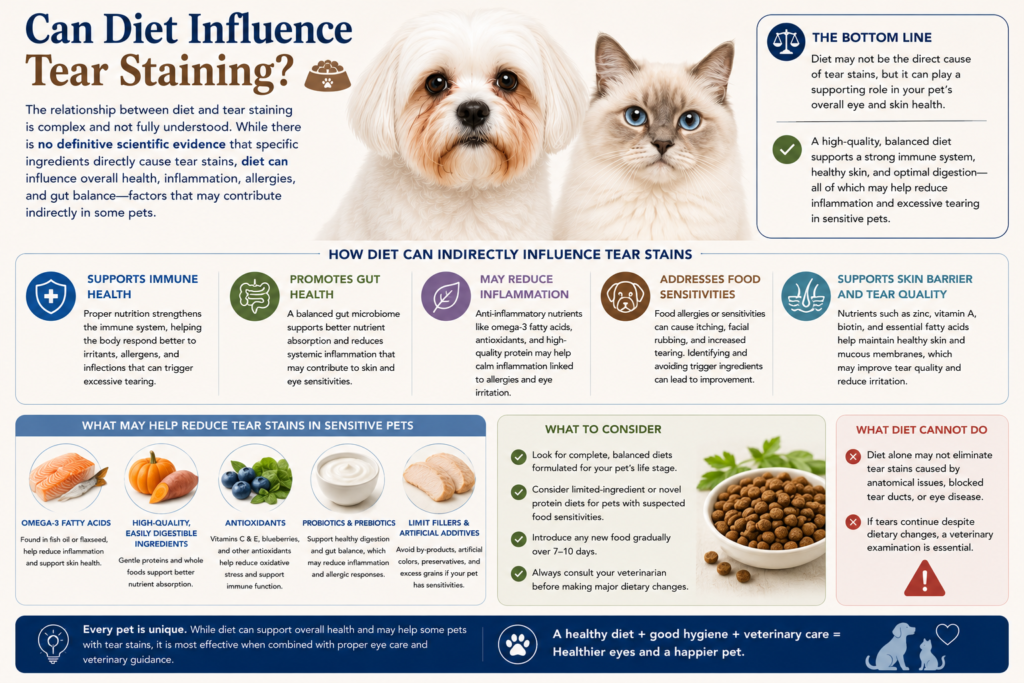
Can Diet Influence Tear Staining?
The relationship between diet and tear staining remains an evolving area of veterinary discussion.
Current evidence does not conclusively prove that specific foods directly cause tear staining. However, veterinary clinicians acknowledge that food sensitivities, allergies, inflammation, or gastrointestinal imbalances may contribute indirectly in some pets by increasing inflammatory responses or tear production.
Some veterinarians report improvements after:
- Eliminating dietary allergens
- Improving ingredient quality
- Supporting gut health
- Reducing inflammatory triggers
However, these responses vary significantly between individuals and should not be considered universal. Claims that certain foods or proteins “cause” tear stains lack strong controlled scientific evidence at present.
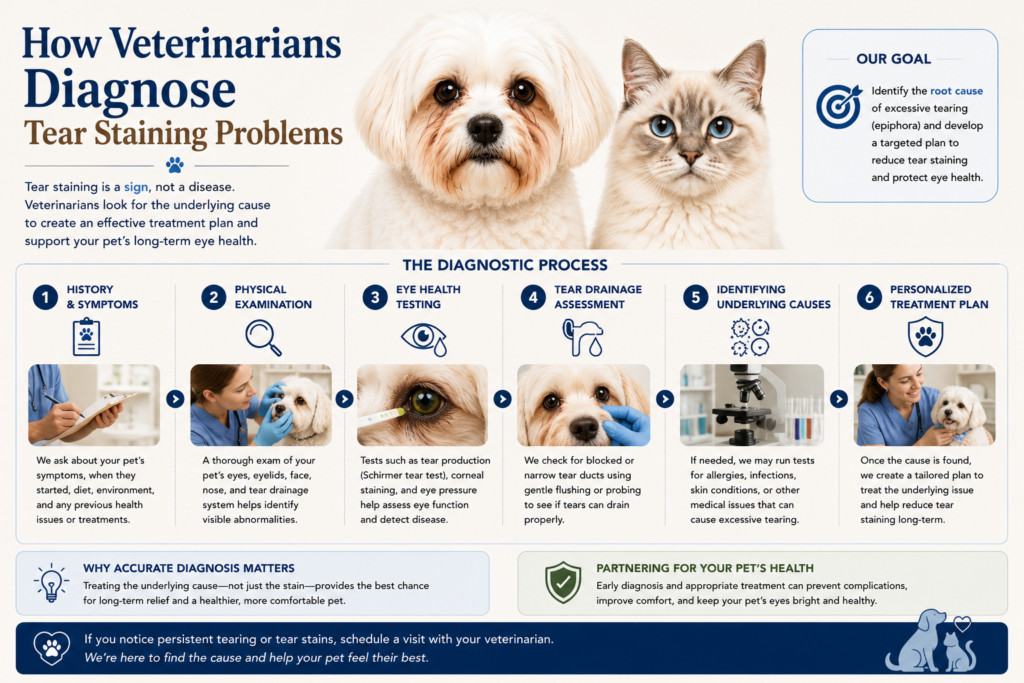
How Veterinarians Diagnose Tear Staining Problems
A veterinary examination is important when tearing is persistent, sudden, painful, or associated with redness or discharge.
Diagnostic evaluation may include:
Ophthalmic Examination
Assessment of the eyelids, cornea, eyelashes, tear film, and ocular structures.
Fluorescein Staining
Used to detect corneal ulcers or damage.
Schirmer Tear Test
Measures tear production levels.
Nasolacrimal Duct Flush
Checks for tear duct obstruction.
Evaluation for Allergies or Skin Disease
Particularly when chronic inflammation or itching is present.
Veterinary ophthalmology specialists emphasize that identifying the underlying cause is critical before attempting cosmetic treatment alone.
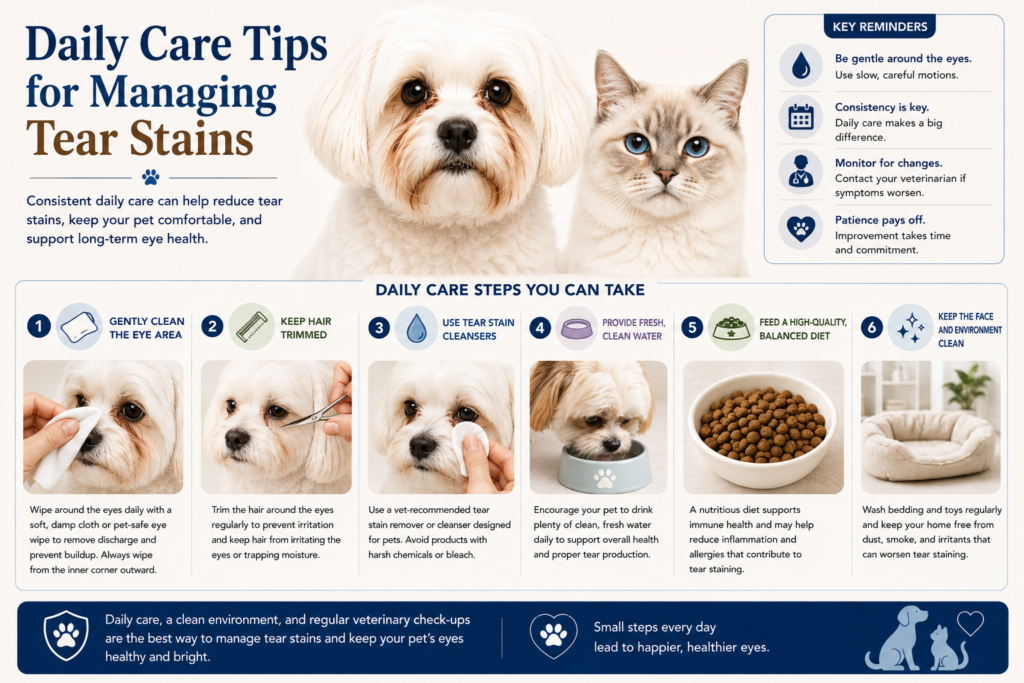
Daily Care Tips for Managing Tear Stains
While some pets may always have mild staining due to anatomy, consistent hygiene and management can significantly improve appearance and skin comfort.
1. Keep Facial Hair Trimmed
Hair around the eyes can trap moisture and wick tears onto the face. Keeping this area trimmed may reduce staining severity.
2. Clean the Area Daily
Use a soft damp cloth or veterinarian-approved eye wipe to gently remove debris and moisture.
Avoid excessive rubbing or harsh chemicals near the eyes.
3. Keep the Area Dry
Drying the fur after cleaning is important because persistent moisture encourages yeast and bacterial growth.
4. Monitor for Skin Irritation
Watch for:
- Redness
- Odor
- Thick discharge
- Swelling
- Excessive scratching or rubbing
These signs may indicate infection or inflammation requiring veterinary care.
5. Avoid Unsafe Home Remedies
Veterinary sources caution against using hydrogen peroxide or unapproved bleaching agents near the eyes due to risk of corneal injury and irritation.
6. Address Underlying Medical Problems
Long-term improvement usually depends on treating the root cause rather than masking the stain itself.
Management may involve:
- Allergy control
- Eyelid surgery
- Tear duct flushing
- Infection treatment
- Grooming adjustments
- Environmental modifications
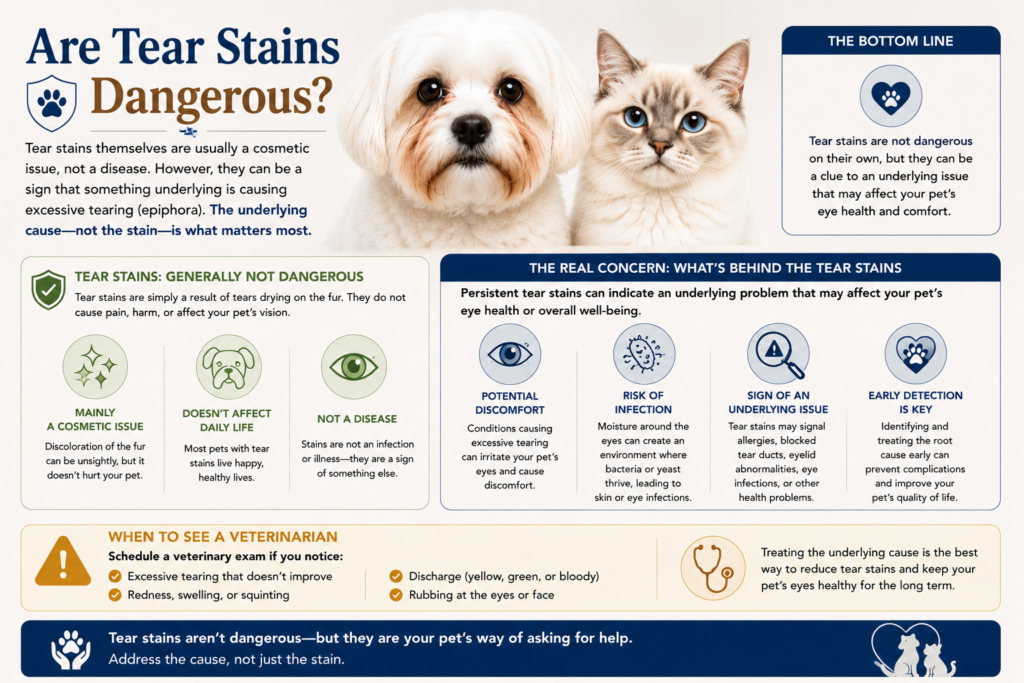
Are Tear Stains Dangerous?
Tear stains themselves are usually cosmetic and not harmful.
However, persistent epiphora should not be ignored because it may sometimes indicate:
- Painful eye disease
- Corneal injury
- Infection
- Anatomical abnormalities
- Chronic inflammation
Veterinary examination is especially important if pets develop:
- Squinting
- Thick yellow or green discharge
- Cloudy eyes
- Sudden tearing
- Rubbing at the eyes
- Visible discomfort
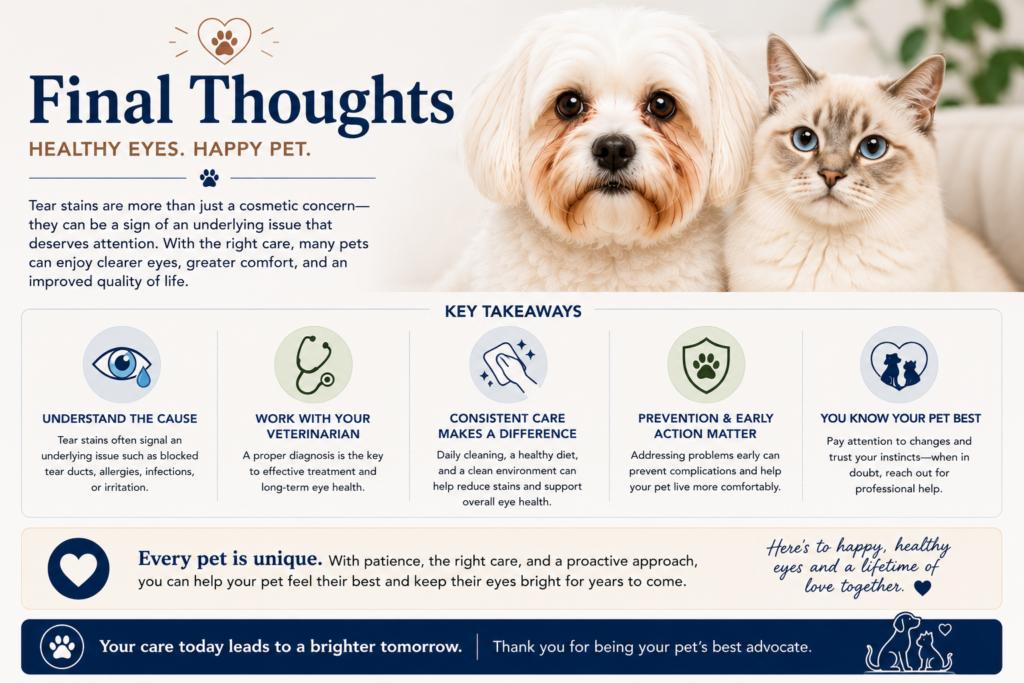
Final Thoughts
Tear staining is extremely common in dogs and cats, particularly in light-colored and flat-faced breeds. While often cosmetic, chronic tearing may reflect underlying ophthalmic, dermatologic, allergic, or anatomical issues that deserve proper veterinary evaluation.
Scientific veterinary literature consistently shows that tear stains are linked to epiphora — excessive tearing or impaired tear drainage — with porphyrins in tears producing the characteristic reddish-brown discoloration.
The most effective long-term approach focuses on:
- Identifying underlying causes
- Maintaining good facial hygiene
- Keeping the area dry
- Supporting skin health
- Working closely with a veterinarian when persistent tearing occurs
Rather than treating tear stains as purely cosmetic, modern veterinary medicine increasingly recognizes them as a potential indicator of broader eye and skin health.
References
- Brooks WC. Runny Eyes (Epiphora) in Dogs and Cats. Veterinary Partner (VIN).
- Boldan M. Epiphora in Dogs: Causes and Treatment. PetMD, 2026.
- Saito A et al. Tear Production in Dogs with Epiphora and Corneal Epitheliopathy. Veterinary Ophthalmology. 1999.
- VCA Animal Hospitals. Eye Discharge (Epiphora) in Dogs.
- MedVet Ophthalmology. Everything You Need to Know About Tear Staining in Dogs. 2026.
- Zoetis Petcare. Understanding and Cleaning Dog Tear Stains.
- Veterinary Ophthalmology Proceedings: Management of Tear Film Disorders in the Dog and Cat.
- Fatcheric E. Dog Tear Stains: What You Should Know. Whole Dog Journal. 2021.