Docosahexaenoic acid (DHA) is one of the most important nutrients involved in neurological and visual development during early canine life. Over the past two decades, veterinary nutrition research has increasingly demonstrated that DHA plays a critical role in puppy cognition, memory formation, retinal maturation, learning ability, and behavioral development.
DHA belongs to the omega-3 family of long-chain polyunsaturated fatty acids (LCPUFAs). It is highly concentrated in the brain and retina, where it becomes incorporated into cell membranes during periods of rapid growth. In puppies, this developmental window begins during fetal life and continues through the first several months after birth.
This article provides a detailed, evidence-based review of DHA’s biological functions, research findings, clinical implications, dietary sources, supplementation considerations, and practical recommendations for puppy nutrition.
What Is DHA?
DHA (docosahexaenoic acid) is a long-chain omega-3 fatty acid scientifically designated as 22:6n-3. It is structurally unique because it contains six double bonds, giving it exceptional flexibility within cell membranes. This flexibility is especially important in neural tissue, where rapid electrical signaling and membrane fluidity are essential for normal brain function.
In mammals, DHA is heavily concentrated in:
- The cerebral cortex
- Synaptic membranes
- Retinal photoreceptors
- Mitochondrial membranes in neurons
Because puppies experience rapid brain growth during gestation and early life, DHA demand is especially high during this period.
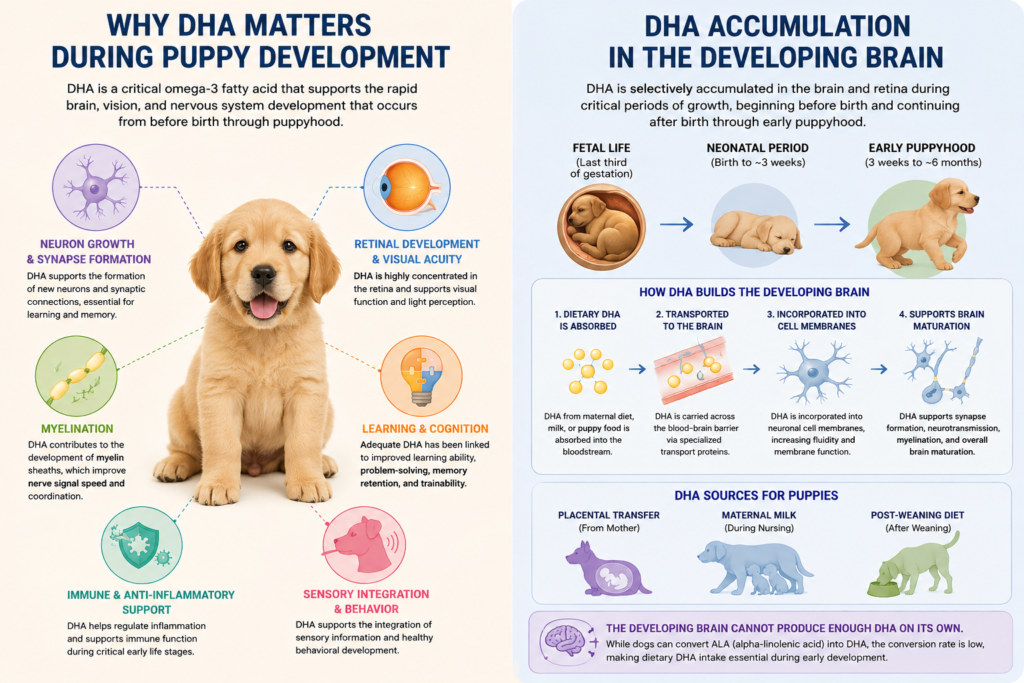
Why DHA Matters During Puppy Development
The canine brain undergoes extensive development before birth and throughout puppyhood. During this time:
- Neurons form new synaptic connections
- Myelination increases
- Retinal tissue matures
- Learning pathways develop
- Sensory integration improves
DHA supports many of these processes directly through membrane incorporation and indirectly through modulation of inflammation, neurotransmission, and gene expression.
Research has shown that puppies receiving adequate DHA may demonstrate improvements in:
- Memory retention
- Problem-solving ability
- Trainability
- Visual acuity
- Learning speed
- Psychomotor performance
DHA Accumulation in the Developing Brain
One of the most important aspects of DHA biology is that the developing brain selectively accumulates DHA during growth. The last third of gestation and early neonatal life are considered critical periods for DHA deposition in both the retina and central nervous system.
The brain cannot efficiently synthesize sufficient DHA on its own. While dogs can convert alpha-linolenic acid (ALA) into DHA, the conversion efficiency is limited. This means dietary intake becomes extremely important.
Puppies receive DHA through:
- Placental transfer during gestation
- Maternal milk during nursing
- Post-weaning diet
If maternal DHA intake is inadequate, puppies may begin life with lower DHA reserves.
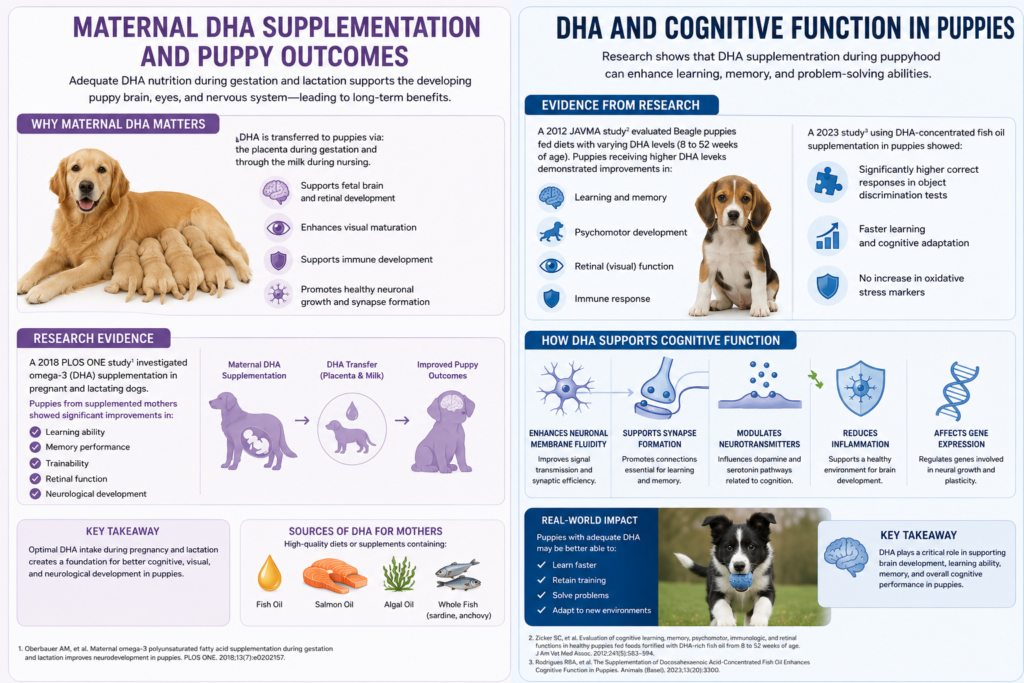
Maternal DHA Supplementation and Puppy Outcomes
Several studies have evaluated the effects of feeding DHA-enriched diets to pregnant and lactating dogs.
A 2018 study published in PLOS ONE investigated maternal omega-3 supplementation during gestation and lactation. Researchers found that DHA supplementation improved cognitive and neurological development in puppies. The study also reinforced previous findings showing benefits in retinal function, trainability, and learning ability.
Additional evidence indicates that puppies born to mothers receiving enhanced DHA nutrition may perform better in cognitive tasks and training assessments.
This is biologically plausible because fetal brain development depends heavily on maternal fatty acid supply.
DHA and Cognitive Function in Puppies
The strongest evidence supporting DHA use in puppies comes from controlled cognitive studies.
Landmark JAVMA Study (2012)
One of the most influential canine DHA studies was published in the Journal of the American Veterinary Medical Association in 2012. Researchers evaluated 48 Beagle puppies fed diets containing varying DHA levels from 8 weeks to 1 year of age.
The investigators assessed:
- Learning performance
- Memory
- Psychomotor development
- Retinal function
- Immune responses
Puppies receiving higher DHA levels demonstrated improvements in several neurodevelopmental measures, including learning and visual performance.
The study provided some of the clearest evidence that dietary DHA can influence functional brain development in growing dogs.
DHA and Learning Ability
More recent research has continued to support these findings.
A 2023 study published in Animals evaluated DHA-concentrated fish oil supplementation in puppies. Puppies receiving DHA supplementation achieved significantly higher rates of correct responses in object discrimination testing, a validated measure of learning capability.
The supplemented puppies demonstrated:
- Better learning performance
- Faster cognitive adaptation
- Improved task discrimination
Importantly, researchers did not observe increased oxidative stress markers during supplementation.
DHA and Retinal Development
The retina contains exceptionally high DHA concentrations. DHA contributes to photoreceptor membrane integrity and visual signal transduction.
Studies in puppies have shown that maternal DHA supplementation can improve electroretinogram (ERG) responses, suggesting enhanced retinal maturation and visual development.
Visual development is especially important during early socialization and environmental learning periods.
DHA and Trainability
Several veterinary nutrition sources suggest that puppies supplemented with DHA may exhibit improved trainability and problem-solving behavior.
Purina Institute research reported that puppies receiving DHA supplementation completed maze tests over 25% faster than control puppies in some learning tasks.
While trainability is influenced by genetics, socialization, environment, and handling, nutritional status appears to contribute meaningfully to neurocognitive performance.
Mechanisms: How DHA Supports the Brain
DHA influences neurological development through multiple biological pathways.
1. Cell Membrane Fluidity
Neuronal membranes require flexibility for efficient signaling. DHA enhances membrane fluidity, improving neurotransmitter receptor function and synaptic communication.
2. Synapse Formation
DHA contributes to synaptogenesis — the formation of neuronal connections critical for learning and memory.
3. Neurotransmission
DHA may influence dopamine and serotonin signaling pathways involved in cognition and behavior.
4. Anti-inflammatory Effects
Omega-3 fatty acids can help regulate inflammatory pathways that influence neural tissue health.
5. Gene Expression
Research suggests DHA affects genes involved in neural growth, plasticity, and development.
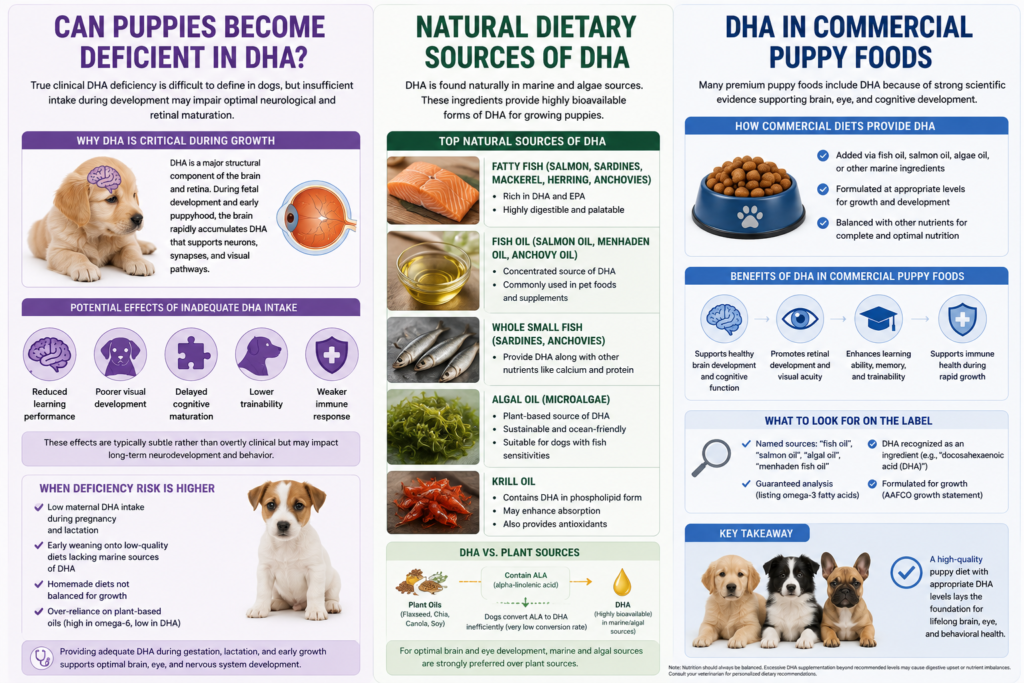
Can Puppies Become Deficient in DHA?
True clinical DHA deficiency is difficult to define in dogs, but insufficient intake during development may impair optimal neurological and retinal maturation.
Potential concerns associated with inadequate DHA exposure include:
- Reduced learning performance
- Poorer visual development
- Delayed cognitive maturation
- Lower trainability
However, these effects can be subtle rather than overtly clinical.
Natural Dietary Sources of DHA
DHA is primarily found in marine sources.
Common DHA-rich ingredients include:
- Fish oil
- Salmon oil
- Sardines
- Anchovies
- Menhaden fish oil
- Algal oil
Fish oils remain the most common source used in commercial puppy diets.
DHA in Commercial Puppy Foods
Many premium puppy foods now include DHA supplementation because of the accumulating evidence supporting early neurodevelopmental benefits.
High-quality puppy diets often derive DHA from:
- Fish oil
- Salmon oil
- Marine microalgae
AAFCO canine growth formulations commonly emphasize omega-3 fatty acid inclusion, especially for large-breed puppy formulations.
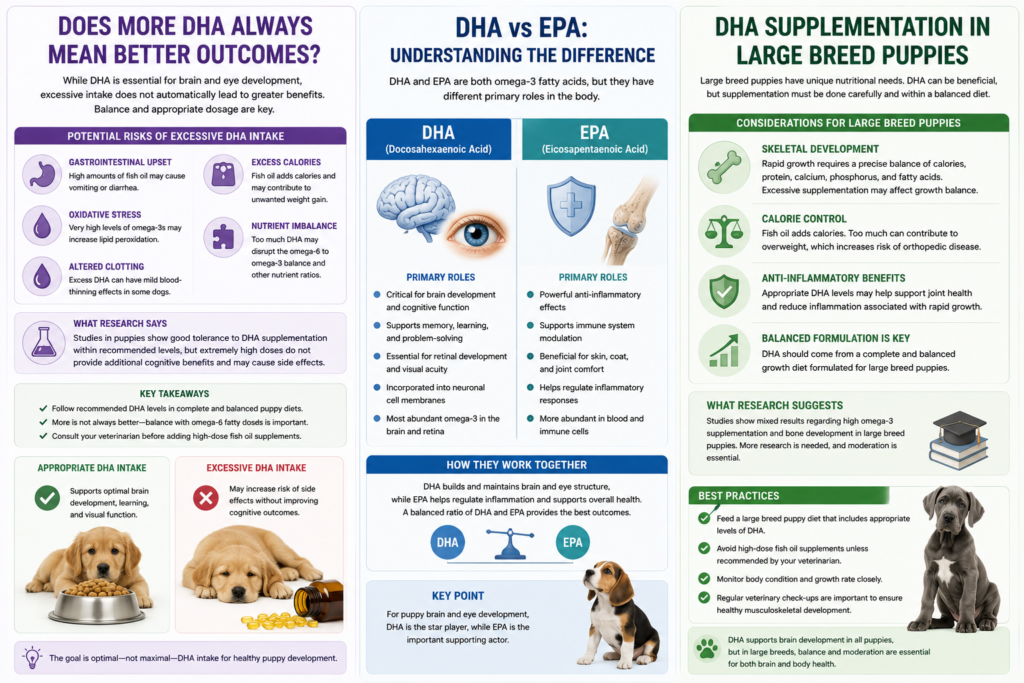
Does More DHA Always Mean Better Outcomes?
Not necessarily.
Although DHA has demonstrated benefits, excessive supplementation is not automatically advantageous. Balance between omega-3 and omega-6 fatty acids remains important. Very high fish oil intake may theoretically contribute to:
- Gastrointestinal upset
- Lipid peroxidation
- Altered clotting
- Excess calorie intake
- Nutrient imbalance
Studies have generally shown good tolerance of DHA supplementation in dogs, but veterinary guidance is still recommended before aggressive supplementation.
DHA vs EPA: Understanding the Difference
DHA and EPA are often grouped together, but they serve somewhat different roles.
| Fatty Acid | Primary Role |
|---|---|
| DHA | Brain, retina, cognition, neural development |
| EPA | Anti-inflammatory effects, immune modulation, joint support |
DHA is generally considered the more critical omega-3 fatty acid for puppy neurodevelopment.
DHA Supplementation in Large Breed Puppies
Large breed puppies deserve special consideration because excessive caloric supplementation and nutritional imbalance can affect skeletal development.
Some studies have evaluated omega-3 supplementation in relation to bone development and growth. Findings remain mixed, and researchers emphasize the importance of balanced formulations rather than excessive supplementation.
This reinforces why supplementation should ideally occur within properly formulated growth diets.
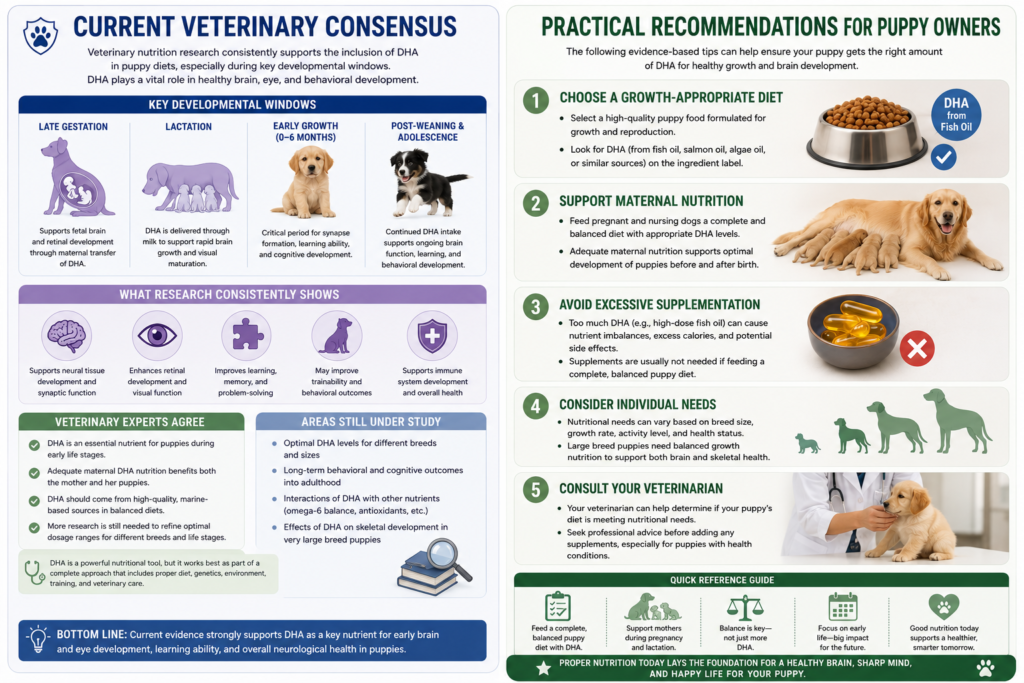
Current Veterinary Consensus
Current veterinary nutrition evidence generally supports DHA inclusion in puppy diets, particularly during:
- Late gestation
- Lactation
- Early growth
- Post-weaning cognitive development
Research consistently supports DHA’s role in:
- Neural tissue development
- Retinal maturation
- Cognitive performance
- Learning capacity
However, researchers also acknowledge that:
- Optimal dosing ranges are still being refined
- Breed-specific effects require more study
- Long-term behavioral outcomes need additional investigation
Practical Recommendations for Puppy Owners
Choose a Growth-Appropriate Diet
Select a puppy food formulated for growth and reproduction that includes DHA from identifiable marine sources.
Support Maternal Nutrition
Pregnant and nursing dogs should receive nutritionally complete diets with appropriate omega-3 content.
Avoid Excessive Supplementation
Adding large amounts of fish oil to already balanced puppy diets can disrupt nutrient ratios and caloric balance.
Consult Veterinary Professionals
Supplementation decisions should consider:
- Breed size
- Existing diet
- Health status
- Growth rate
- Body condition
Final Thoughts
DHA is one of the most scientifically supported nutritional components involved in early canine neurological development. Evidence from veterinary studies demonstrates that DHA contributes to brain maturation, retinal development, cognitive performance, memory, and learning ability in puppies.
The strongest benefits appear during gestation, lactation, and early puppyhood — periods when the brain is rapidly developing and highly dependent on dietary fatty acids.
While DHA is not a substitute for proper training, enrichment, genetics, or socialization, it represents an important nutritional foundation for healthy neurodevelopment.
As veterinary nutrition science continues to evolve, DHA remains one of the clearest examples of how early-life nutrition can directly influence long-term developmental outcomes in dogs.
References
- Rodrigues RBA, et al. The Supplementation of Docosahexaenoic Acid-Concentrated Fish Oil Enhances Cognitive Function in Puppies. Animals. 2023.
- Oberbauer AM, et al. Maternal omega-3 polyunsaturated fatty acid supplementation during gestation and lactation improves neurodevelopment in puppies. PLOS ONE. 2018.
- Zicker SC, et al. Evaluation of cognitive learning, memory, psychomotor, immunologic, and retinal functions in healthy puppies fed foods fortified with DHA-rich fish oil from 8 to 52 weeks of age. JAVMA. 2012.
- Kelley R. DHA for Puppies. Royal Canin Veterinary Academy.
- Purina Institute. Brain Development – Advancing Brain Health.
- Heinemann KM, et al. Docosahexaenoic acid and neurologic development in animals.
- Vendramini THA, et al. Exploring the efficacy and optimal dosages of omega-3 supplementation for companion animals. Nutrition Research Reviews.
- Carlisle C, et al. The Effects of Omega-3 Supplementation on Dogs. Animals. 2024.