Puppies are naturally energetic, curious, playful, and constantly developing. Because young dogs experience rapid growth and possess immature immune systems, they are significantly more vulnerable to infectious disease, dehydration, nutritional imbalances, gastrointestinal illness, congenital disorders, and environmental toxins than healthy adult dogs. Early recognition of illness is therefore one of the most important responsibilities of puppy ownership.
Veterinary professionals consistently emphasize that subtle behavioral or physical changes are often the earliest indicators of disease in puppies. Delayed recognition can rapidly lead to deterioration because puppies have smaller body reserves, faster metabolic rates, and reduced physiologic resilience compared to adult dogs.
This article provides an evidence-based overview of the most important warning signs every puppy owner should understand, explains when symptoms may indicate emergency conditions, and discusses how veterinarians diagnose underlying illness.
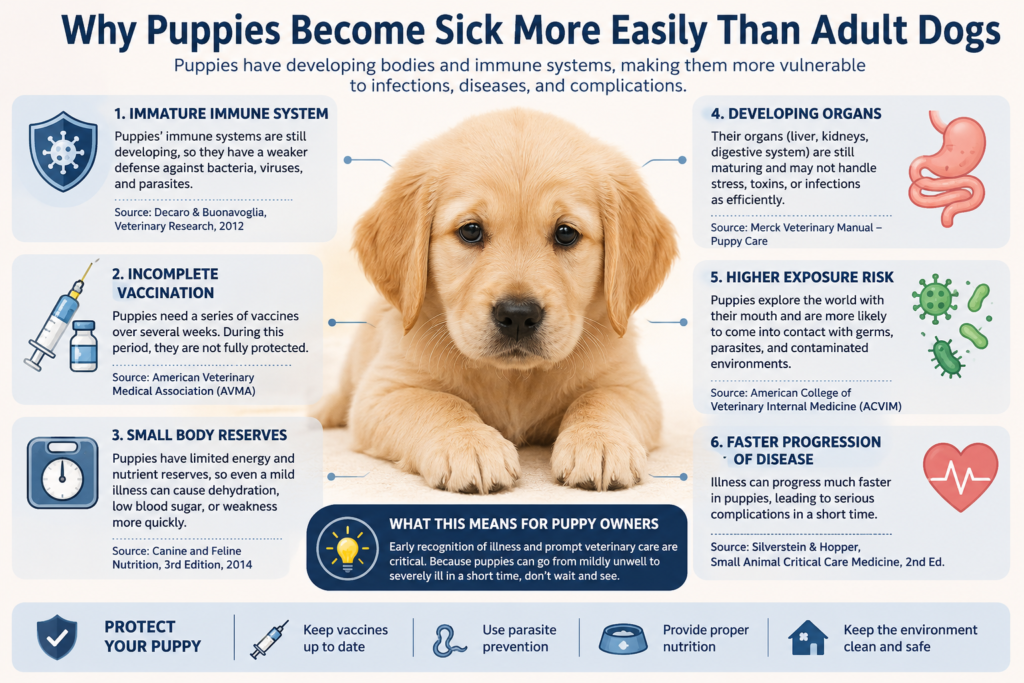
Why Puppies Become Sick More Easily Than Adult Dogs
Several biological factors increase disease susceptibility in puppies:
- Immature immune systems
- Incomplete vaccination protection
- Greater risk of dehydration
- Higher susceptibility to intestinal parasites
- Curiosity-driven ingestion of foreign objects and toxins
- Stress associated with weaning, relocation, and environmental changes
According to the American Veterinary Medical Association (AVMA), serious infectious diseases such as canine parvovirus can progress rapidly in puppies and may initially present with vague symptoms such as lethargy and decreased appetite before progressing to vomiting and severe diarrhea.
The Merck Veterinary Manual similarly notes that gastrointestinal disease in puppies can rapidly result in dehydration, electrolyte imbalance, and shock if left untreated.
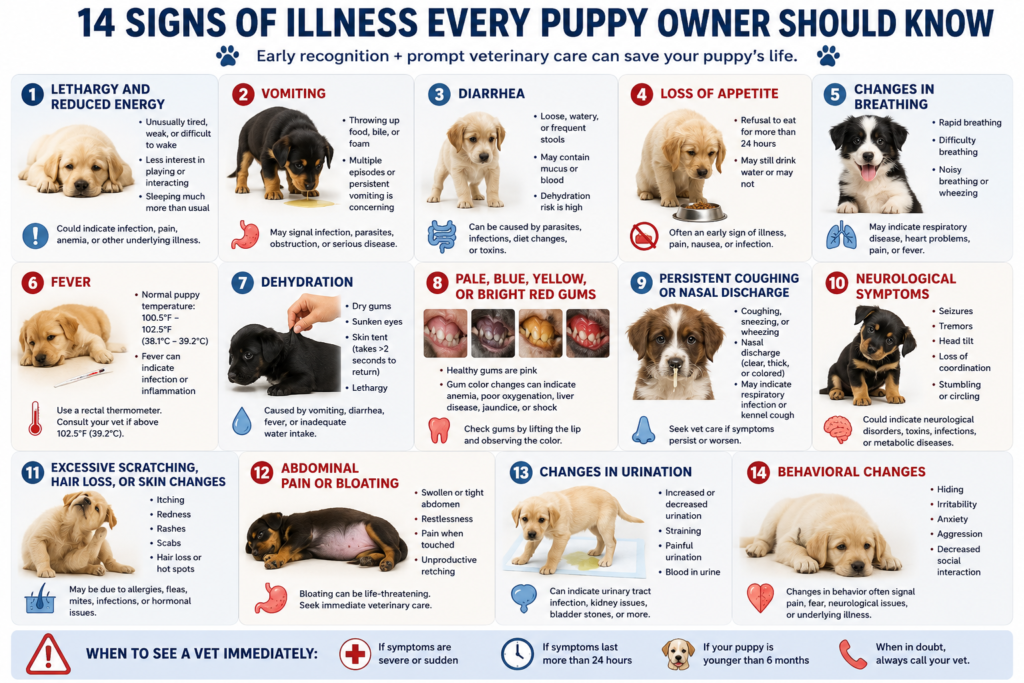
1. Lethargy and Reduced Energy
Why It Matters
Healthy puppies sleep frequently, but when awake they are generally curious, responsive, playful, and interactive. Persistent lethargy, weakness, reluctance to move, excessive sleeping, or loss of interest in play can indicate significant illness.
Lethargy is considered one of the most important nonspecific warning signs in veterinary medicine because it commonly accompanies:
- Fever
- Viral infections
- Parvovirus
- Severe intestinal parasites
- Hypoglycemia
- Congenital heart disease
- Dehydration
- Pain
- Sepsis
- Toxicity
In canine parvovirus infection, lethargy is often among the earliest clinical signs before vomiting and hemorrhagic diarrhea develop.
Warning Signs Requiring Immediate Veterinary Attention
- Collapse
- Extreme weakness
- Inability to stand
- Pale gums
- Unresponsiveness
- Difficulty waking
- Weakness accompanied by vomiting or diarrhea
2. Vomiting
Occasional vs Concerning Vomiting
Single episodes of mild vomiting may occasionally occur after rapid eating, dietary indiscretion, or stress. However, repeated vomiting in puppies should never be ignored.
The Merck Veterinary Manual explains that vomiting in dogs may be associated with:
- Gastrointestinal obstruction
- Infectious disease
- Parasites
- Toxin ingestion
- Dietary intolerance
- Systemic disease
- Electrolyte abnormalities
- Pancreatic disease
Because puppies dehydrate quickly, repeated vomiting is especially dangerous.
Dangerous Vomiting Symptoms
Seek veterinary care immediately if vomiting is accompanied by:
- Blood
- Repeated retching
- Abdominal swelling
- Inability to keep water down
- Lethargy
- Fever
- Diarrhea
- Suspected toxin exposure
- Possible ingestion of foreign objects
Common Puppy Diseases Associated With Vomiting
Canine Parvovirus
Parvovirus commonly causes:
- Vomiting
- Severe diarrhea
- Fever
- Lethargy
- Dehydration
- Loss of appetite
The disease may progress rapidly and can become life-threatening within a short period.
Intestinal Parasites
Roundworms, hookworms, whipworms, giardia, and coccidia frequently contribute to gastrointestinal upset in puppies.
Foreign Body Obstruction
Puppies commonly swallow:
- Socks
- Toys
- Plastic
- Fabric
- Bones
- Rocks
Foreign objects can obstruct the intestines and may require emergency surgery.
3. Diarrhea
Why Diarrhea in Puppies Is Serious
Mild stool changes may occur during dietary transitions or stress, but persistent diarrhea in puppies can rapidly become dangerous because fluid loss quickly leads to dehydration.
Diarrhea may result from:
- Viral infection
- Bacterial infection
- Parasites
- Food intolerance
- Sudden diet change
- Stress
- Toxin ingestion
- Inflammatory disease
Signs of Dangerous Diarrhea
Emergency evaluation is recommended if diarrhea:
- Contains blood
- Appears black or tarry
- Occurs repeatedly
- Is accompanied by vomiting
- Causes weakness or lethargy
- Persists longer than 24 hours
- Occurs in puppies younger than 4 months
Bloody diarrhea is particularly concerning because it may indicate:
- Parvovirus
- Hemorrhagic gastroenteritis
- Severe intestinal inflammation
- Foreign body injury
- Severe parasitism
4. Loss of Appetite
Why Appetite Changes Matter
Healthy puppies typically have strong food motivation due to rapid growth demands. Reduced appetite or refusal to eat is therefore considered clinically important.
A puppy that refuses food may be experiencing:
- Fever
- Pain
- Gastrointestinal disease
- Infection
- Dental problems
- Stress
- Congenital illness
- Liver disease
- Toxic exposure
Puppies Are Vulnerable to Low Blood Sugar
Young puppies, particularly toy breeds and small breeds, are highly susceptible to hypoglycemia (low blood sugar). Reduced food intake may rapidly cause:
- Weakness
- Tremors
- Disorientation
- Seizures
- Collapse
Hypoglycemia represents a veterinary emergency.
5. Changes in Breathing
Normal Puppy Breathing
Puppies normally breathe quietly and comfortably at rest. Mild panting after activity or excitement may be normal.
Abnormal breathing signs include:
- Rapid breathing at rest
- Labored breathing
- Wheezing
- Persistent coughing
- Open-mouth breathing
- Blue or pale gums
- Noisy breathing
- Nasal discharge
Potential Causes
Respiratory abnormalities may indicate:
- Kennel cough
- Pneumonia
- Congenital heart disease
- Airway obstruction
- Distemper
- Aspiration pneumonia
- Allergic reactions
- Heatstroke
According to AVMA resources on canine infectious respiratory disease complex (commonly called kennel cough), coughing accompanied by nasal discharge, lethargy, or difficulty breathing may indicate more severe respiratory involvement.
Emergency Symptoms
Seek emergency care immediately if a puppy:
- Struggles to breathe
- Has blue gums or tongue
- Collapses
- Cannot rest comfortably
- Produces choking sounds
- Experiences sudden breathing difficulty
6. Fever
Understanding Fever in Puppies
Normal canine body temperature is generally around 100°F to 102.5°F (37.8°C to 39.2°C).
Fever often indicates:
- Infection
- Inflammation
- Immune response
- Toxicity
- Heat-related illness
Signs That May Suggest Fever
- Warm ears
- Shivering
- Lethargy
- Loss of appetite
- Weakness
- Seeking cool surfaces
- Reduced activity
Rectal thermometers designed for pets provide the most accurate readings.
Persistent fever requires veterinary evaluation because puppies can deteriorate rapidly.
7. Dehydration
Why Dehydration Is Dangerous
Puppies lose body fluids quickly through:
- Vomiting
- Diarrhea
- Fever
- Heat exposure
- Refusal to drink
Even mild dehydration can significantly affect circulation and organ function.
Signs of Dehydration
- Dry or tacky gums
- Sunken eyes
- Weakness
- Skin losing elasticity
- Excessive panting
- Reduced urination
- Lethargy
Veterinarians commonly assess hydration by evaluating gum moisture, skin elasticity, heart rate, and capillary refill time.
Severe dehydration can lead to shock and death if untreated.
8. Pale, Blue, Yellow, or Bright Red Gums
Gum Color as an Important Health Indicator
Healthy puppy gums are usually pink and moist.
Abnormal gum colors can indicate serious disease:
| Gum Color | Possible Concern |
|---|---|
| Pale or white | Shock, anemia, blood loss |
| Blue or gray | Oxygen deprivation |
| Yellow | Liver disease or hemolysis |
| Bright red | Heatstroke, sepsis, toxicity |
Capillary refill time is another important indicator. Normally, gum color should return within approximately two seconds after gentle pressure is applied.
Abnormal gum color should always be treated seriously.
9. Persistent Coughing or Nasal Discharge
Respiratory Illness in Puppies
Coughing may range from mild irritation to severe respiratory disease.
Potential causes include:
- Kennel cough
- Viral infections
- Distemper
- Pneumonia
- Congenital heart disease
- Aspiration
- Airway abnormalities
Distemper may additionally cause:
- Eye discharge
- Neurologic abnormalities
- Thickened paw pads
- Seizures
Green or yellow nasal discharge often suggests bacterial involvement or severe inflammation.
10. Neurological Symptoms
Symptoms That Require Emergency Care
Neurological signs are always considered medically significant in puppies.
Warning signs include:
- Seizures
- Tremors
- Head tilt
- Circling
- Loss of balance
- Disorientation
- Sudden blindness
- Collapse
- Muscle twitching
Possible causes include:
- Distemper
- Congenital abnormalities
- Toxic ingestion
- Liver shunts
- Hypoglycemia
- Trauma
- Brain inflammation
Because neurological disease can progress rapidly, immediate veterinary assessment is essential.
11. Excessive Scratching, Hair Loss, or Skin Changes
Common Skin Problems in Puppies
Puppies frequently develop dermatologic issues caused by:
- Fleas
- Mites
- Allergies
- Ringworm
- Bacterial infections
- Nutritional imbalance
- Environmental irritation
Signs requiring veterinary attention include:
- Hair loss
- Scabs
- Red skin
- Ear inflammation
- Constant scratching
- Crusting
- Pustules
- Strong skin odor
Some skin diseases, including ringworm and certain parasites, are transmissible to humans.
12. Abdominal Pain or Bloating
Why This Can Be Serious
Abdominal discomfort may indicate:
- Intestinal obstruction
- Severe parasites
- Gastroenteritis
- Pancreatic disease
- Internal bleeding
- Bloat (gastric dilatation-volvulus)
Signs include:
- Restlessness
- Crying when touched
- Hunched posture
- Distended abdomen
- Repeated unsuccessful vomiting
- Refusal to lie down comfortably
Rapid abdominal swelling is considered an emergency.
13. Changes in Urination
Urinary Signs Owners Should Monitor
Abnormal urination may indicate:
- Urinary tract infection
- Congenital abnormalities
- Kidney disease
- Bladder stones
- Toxicity
- Dehydration
Warning signs include:
- Straining to urinate
- Blood in urine
- Frequent urination
- Excessive thirst
- Urinating very little
- Crying while urinating
Urinary obstruction is a life-threatening emergency.
14. Behavioral Changes
Subtle Behavior Changes Often Appear Early
Many illnesses initially present as behavioral abnormalities before obvious physical symptoms appear.
Behavioral warning signs include:
- Hiding
- Reduced social interaction
- Irritability
- Increased sleeping
- Restlessness
- Vocalizing excessively
- Aggression when touched
- Confusion
Because owners know their puppy’s normal personality best, even subtle behavioral changes should be taken seriously.
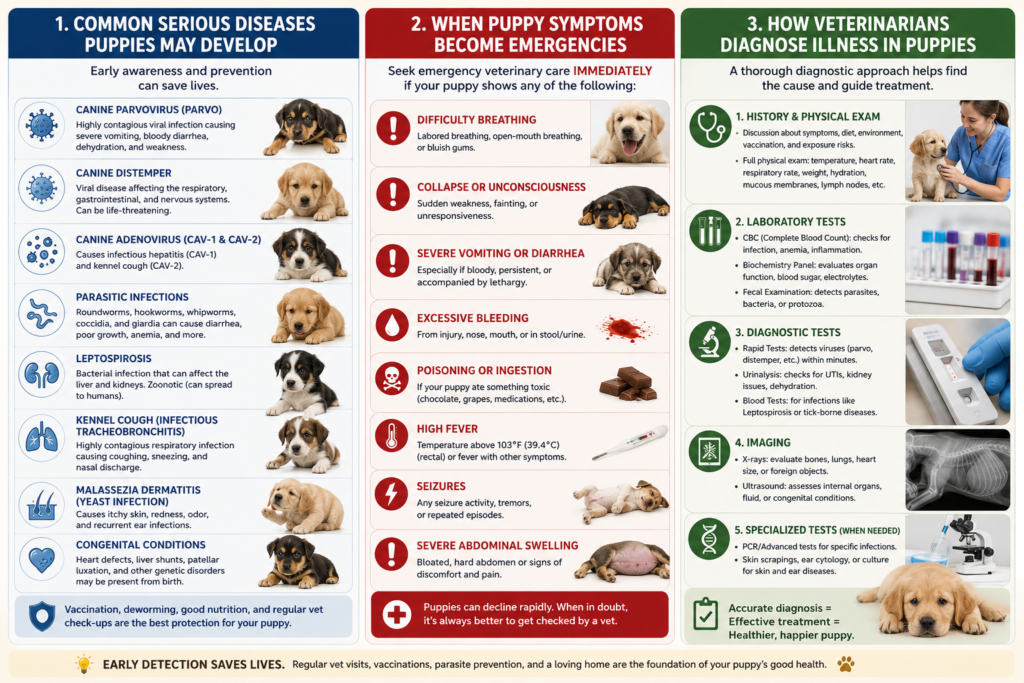
Common Serious Diseases Puppies May Develop
Canine Parvovirus
One of the most dangerous infectious diseases in puppies.
Common signs:
- Severe vomiting
- Bloody diarrhea
- Lethargy
- Fever
- Loss of appetite
- Dehydration
Distemper
A potentially fatal viral disease affecting respiratory, gastrointestinal, and nervous systems.
Common signs:
- Nasal discharge
- Eye discharge
- Fever
- Coughing
- Vomiting
- Neurological abnormalities
Intestinal Parasites
Common signs:
- Pot-bellied appearance
- Diarrhea
- Weight loss
- Vomiting
- Poor growth
Kennel Cough (Canine Infectious Respiratory Disease Complex)
Common signs:
- Persistent cough
- Sneezing
- Nasal discharge
- Mild lethargy
Leptospirosis
Common signs:
- Vomiting
- Diarrhea
- Fever
- Lethargy
- Abdominal pain
- Increased thirst
When Puppy Symptoms Become Emergencies
Immediate veterinary care is recommended for:
- Difficulty breathing
- Collapse
- Seizures
- Persistent vomiting
- Bloody diarrhea
- Severe lethargy
- Pale or blue gums
- Abdominal swelling
- Inability to urinate
- Suspected toxin ingestion
- Suspected foreign body ingestion
- Puppies unable to keep water down
- Rapid neurologic decline
Young puppies can deteriorate within hours.
How Veterinarians Diagnose Illness in Puppies
Veterinarians may use:
- Physical examination
- Fecal testing
- Blood testing
- Urinalysis
- X-rays
- Ultrasound
- Viral testing
- Parasite screening
- Neurologic examination
- Pulse oximetry
Early diagnosis significantly improves outcomes for many diseases.
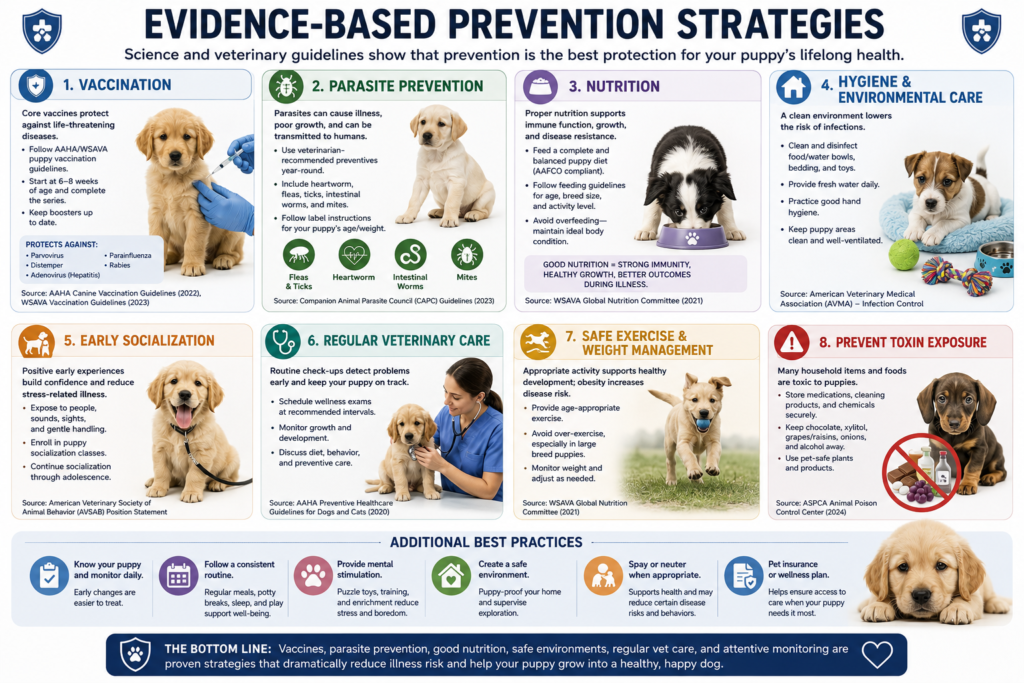
Evidence-Based Prevention Strategies
Vaccination
Vaccination is one of the most effective methods for preventing severe infectious disease.
Core vaccines typically include protection against:
- Parvovirus
- Distemper
- Adenovirus
- Rabies
Parasite Prevention
Routine deworming and fecal testing are critical during puppyhood.
Nutritional Management
Balanced puppy nutrition supports:
- Immune development
- Gastrointestinal health
- Skeletal growth
- Neurologic development
Environmental Safety
Owners should prevent access to:
- Toxic plants
- Household cleaners
- Human medications
- Small swallowable objects
- Electrical cords
- Chocolate
- Xylitol
Routine Veterinary Care
Regular veterinary examinations help identify congenital abnormalities, developmental disorders, and infectious disease early.
Final Thoughts
Puppies often hide illness until disease becomes advanced. Recognizing early warning signs such as lethargy, vomiting, diarrhea, appetite loss, breathing abnormalities, dehydration, or behavioral changes can significantly improve the chances of successful treatment.
Many serious diseases initially appear with vague or mild symptoms before rapidly progressing. Because puppies are physiologically vulnerable and can decline quickly, prompt veterinary evaluation should always be prioritized whenever concerning symptoms develop.
Attentive observation, preventive veterinary care, vaccination, parasite control, and early medical intervention remain the foundation of protecting puppy health.
References
- American Veterinary Medical Association (AVMA). Canine Parvovirus.
- American Veterinary Medical Association (AVMA). Canine Infectious Respiratory Disease Complex (Kennel Cough).
- American Veterinary Medical Association (AVMA). Leptospirosis in Dogs.
- Merck Veterinary Manual. Vomiting in Dogs.
- Merck Veterinary Manual. Canine Parvovirus Infection (Parvoviral Enteritis in Dogs).
- PetMD. Vomiting and Diarrhea in Puppies.
- PetMD. 7 Common Puppy Illnesses and How To Protect Your Pup.
- AKC Pet Insurance. How to Tell if Your Dog Is Sick: Common Symptoms.
- Blue Cross UK. Vomiting and Diarrhoea in Dogs.
- Vets Now. Common Emergencies in Puppies.
- Greene CE, Decaro N. Canine Viral Enteritis. In: Greene’s Infectious Diseases of the Dog and Cat. Elsevier.
- Ettinger SJ, Feldman EC, Côté E. Textbook of Veterinary Internal Medicine. Elsevier.
- Companion Animal Parasite Council (CAPC). Parasite Recommendations for Puppies.
- Ford RB, Mazzaferro EM. Kirk & Bistner’s Handbook of Veterinary Procedures and Emergency Treatment.
- Nelson RW, Couto CG. Small Animal Internal Medicine. Elsevier.