Fresh food toppers have become increasingly popular among pet owners looking to improve palatability, hydration, and nutritional variety in their pets’ diets. When used correctly, toppers can support digestion, skin health, immune function, and overall wellbeing. However, veterinarians and veterinary nutritionists consistently caution that toppers should complement — not unbalance — an already complete and balanced diet.
The safest and most practical approach is to use toppers as a small nutritional enhancement, usually making up no more than 10–20% of daily caloric intake unless the diet has been specifically formulated by a board-certified veterinary nutritionist.
This guide focuses on veterinarian-supported ingredient combinations using evidence-based nutrition principles — not trendy “superfood” recipes or unnecessary exotic ingredients.
What Makes a Good Fresh Food Topper?
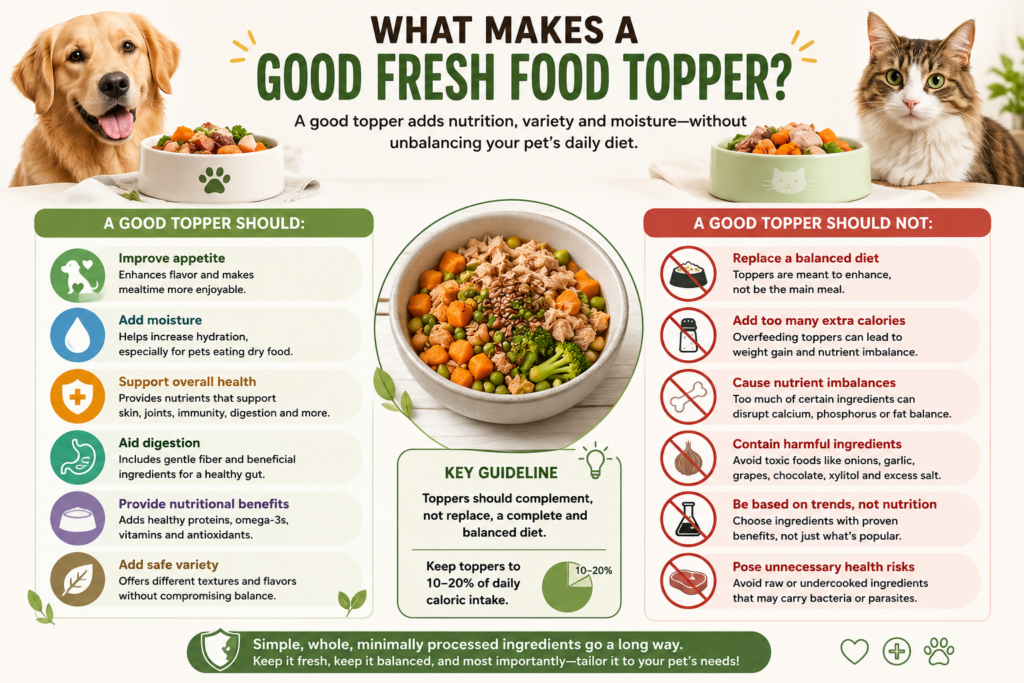
A properly designed topper should provide one or more of the following benefits:
- Improve appetite and meal enjoyment
- Add moisture to dry diets
- Supply beneficial omega-3 fats
- Support digestive health
- Provide antioxidants and phytonutrients
- Increase dietary variety safely
- Support skin, coat, joints, or gut health
A good topper should not:
- Replace a balanced diet entirely
- Contain toxic ingredients
- Excessively increase calories
- Provide dangerous calcium/phosphorus imbalances
- Be overloaded with fat or salt
According to WSAVA and veterinary nutrition guidelines, the foundation of pet nutrition should still come from a complete and balanced diet formulated to established nutritional standards.
The Basic Formula for a Balanced Topper
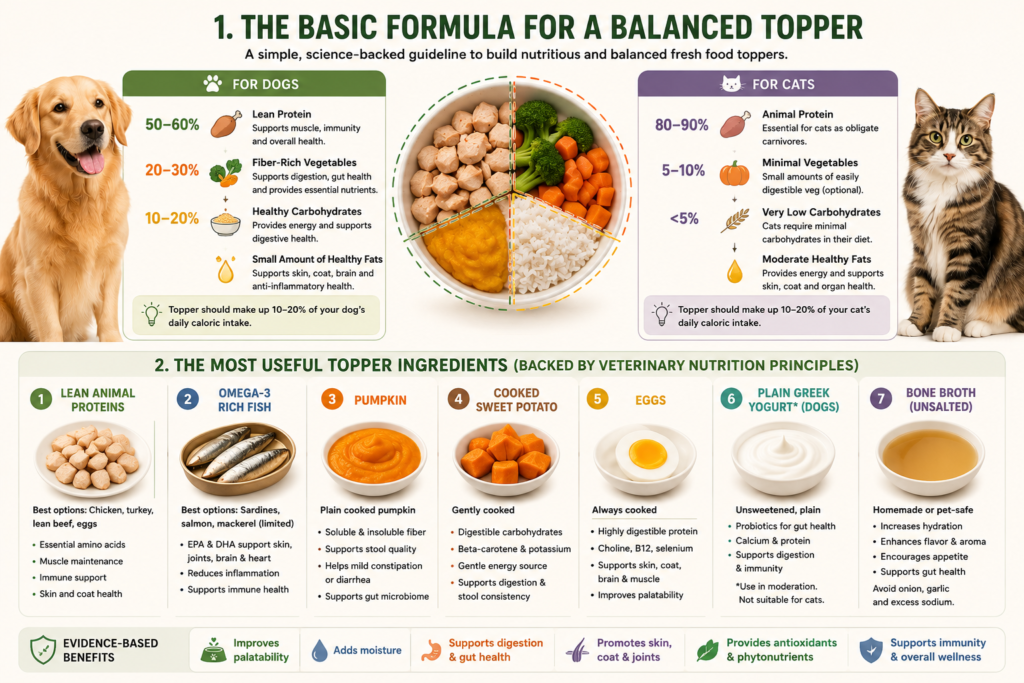
A simple evidence-based topper framework:
For Dogs
- 50–60% lean protein
- 20–30% fiber-rich vegetables
- 10–20% healthy carbohydrates
- Small amount of healthy fats
For Cats
Cats are obligate carnivores, so toppers should be:
- 80–90% animal protein
- Minimal vegetables
- Very low carbohydrates
- Moderate healthy fats
The Most Useful Topper Ingredients (Backed by Veterinary Nutrition Principles)
1. Lean Animal Proteins
Best Options
- Chicken breast
- Turkey
- Lean beef
- Sardines
- Salmon
- Eggs
Nutritional Benefits
Protein supplies:
- Essential amino acids
- Muscle maintenance
- Immune support
- Skin and coat health
Cats especially require high-quality animal protein because they cannot efficiently synthesize certain amino acids like taurine from plant sources.
Best Uses
- Picky eaters
- Senior pets losing muscle mass
- Active dogs
- Cats needing higher moisture intake
2. Omega-3 Rich Fish
Recommended Choices
- Sardines in water
- Salmon
- Mackerel (limited quantities)
Why Veterinarians Recommend It
Marine omega-3 fatty acids (EPA and DHA) help support:
- Skin barrier function
- Reduced inflammation
- Joint health
- Brain and eye health
- Cardiovascular support
These fatty acids are among the most evidence-supported functional nutrients in veterinary medicine.
Important Note
Avoid heavily salted, seasoned, or oil-packed canned fish.
3. Pumpkin
Why Pumpkin Is Commonly Recommended
Plain cooked pumpkin is widely used by veterinarians because it contains:
- Soluble fiber
- Insoluble fiber
- Moisture
- Beta-carotene
Benefits
- Supports stool quality
- Helps mild constipation
- Helps mild diarrhea
- Supports gut microbiome health
Portion Guide
- Small dogs/cats: 1–2 teaspoons
- Medium dogs: 1 tablespoon
- Large dogs: 1–2 tablespoons
Too much fiber can cause loose stools.
4. Cooked Sweet Potato
Nutritional Role
Sweet potato provides:
- Digestible carbohydrates
- Beta-carotene
- Potassium
- Fiber
Benefits
- Gentle energy source
- Supports digestive health
- May improve stool consistency
- Useful for active dogs
Cats generally require far less carbohydrate.
5. Eggs
One of the Most Complete Natural Proteins
Eggs provide:
- Highly bioavailable protein
- Choline
- Vitamin B12
- Selenium
- Healthy fats
Benefits
- Skin and coat support
- Muscle maintenance
- Appetite enhancement
Important
Always cook eggs to reduce bacterial risks and improve digestibility.
6. Plain Greek Yogurt (Dogs Only in Moderation)
Potential Benefits
- Probiotics
- Calcium
- Protein
Best For
- Dogs with mild digestive sensitivity
- Improving palatability
Avoid If
- Lactose intolerant
- Chronic gastrointestinal disease
- Cats (many cats poorly tolerate dairy)
7. Bone Broth (Unsalted)
Why It Helps
Unsalted bone broth:
- Increases hydration
- Improves meal aroma
- Encourages appetite
This is especially useful for:
- Senior pets
- Recovering pets
- Pets eating dry food
Critical Rule
Never use broth containing:
- Onion
- Garlic
- Excess sodium
Both onion and garlic are toxic to dogs and cats.
Evidence-Based Fresh Food Topper Pairings
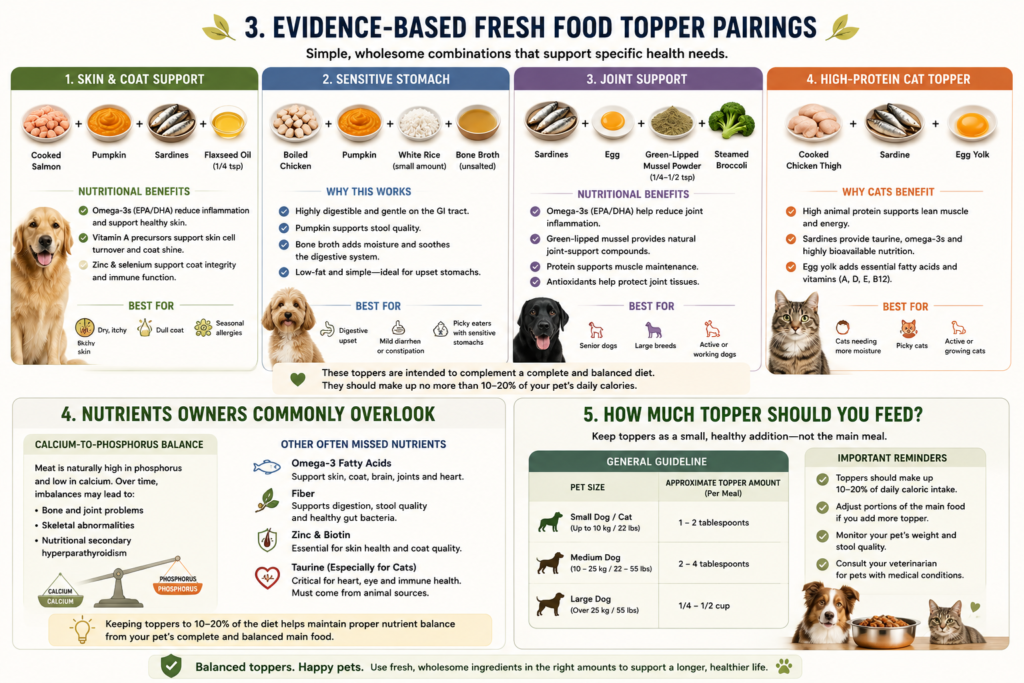
1. Skin & Coat Support Topper
Ingredients
- Cooked salmon
- Pumpkin
- Sardines
- Small amount of flaxseed oil
Nutritional Breakdown
| Nutrient | Function |
|---|---|
| EPA/DHA | Anti-inflammatory skin support |
| Vitamin A precursors | Skin cell turnover |
| Zinc & selenium | Coat integrity |
| Healthy fats | Skin barrier maintenance |
Best For
- Dry skin
- Dull coats
- Seasonal itching
2. Sensitive Stomach Topper
Ingredients
- Boiled chicken breast
- Pumpkin
- White rice (small amount)
- Bone broth
Why This Works
This combination is:
- Highly digestible
- Low-fat
- Gentle on the gastrointestinal tract
Veterinary Use
This style of bland diet is commonly used short-term for mild digestive upset.
Important
Not suitable as a permanent exclusive diet without proper balancing.
3. Joint Support Topper
Ingredients
- Sardines
- Egg
- Green-lipped mussel powder
- Steamed broccoli
Nutritional Benefits
| Ingredient | Key Benefit |
|---|---|
| Sardines | Omega-3 EPA/DHA |
| Egg | Protein for muscle support |
| Green-lipped mussel | Joint-support compounds |
| Broccoli | Antioxidants |
Best For
- Senior dogs
- Large breeds
- Active dogs
4. High-Protein Cat Topper
Ingredients
- Cooked chicken thigh
- Sardine
- Egg yolk
Why Cats Benefit
Cats require:
- High animal protein
- Taurine-rich ingredients
- Higher moisture intake
Nutritional Benefits
| Nutrient | Role |
|---|---|
| Taurine | Heart and eye health |
| Protein | Muscle maintenance |
| Animal fats | Energy source |
| Moisture | Urinary health support |
Nutrients Owners Commonly Overlook
Calcium-to-Phosphorus Balance
One of the biggest problems with homemade feeding is improper calcium balance. Meat alone is naturally high in phosphorus and low in calcium. Over time, imbalance can contribute to:
- Bone disease
- Skeletal abnormalities
- Nutritional secondary hyperparathyroidism
Veterinary nutritionists repeatedly warn that homemade diets without proper balancing are often nutritionally incomplete.
If the topper remains under 10–20% of the total diet, this risk is much lower.
How Much Topper Should You Feed?
General Guideline
| Pet Size | Approximate Topper Amount |
|---|---|
| Small dog/cat | 1–2 tablespoons |
| Medium dog | 2–4 tablespoons |
| Large dog | 1/4–1/2 cup |
Fresh toppers should generally remain:
- Around 10% of calories for fully balanced commercial diets
- Up to 20% occasionally in healthy pets
Too much topper may dilute essential nutrients from the main diet.
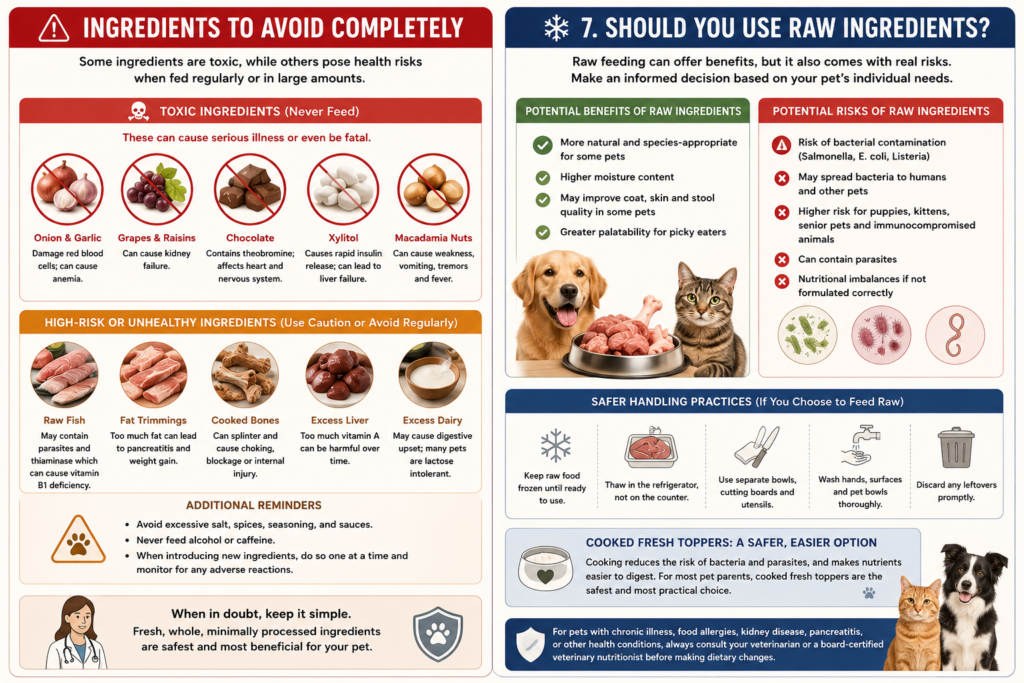
Ingredients to Avoid Completely
Toxic Ingredients
Never include:
- Onion
- Garlic
- Grapes
- Raisins
- Chocolate
- Xylitol
- Macadamia nuts
- Alcohol
- Excess salt
High-Risk Ingredients
Use caution with:
- Excess liver
- Raw fish
- Fat trimmings
- Cooked bones
- Excess dairy
Should You Use Raw Ingredients?
Most veterinary organizations advise caution with raw feeding due to risks of:
- Salmonella
- E. coli
- Listeria contamination
This is especially important for:
- Puppies/kittens
- Senior pets
- Immunocompromised animals
- Households with young children or elderly individuals
Cooked fresh toppers are generally safer and easier to digest.
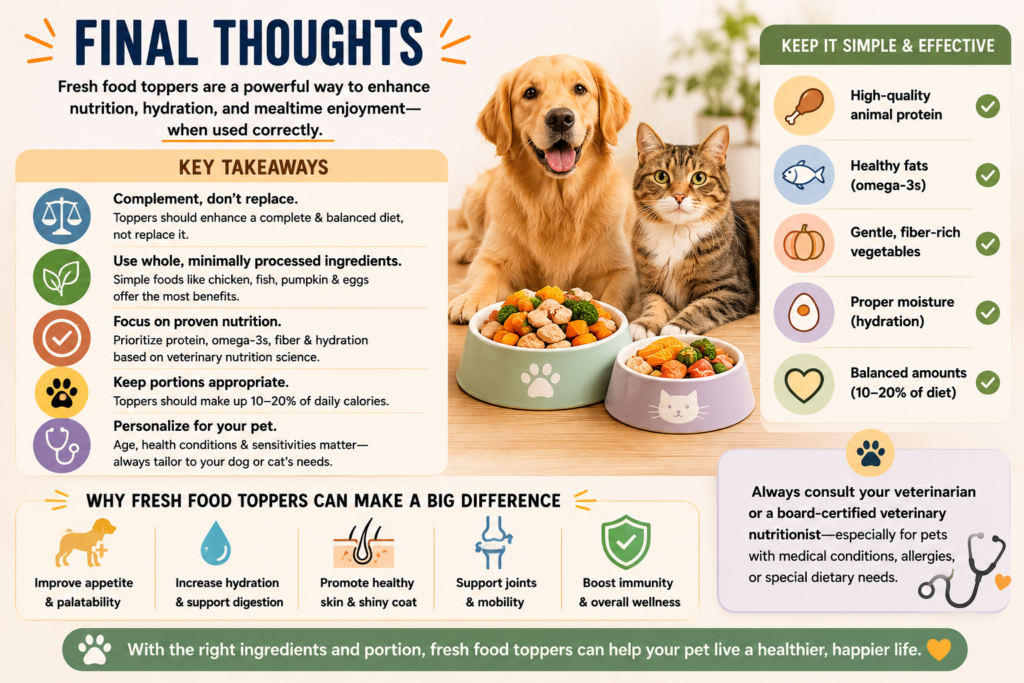
Final Thoughts
Fresh food toppers can be a healthy addition when used thoughtfully and conservatively. The best toppers are not trendy or exotic — they are nutritionally sensible, digestible, and evidence-based.
Veterinary nutrition principles consistently prioritize:
- High-quality animal protein
- Appropriate omega-3 fats
- Digestible fiber
- Proper nutrient balance
- Portion control
Simple ingredients like cooked chicken, sardines, pumpkin, eggs, and sweet potato often provide far more benefit than complicated “superfood” recipes marketed online.
For pets with chronic disease, allergies, kidney disease, pancreatitis, urinary conditions, or gastrointestinal disorders, topper recipes should always be reviewed by a veterinarian or board-certified veterinary nutritionist before long-term use.