What Veterinary Science and Medical Research Actually Show
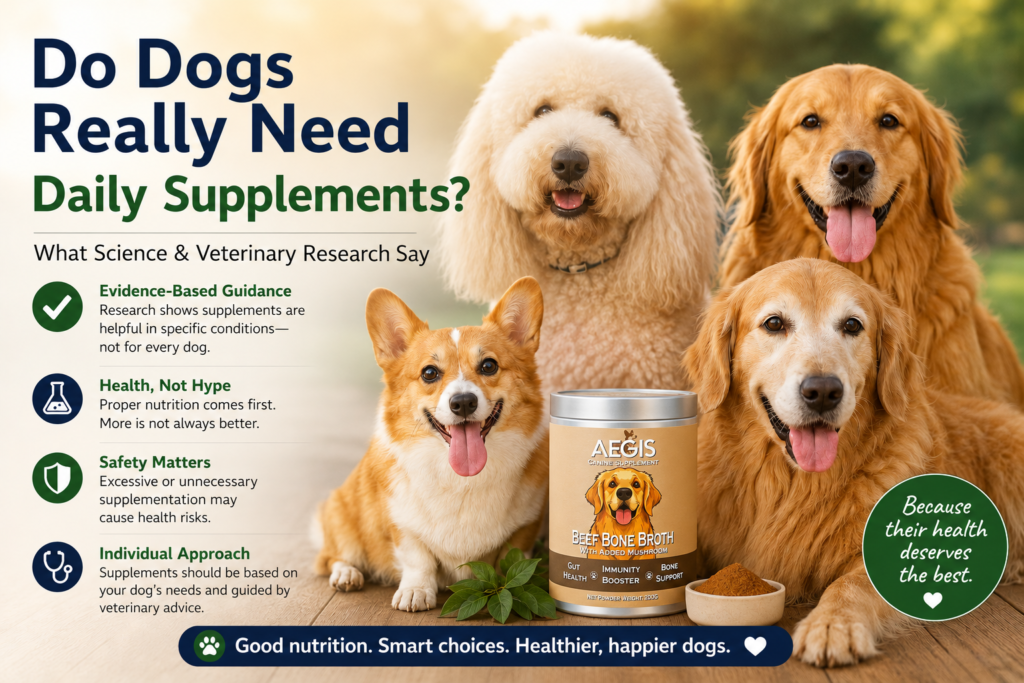
The pet supplement industry has grown rapidly in recent years, with products marketed for joint health, immunity, digestion, skin condition, heart support, and overall wellness. While certain supplements may provide benefits in specific medical situations, a widespread misconception has developed that all dogs require supplements every day to remain healthy.
Current veterinary science does not support this claim.
Research consistently shows that many healthy dogs consuming a properly formulated, complete, and balanced diet already receive the nutrients required for normal physiological function. In these cases, routine supplementation is often unnecessary and, in some situations, excessive supplementation may even pose health risks.
This article reviews the current scientific evidence surrounding canine supplementation, including when supplements may be beneficial, when they are unnecessary, and why proper nutrition remains the foundation of canine health.
What Is a “Complete and Balanced” Diet?
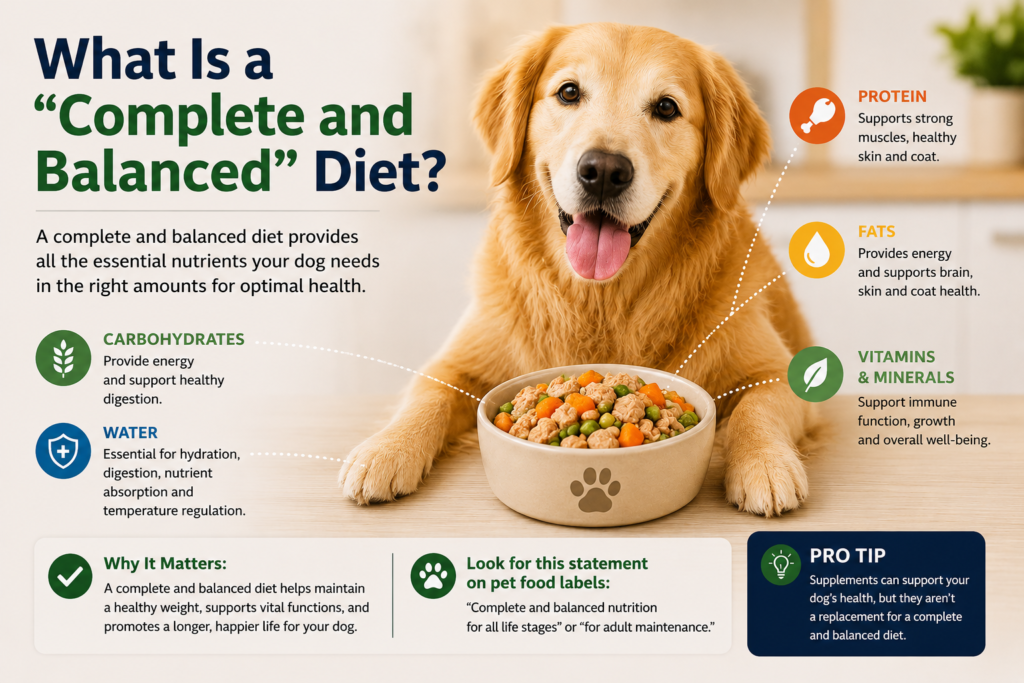
A “complete and balanced” dog food is formulated to provide all essential nutrients required for a dog’s life stage in appropriate amounts.
In the United States, these nutritional standards are primarily guided by the Association of American Feed Control Officials (AAFCO). To carry a “complete and balanced” claim, pet food must either:
- meet established nutrient profiles,
- or successfully pass feeding trials demonstrating nutritional adequacy.
The United States Food and Drug Administration (FDA) explains that complete and balanced diets are intended to provide all required nutrients when fed as the dog’s sole diet.
Similarly, the European Pet Food Industry Federation (FEDIAF) states that:
“A complete and balanced diet is essential for the health and well-being of dogs and cats.”
These diets are carefully formulated to include:
- protein and essential amino acids,
- fats and fatty acids,
- vitamins,
- minerals,
- carbohydrates,
- and energy requirements necessary for normal body function.
Because of this, healthy dogs eating nutritionally adequate commercial diets generally do not require additional vitamin or mineral supplementation unless a specific medical or nutritional indication exists.
What Peer-Reviewed Research Says About Routine Supplementation
A comprehensive veterinary review published in the National Institutes of Health’s PubMed Central database examined the role of pet supplements and nutraceuticals in dogs and cats. The review concluded that while supplements may have therapeutic applications, evidence supporting universal supplementation in healthy animals is limited and highly variable.
The review also emphasized several important concerns:
- inconsistent scientific evidence,
- lack of standardized regulation,
- variable product quality,
- and inconsistent ingredient concentrations between products.
Importantly, the review did not support the idea that all healthy dogs require routine supplementation.

Why More Supplements Are Not Always Better
One of the most common misconceptions in pet nutrition is that “more nutrients” automatically result in better health.
In reality, nutrition science demonstrates that excessive intake of certain nutrients may disrupt physiological balance and potentially cause harm.
Fat-soluble vitamins — including vitamins A, D, E, and K — are stored in body tissues and are not easily excreted. Excessive supplementation can therefore contribute to nutrient accumulation and toxicity over time.
Veterinary nutrition literature has documented several risks associated with over-supplementation, including:
- excessive calcium contributing to developmental orthopedic disease in large-breed puppies,
- vitamin D toxicity causing dangerous calcium imbalances,
- excessive vitamin A affecting bone and joint health,
- and mineral imbalances interfering with nutrient absorption.
For this reason, veterinary nutritionists generally recommend avoiding unnecessary supplementation in healthy dogs unless there is a medically justified need.
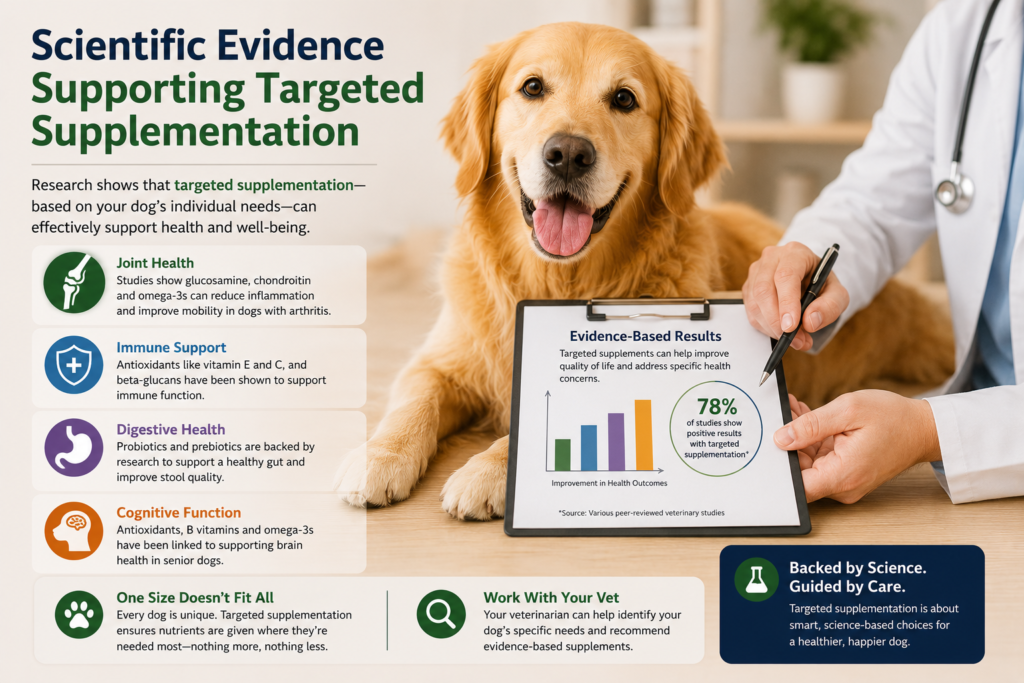
Scientific Evidence Supporting Targeted Supplementation
Although routine supplementation is not universally necessary, research does support the use of certain supplements in specific clinical situations.
1. Joint Health and Osteoarthritis
One of the strongest evidence-based uses of supplements in dogs involves osteoarthritis and mobility support.
Studies have investigated:
- glucosamine,
- chondroitin sulfate,
- omega-3 fatty acids (EPA and DHA),
- and green-lipped mussel extracts.
Omega-3 fatty acids, particularly EPA and DHA from marine sources, have demonstrated anti-inflammatory properties that may help support joint comfort and mobility in arthritic dogs.
However, these supplements are generally used therapeutically for dogs with diagnosed joint disease to help alleviate the condition rather than as mandatory daily supplements for all healthy dogs.
2. Digestive and Gastrointestinal Support
Certain probiotic strains have demonstrated benefits for gastrointestinal health.
Research suggests probiotics may help:
- support intestinal microbial balance,
- reduce some forms of diarrhea,
- improve stool quality,
- and assist recovery following antibiotic treatment.
Importantly, probiotic effects are strain-specific. Not all probiotic supplements provide the same outcomes, and benefits depend on the formulation and clinical indication.
3. Skin and Coat Support
Omega-3 fatty acids have also shown benefits in dermatological health.
Veterinary studies suggest EPA and DHA may:
- support skin barrier integrity,
- reduce inflammatory skin responses,
- improve coat condition,
- and assist dogs with allergic skin disease.
Again, these are targeted therapeutic applications rather than evidence that every dog requires daily supplementation.
4. Senior Dogs
As dogs age, physiological changes may affect nutritional needs and metabolism.
Senior dogs may experience:
- reduced mobility,
- cognitive aging,
- altered digestion,
- or increased oxidative stress.
Some evidence suggests antioxidants and omega-3 fatty acids may support healthy aging in certain dogs. However, supplementation should still be individualized based on the dog’s health condition, diet quality, and veterinary assessment rather than automatically prescribed to all senior pets.
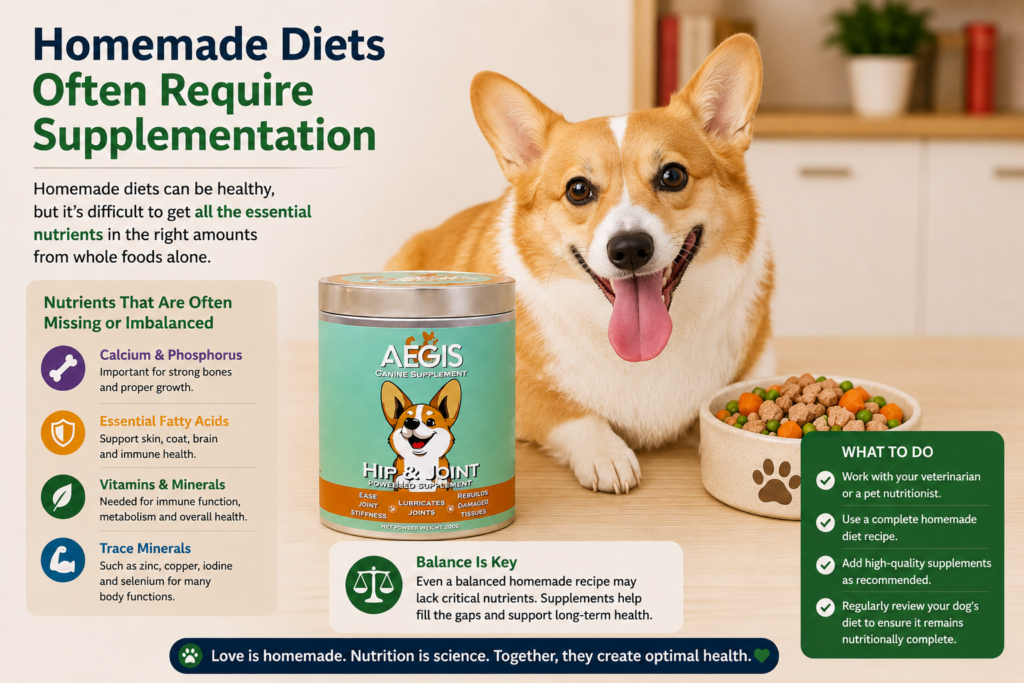
Homemade Diets Often Require Supplementation
One of the clearest scientifically supported indications for supplementation involves home-prepared diets.
Multiple veterinary studies have shown that homemade diets frequently fail to provide adequate levels of essential nutrients when not formulated by veterinary nutrition professionals.
Common deficiencies identified in improperly balanced homemade diets include:
- calcium,
- zinc,
- copper,
- vitamin D,
- essential fatty acids,
- and certain amino acids.
Veterinary literature emphasizes that home-prepared diets should ideally be formulated with professional nutritional guidance to avoid deficiencies and imbalances.
Research Shows Properly Balanced Diets Can Sustain Health Without Additional Supplementation
Emerging research further supports the principle that dogs can maintain health when consuming nutritionally complete diets.
A 2024 peer-reviewed study published in PLOS ONE evaluated clinically healthy dogs fed a commercially formulated complete and balanced plant-based diet for twelve months. Researchers monitored:
- blood work,
- amino acid levels,
- vitamin concentrations,
- cardiac biomarkers,
- and overall clinical health.
The study found that dogs maintained normal clinical, nutritional, and hematological health outcomes throughout the study period.
While the study focused specifically on plant-based nutrition, its findings reinforce an important nutritional principle:
properly formulated complete and balanced diets can provide adequate nutrition without requiring routine additional supplementation.
Quality Control Concerns in Pet Supplements
Another important issue highlighted in veterinary research is supplement quality control.
Unlike prescription medications, pet supplements are not regulated with the same degree of oversight in many countries. Research reviews have identified concerns including:
- inaccurate ingredient labeling,
- inconsistent potency,
- contamination risks,
- and product variability between manufacturers.
This means that even when supplementation is appropriate, product quality and formulation remain critically important.
Veterinary professionals commonly recommend choosing products from manufacturers that:
- perform third-party testing,
- maintain transparent quality standards,
- and provide evidence-based formulations.
What Pet Owners Should Understand
Current veterinary nutrition science supports an individualized, evidence-based approach to supplementation.
The scientific evidence does not support the statement:
“All dogs need supplements daily.”
Instead, research indicates:
- healthy dogs consuming complete and balanced diets may not require additional supplementation,
- supplements may be beneficial in targeted medical or nutritional situations,
- and excessive or inappropriate supplementation can potentially create health risks.
The decision to supplement should depend on:
- age,
- diet quality,
- medical history,
- lifestyle,
- breed predispositions,
- and veterinary evaluation.
Final Takeaway
Supplements are not replacements for proper nutrition. They are targeted nutritional tools designed to support specific physiological or medical needs when scientifically justified.
For healthy dogs consuming nutritionally complete and balanced diets, routine daily supplementation is often unnecessary. However, carefully selected supplements may provide meaningful benefits for dogs with:
- osteoarthritis,
- skin disease,
- gastrointestinal disorders,
- nutritional deficiencies,
- age-related conditions,
- or specialized dietary requirements.
The most scientifically supported approach is not universal supplementation, but individualized nutritional care guided by evidence, diet quality, and veterinary assessment.
References
- Finno CJ, et al. Veterinary Pet Supplements and Nutraceuticals. Frontiers in Veterinary Science. 2020.
- FDA. “Complete and Balanced” Pet Food. United States Food and Drug Administration.
- FEDIAF Nutritional Guidelines for Complete and Complementary Pet Food for Cats and Dogs. 2024 Edition.
- Linde A, et al. Domestic dogs maintain clinical, nutritional, and hematological health outcomes when fed a commercial plant-based diet for a year. PLOS ONE. 2024.
- Ionică CN, et al. Home-prepared dog food: benefits and downsides. Frontiers in Animal Science. 2025.
- VCA Animal Hospitals. Nutrition – General Feeding Guidelines for Dogs.
- Veterinary Information Network (VIN). Diet & Nutrition.