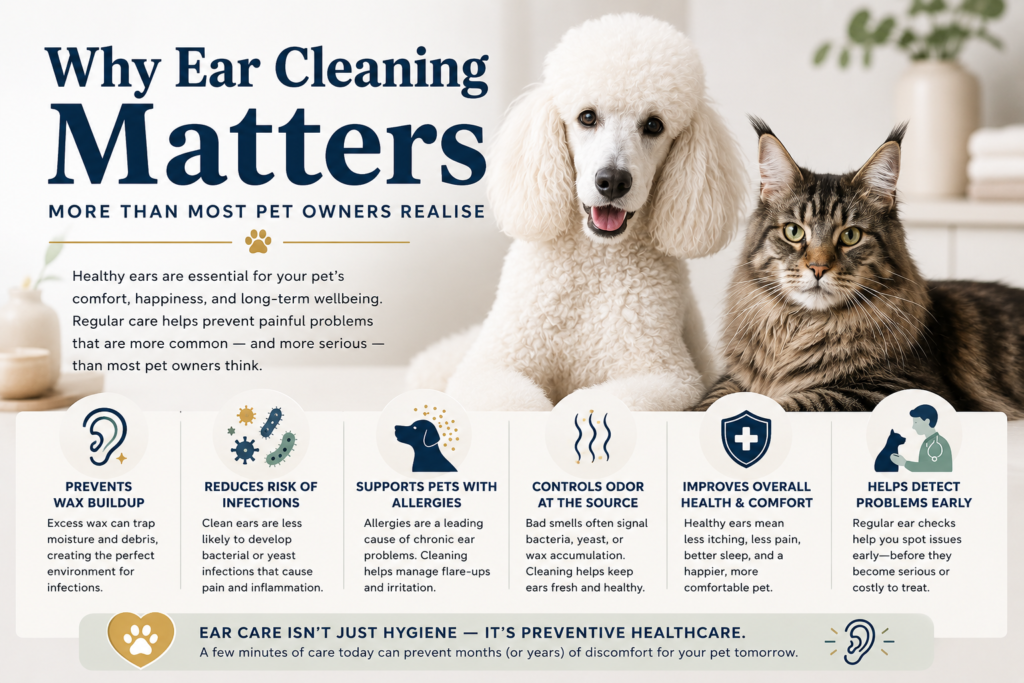
Ear health is one of the most overlooked aspects of companion animal care, yet chronic ear disease is among the most common reasons dogs and cats are brought to veterinary clinics worldwide. While many owners only notice a problem once there is a strong odor, redness, or visible discharge, veterinary research shows that ear disease often develops gradually beneath the surface long before obvious symptoms appear.
For pets, especially dogs, healthy ears rely on a delicate balance of skin integrity, natural wax production, airflow, and microbial stability. When this balance is disrupted — by allergies, moisture, wax accumulation, parasites, or inappropriate cleaning practices — inflammation can rapidly progress into infection and chronic disease. In severe cases, untreated ear problems may lead to permanent canal thickening, hearing impairment, middle ear disease, chronic pain, and even surgery.
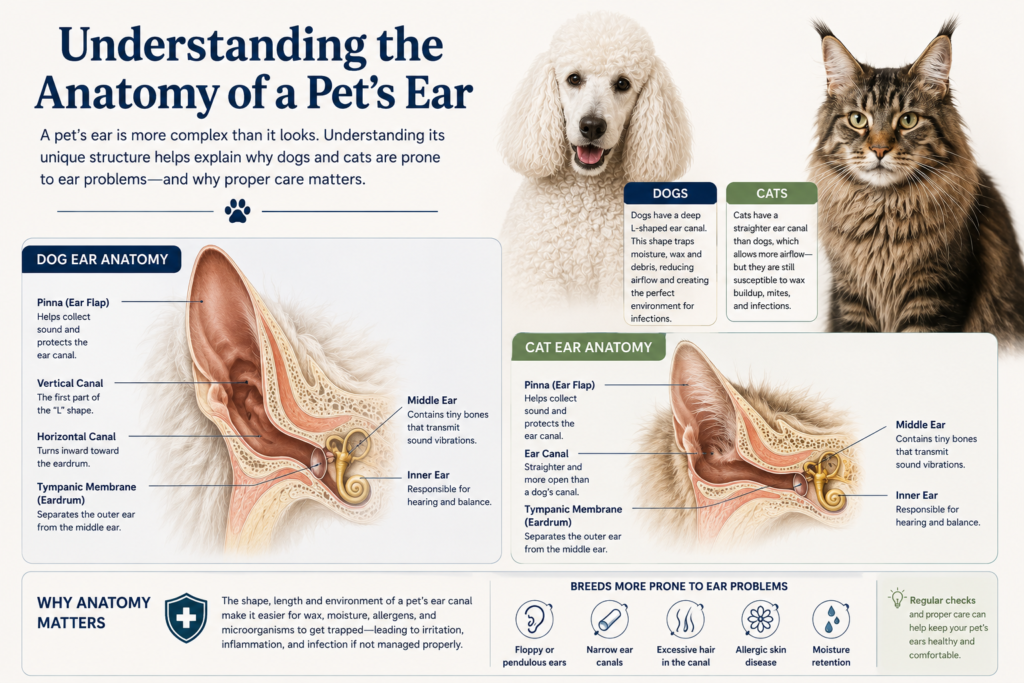
Understanding the Anatomy of a Pet’s Ear
Before understanding why cleaning matters, it helps to understand why pets are naturally prone to ear problems.
Unlike humans, dogs possess a deep L-shaped ear canal. This anatomical structure traps moisture, wax, debris, and microorganisms more easily. Cats have somewhat straighter ear canals, but they are still susceptible to wax accumulation, mites, and infections.
Certain breeds are especially predisposed to ear disease due to:
- Pendulous or floppy ears that reduce airflow
- Narrow ear canals
- Excessive hair within the ear canal
- Underlying allergic skin disease
- Increased moisture retention after swimming or grooming
Breeds frequently associated with chronic ear disease include:
- Cocker Spaniels
- Labrador Retrievers
- Golden Retrievers
- Basset Hounds
- Poodles
- Shar Peis
Veterinary dermatology literature consistently identifies allergic skin disease as one of the leading underlying causes of recurrent otitis externa in dogs.
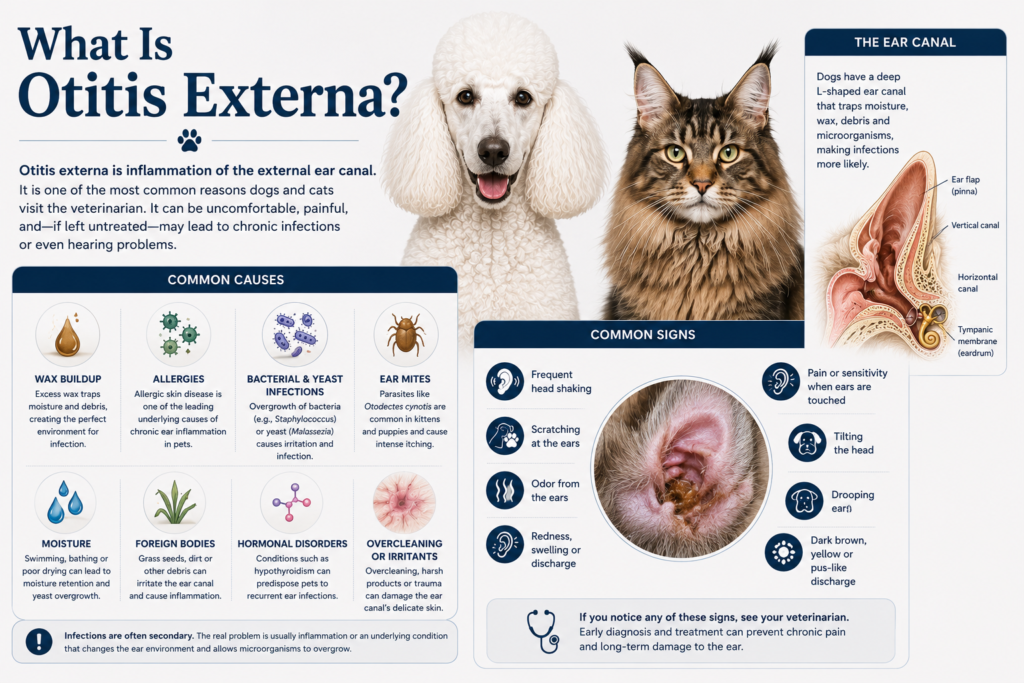
What Is Otitis Externa?
Otitis externa refers to inflammation of the external ear canal. It is one of the most prevalent dermatological conditions seen in veterinary medicine.
Common causes include:
- Wax buildup
- Allergies
- Bacterial infections
- Yeast overgrowth
- Ear mites
- Moisture retention
- Foreign bodies (grass seeds, debris)
- Hormonal disorders
- Poor grooming practices
Importantly, infections are often secondary problems. The underlying trigger is commonly inflammation or allergy that changes the ear environment and allows microorganisms to proliferate.
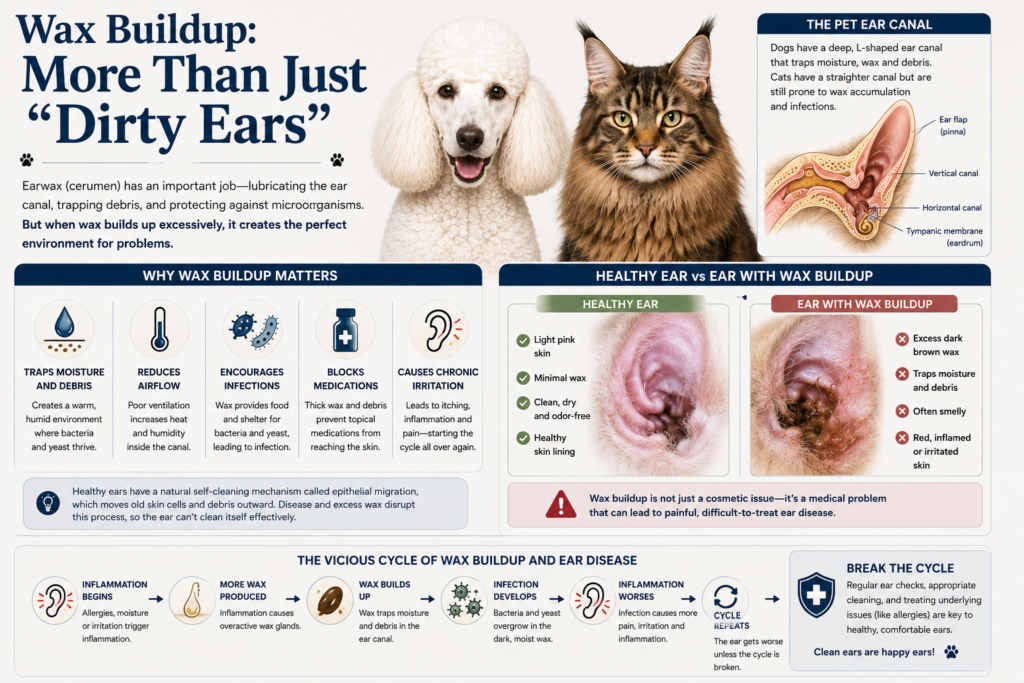
Wax Buildup: More Than Just “Dirty Ears”
Earwax (cerumen) serves an important biological purpose. It lubricates the ear canal, traps debris, and helps protect against microorganisms. However, excessive wax accumulation can become problematic.
Veterinary studies note that wax buildup:
- Traps heat and moisture
- Reduces ventilation
- Encourages bacterial and yeast overgrowth
- Prevents medications from reaching infected tissue
- Creates chronic irritation within the canal
When wax accumulates excessively, it can behave almost like a foreign body inside the ear.
Healthy ears possess a natural self-cleaning mechanism called epithelial migration, where skin cells slowly move outward from the eardrum to remove debris naturally. In diseased ears, this mechanism becomes impaired.
This explains why chronic ear disease often becomes cyclical:
- Inflammation increases wax production
- Wax traps microorganisms
- Infection worsens inflammation
- More debris accumulates
- The ear environment deteriorates further
Without proper management, the condition can become progressively more difficult to treat.
The Link Between Allergies and Ear Disease
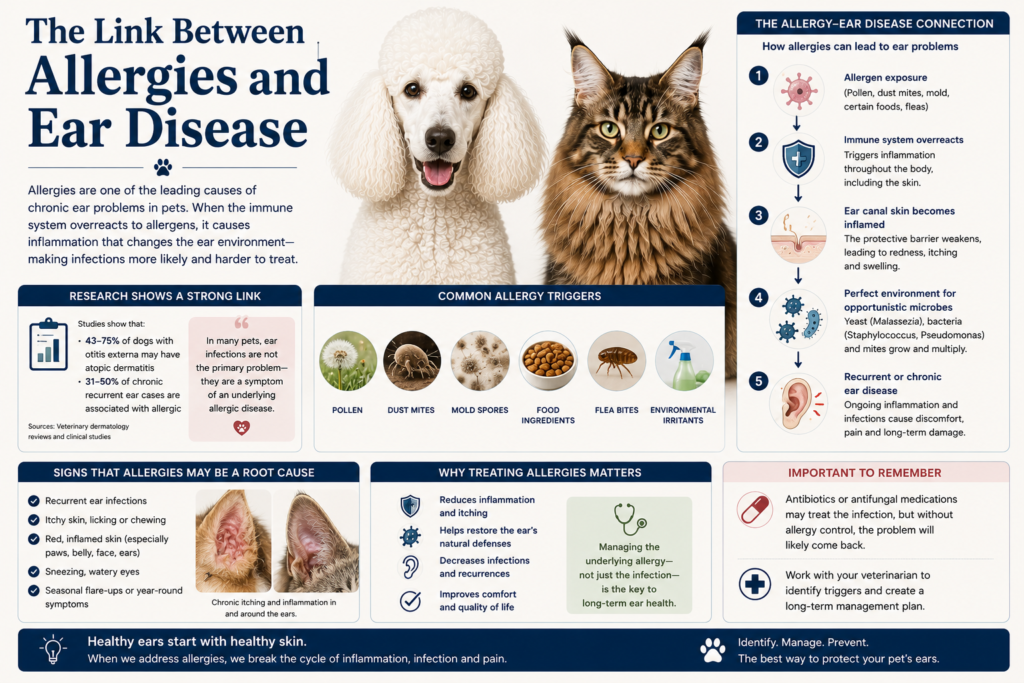
One of the most important findings in modern veterinary dermatology is the strong connection between allergies and chronic ear disease.
Research cited in veterinary reviews suggests:
- 43–75% of dogs with otitis externa may have atopic dermatitis
- 31–50% of chronic recurrent ear cases are associated with allergic disease
Allergic inflammation weakens the skin barrier inside the ear canal. This allows opportunistic organisms such as:
- Malassezia yeast
- Staphylococcus bacteria
- Pseudomonas bacteria
to overgrow more easily.
In many pets, recurrent ear infections are not simply “ear problems” — they are manifestations of underlying systemic allergic disease.
This is why repeated antibiotic treatment alone often fails. Unless the allergy itself is controlled, infections frequently recur.
Odor Is Usually a Sign of Disease
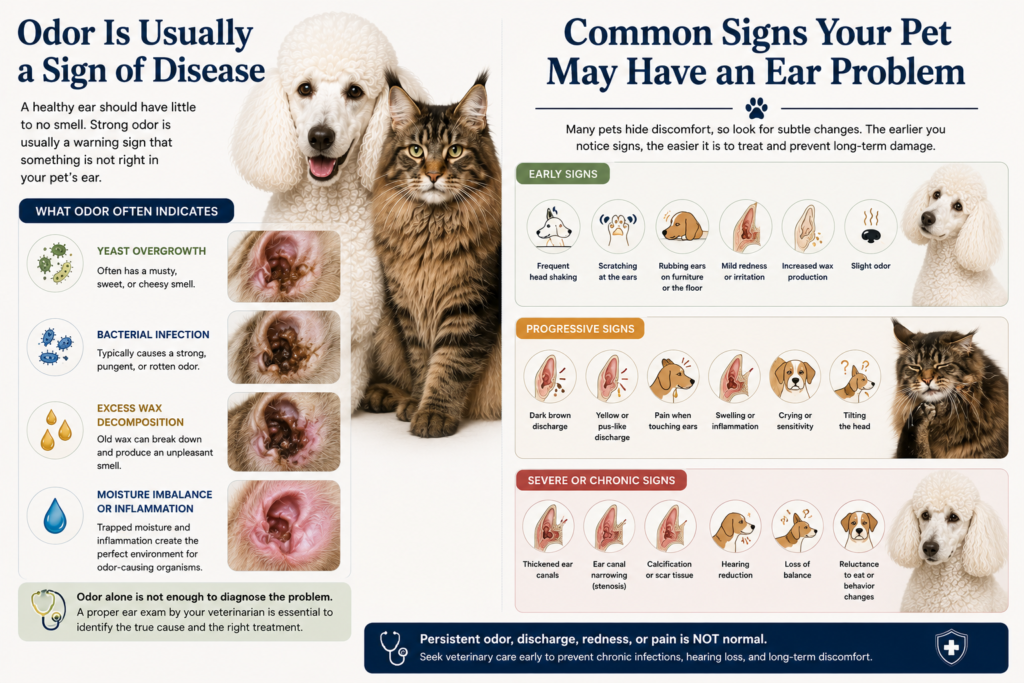
A healthy ear should have little to no smell.
Strong odor commonly indicates:
- Yeast overgrowth
- Bacterial infection
- Excess wax decomposition
- Moisture imbalance
- Chronic inflammation
Different organisms can produce characteristic odors:
- Yeast infections are often described as sweet or musty
- Bacterial infections may smell pungent or rotten
Veterinarians often use odor as an important clinical clue during diagnosis.
However, odor alone should never be used to self-diagnose. Proper veterinary examination with otoscopy and cytology is required to identify the true cause.
Common Signs Your Pet May Have an Ear Problem
Many pets hide discomfort surprisingly well. Owners should monitor for subtle behavioral and physical changes.
Early Signs
- Frequent head shaking
- Ear scratching
- Rubbing ears on furniture
- Mild redness
- Increased wax production
- Slight odor
Progressive Signs
- Dark brown discharge
- Yellow or pus-like discharge
- Pain when touching ears
- Swelling
- Crying or sensitivity
- Tilting the head
Severe or Chronic Signs
- Thickened ear canals
- Hearing reduction
- Loss of balance
- Reluctance to eat
- Personality changes due to chronic pain
Veterinary surgeons report that chronic untreated cases may eventually require advanced surgical intervention such as total ear canal ablation.
Why Proper Ear Cleaning Matters
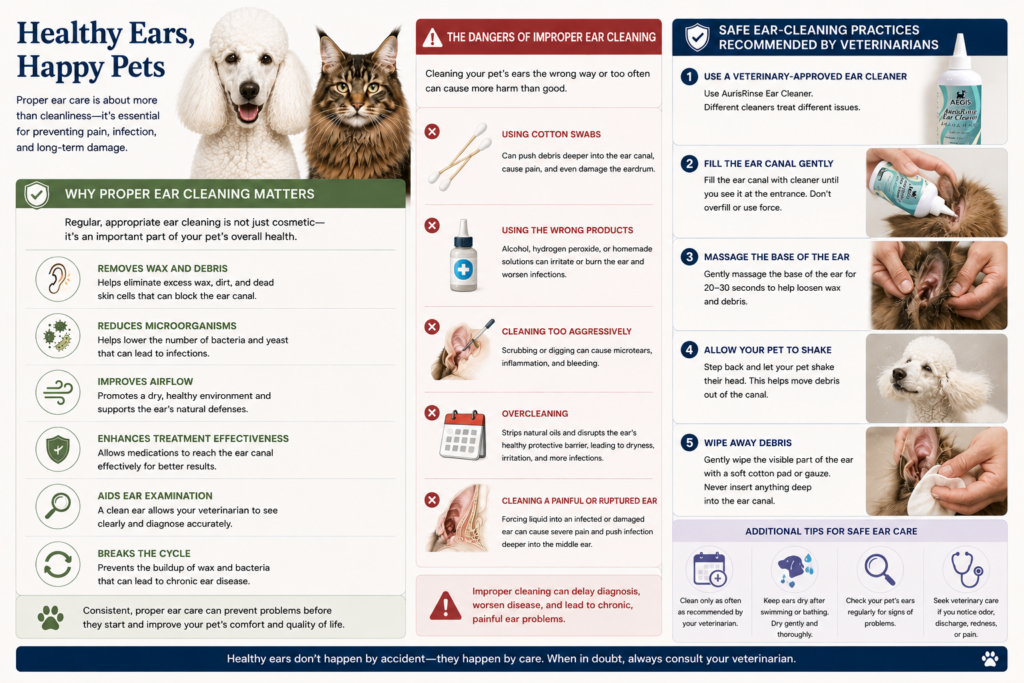
Research consistently shows that ear cleaning is not merely cosmetic — it is medically important.
Appropriate ear cleaning helps:
- Remove wax and debris
- Reduce microbial load
- Improve airflow
- Restore normal ear pH
- Enhance effectiveness of medications
- Break down bacterial biofilms
- Allow better visualization during examination
A 2024 veterinary dermatology study evaluating treatment outcomes found that ear cleaning improved results in dogs with rod-shaped bacterial infections.
Cleaning is especially critical because topical medications may become ineffective if thick wax or discharge blocks contact with the ear canal lining
The Dangers of Improper Ear Cleaning
While ear cleaning is important, overcleaning or incorrect cleaning can worsen disease.
Veterinary literature identifies overcleaning itself as a contributing factor in otitis externa.
Common mistakes include:
- Using cotton swabs deep inside the canal
- Using alcohol-based products excessively
- Cleaning too aggressively
- Using homemade solutions without veterinary guidance
- Forcing fluid into painful or ruptured ears
Cotton swabs are particularly problematic because they often push debris deeper into the canal rather than removing it safely.
Improper cleaning may also:
- Damage delicate ear tissue
- Increase inflammation
- Disrupt healthy microbiota
- Delay accurate diagnosis
Safe Ear-Cleaning Practices Recommended by Veterinarians
1. Use a Veterinary-Approved Ear Cleaner
Not all cleaners are suitable for every condition.
Different formulations may include:
- Drying agents
- Ceruminolytics (wax dissolvers)
- Antimicrobial ingredients
- Acidifying agents
The wrong cleaner can worsen certain infections or irritate inflamed tissue.
2. Never Insert Cotton Buds Deep Into the Ear
Only clean areas you can safely see.
Deep insertion risks:
- Pushing debris further inward
- Traumatizing the canal
- Damaging the eardrum
3. Fill the Canal Gently
Veterinary cleaning recommendations generally involve:
- Filling the ear canal with cleaner
- Gently massaging the base of the ear
- Allowing the pet to shake its head
- Wiping away loosened debris with gauze or cotton
4. Avoid Overcleaning
Healthy ears do not necessarily require frequent cleaning.
Excessive cleaning can:
- Strip protective oils
- Irritate skin
- Promote inflammation
Frequency should depend on:
- Breed
- Medical history
- Swimming habits
- Allergy status
- Veterinary recommendations
5. Seek Veterinary Attention Early
Persistent odor, redness, discharge, or pain should always be evaluated professionally.
Veterinarians may perform:
- Otoscopic examination
- Cytology
- Culture and sensitivity testing
- Imaging in severe chronic cases
Ear Mites: A Common Cause in Younger Pets
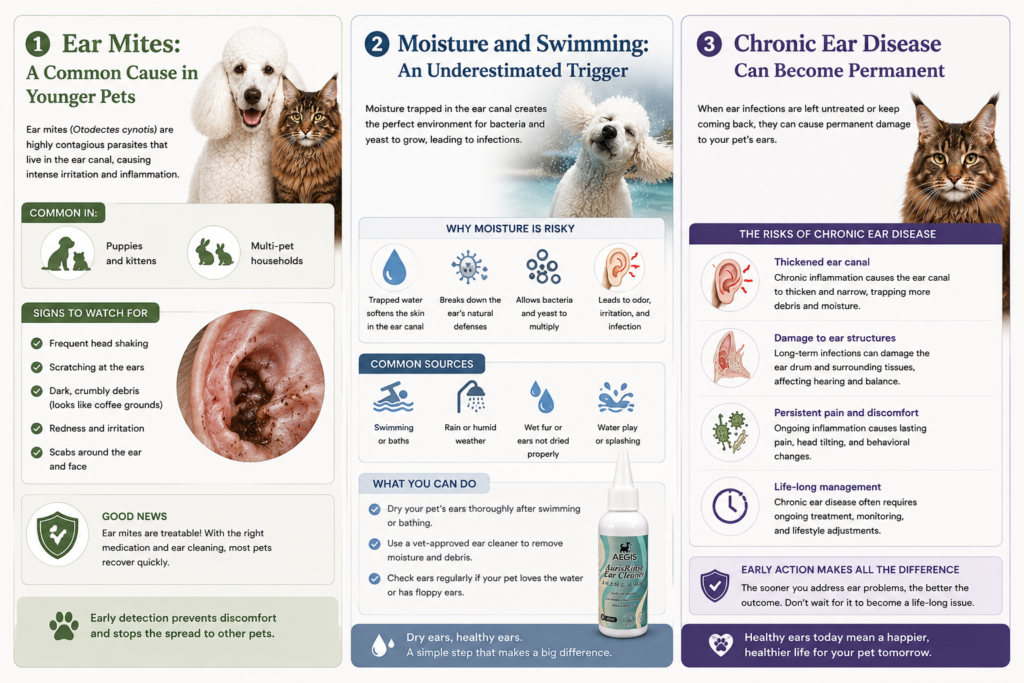
Ear mites remain a major cause of ear irritation, especially in kittens and puppies.
Otodectes cynotis is responsible for the majority of feline ear mite infestations.
Signs commonly include:
- Intense itching
- Dark coffee-ground discharge
- Head shaking
- Ear scratching
Because mites are highly contagious between animals, early treatment is important.
Moisture and Swimming: An Underestimated Trigger
Moisture retention significantly alters the ear environment.
Dogs that swim frequently or are bathed often may develop:
- Increased humidity within the canal
- Maceration of skin
- Yeast overgrowth
- Secondary bacterial infections
This is particularly problematic in breeds with floppy ears where airflow is already limited.
For water-loving breeds, preventive drying and veterinary-approved maintenance cleaning may help reduce recurrence.
Chronic Ear Disease Can Become Permanent
One of the most concerning aspects of chronic otitis is that prolonged inflammation physically changes the ear canal over time.
Veterinary findings describe:
- Tissue hyperplasia
- Canal narrowing (stenosis)
- Mineralization
- Scar formation
- Thickening of canal walls
Once severe mineralization develops, these changes may become irreversible.
This is why early management matters enormously.
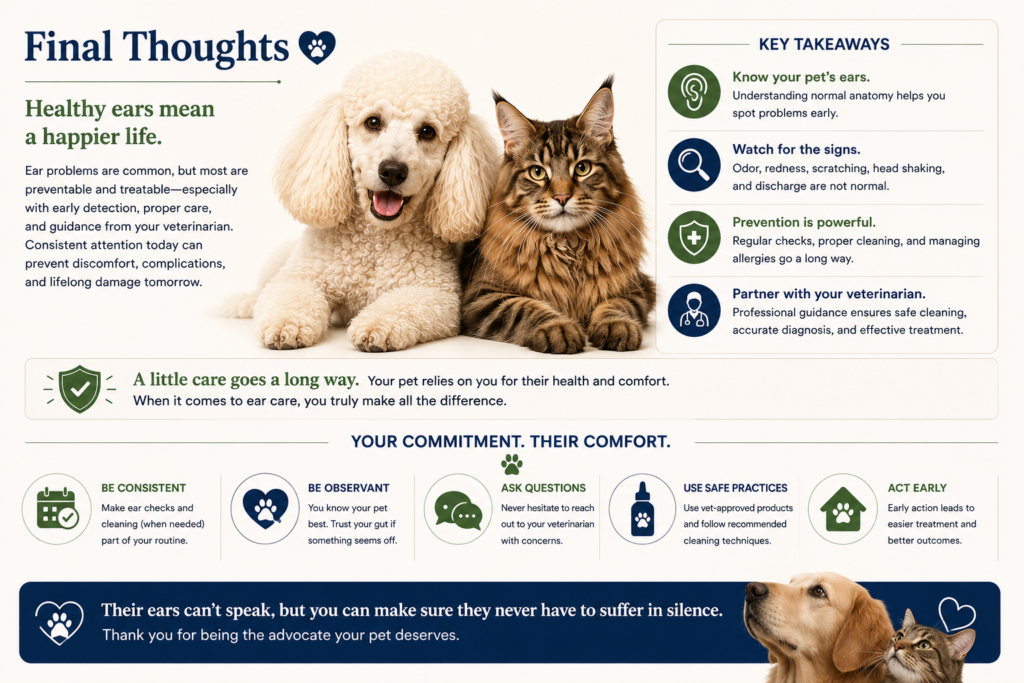
Final Thoughts
Ear disease is far more than a hygiene issue. It is a medical condition deeply connected to skin health, allergies, microbiome balance, anatomy, and long-term quality of life.
Routine observation, appropriate cleaning, and early veterinary intervention can significantly reduce the risk of chronic pain and irreversible ear damage. Importantly, healthy ear care is not about cleaning more aggressively — it is about maintaining the delicate balance of the ear environment safely and consistently.
Modern veterinary research increasingly supports a proactive approach:
- Identify underlying causes early
- Manage allergies properly
- Use evidence-based cleaning practices
- Avoid overcleaning
- Monitor for subtle warning signs before severe disease develops
When managed correctly, ear care becomes one of the simplest yet most impactful ways pet owners can support long-term comfort and health for their companions.