Chronic diarrhea is one of the most common gastrointestinal complaints seen in small animal veterinary medicine. In both dogs and cats, diarrhea lasting longer than three weeks is generally considered chronic and warrants thorough investigation because it may reflect anything from dietary intolerance to inflammatory bowel disease, endocrine disease, intestinal cancer, or severe malabsorption disorders.
Unlike acute diarrhea, which is often self-limiting, chronic diarrhea frequently indicates ongoing intestinal inflammation, digestive dysfunction, immune dysregulation, or systemic disease. Proper diagnosis is important because treatment varies dramatically depending on the underlying cause.
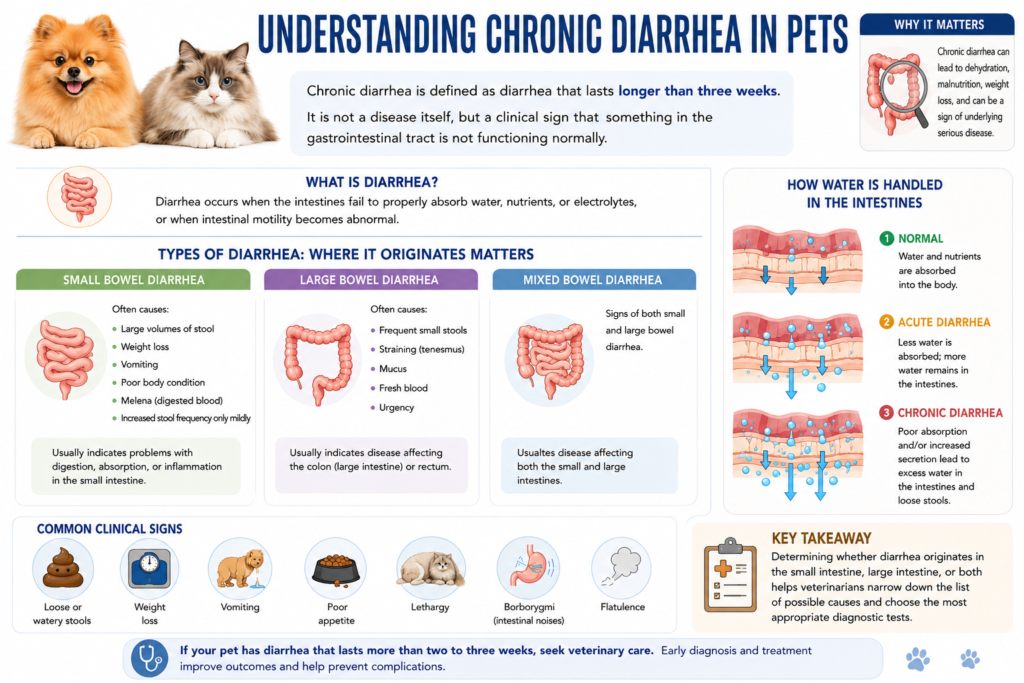
Understanding Chronic Diarrhea in Pets
Diarrhea occurs when the intestines fail to properly absorb water, nutrients, or electrolytes, or when intestinal motility becomes abnormal.
Veterinarians commonly classify diarrhea as:
- Small bowel diarrhea
- Large bowel diarrhea
- Mixed bowel diarrhea
This distinction helps narrow diagnostic possibilities.
Small Bowel Diarrhea Often Causes:
- Large volumes of stool
- Weight loss
- Vomiting
- Poor body condition
- Melena (digested blood)
- Increased stool frequency only mildly
Large Bowel Diarrhea Often Causes:
- Frequent small stools
- Straining (tenesmus)
- Mucus
- Fresh blood
- Urgency
These distinctions are widely used in veterinary gastroenterology diagnostic algorithms.
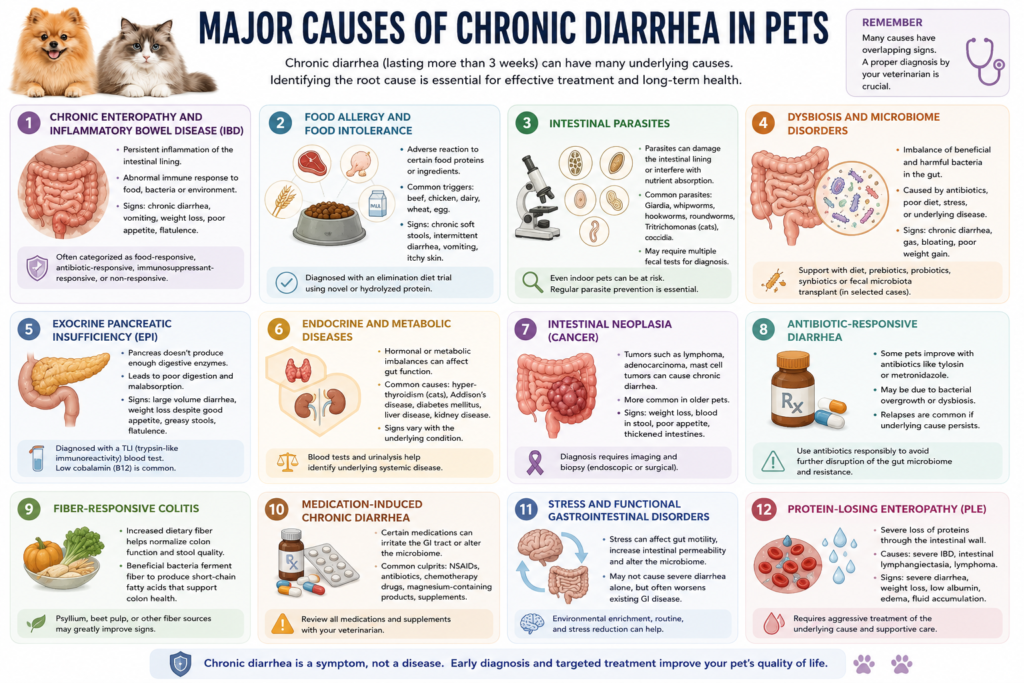
Major Causes of Chronic Diarrhea in Pets
1. Chronic Enteropathy and Inflammatory Bowel Disease (IBD)
Chronic inflammatory enteropathies are among the most common causes of chronic diarrhea in dogs and cats. These disorders involve persistent intestinal inflammation caused by abnormal immune responses to food antigens, intestinal bacteria, or environmental triggers.
Veterinary medicine now increasingly uses the broader term chronic enteropathy (CE) rather than simply “IBD” because many affected animals respond differently to therapy.
Current classifications include:
- Food-responsive enteropathy (FRE)
- Antibiotic-responsive enteropathy (ARE)
- Immunosuppressant-responsive enteropathy (IRE)
- Non-responsive enteropathy (NRE)
Food-responsive enteropathy is believed to represent approximately 50–65% of canine chronic enteropathy cases.
Common Clinical Signs
- Chronic intermittent diarrhea
- Vomiting
- Weight loss
- Flatulence
- Poor appetite
- Borborygmi (intestinal noises)
Pathophysiology
Research suggests chronic enteropathy involves:
- Dysregulated intestinal immune activity
- Altered gut microbiota (dysbiosis)
- Impaired intestinal barrier function
- Genetic predisposition in some breeds
Breeds Commonly Affected
- German Shepherds
- Boxers
- French Bulldogs
- Soft-Coated Wheaten Terriers
- Yorkshire Terriers
Diagnosis
Diagnosis is typically made by excluding other diseases and may involve:
- Fecal testing
- Bloodwork
- Abdominal ultrasound
- Dietary trials
- Endoscopic biopsies
Histopathology often reveals lymphoplasmacytic inflammation.
2. Food Allergy and Food Intolerance
Adverse food reactions are extremely important causes of chronic diarrhea, particularly in dogs.
These reactions may be:
- Immune-mediated food allergy
- Non-immune food intolerance
Protein sources are the most common triggers.
Common allergens include:
- Beef
- Chicken
- Dairy
- Wheat
- Egg
Why Food Reactions Cause Diarrhea
Food allergens may:
- Trigger intestinal inflammation
- Damage mucosal integrity
- Alter gut permeability
- Disrupt normal microbiota
Clinical Signs
- Chronic soft stools
- Intermittent diarrhea
- Flatulence
- Vomiting
- Itching or skin disease (sometimes)
Diagnosis
The gold standard remains a strict elimination diet trial using:
- Hydrolyzed protein diets
- Novel protein diets
Improvement typically occurs within 1–4 weeks for gastrointestinal signs.
3. Intestinal Parasites
Parasitic infections remain a major cause of chronic diarrhea worldwide, even in pets receiving routine veterinary care.
Important parasites include:
- Giardia
- Whipworms (Trichuris vulpis)
- Hookworms
- Roundworms
- Tritrichomonas foetus (cats)
- Coccidia
Some parasites intermittently shed eggs or cysts, meaning multiple fecal tests may be necessary.
Giardia
Giardia is particularly important because it may produce:
- Chronic intermittent diarrhea
- Malabsorption
- Weight loss
- Mucus-rich stools
Young animals and immunocompromised pets are at greater risk.
Whipworms
Whipworms are classic causes of chronic large bowel diarrhea in dogs and may mimic inflammatory bowel disease.
4. Dysbiosis and Microbiome Disorders
The intestinal microbiome plays a major role in digestive health. Research increasingly shows that chronic diarrhea is often associated with disruption of normal bacterial populations.
This imbalance is known as intestinal dysbiosis.
Causes of Dysbiosis
- Repeated antibiotic exposure
- Poor diet
- Chronic inflammation
- Stress
- Gastrointestinal disease
Effects of Dysbiosis
Altered microbiota may:
- Increase intestinal permeability
- Promote inflammation
- Reduce nutrient absorption
- Impair immune regulation
Some dogs improve dramatically with:
- Dietary modification
- Prebiotics
- Probiotics
- Synbiotics
- Fecal microbiota transplantation (FMT)
FMT is an emerging area of veterinary research and may help selected refractory chronic enteropathy cases.
5. Exocrine Pancreatic Insufficiency (EPI)
Exocrine pancreatic insufficiency occurs when the pancreas fails to produce adequate digestive enzymes.
Without these enzymes, pets cannot properly digest:
- Fat
- Protein
- Carbohydrates
Classic Signs
- Chronic diarrhea
- Weight loss despite good appetite
- Large stool volumes
- Greasy stools
- Flatulence
German Shepherds are especially predisposed.
Diagnosis
The gold standard diagnostic test is:
- Serum trypsin-like immunoreactivity (TLI)
Low cobalamin (vitamin B12) is also common because pancreatic dysfunction impairs absorption.
6. Endocrine and Metabolic Diseases
Systemic diseases frequently produce chronic diarrhea secondary to metabolic disturbances.
Important Endocrine Causes
Hyperthyroidism (Cats)
Hyperthyroidism commonly causes:
- Weight loss
- Increased appetite
- Chronic diarrhea
- Hyperactivity
Middle-aged and older cats are especially affected.
Hypoadrenocorticism (Addison’s Disease)
Addison’s disease may mimic gastrointestinal disease and can cause:
- Chronic intermittent diarrhea
- Vomiting
- Weakness
- Electrolyte abnormalities
Diabetes Mellitus
Poorly controlled diabetes may contribute to chronic diarrhea through:
- Dysbiosis
- Pancreatic disease
- Neuropathy affecting gut motility
Liver and Kidney Disease
Chronic hepatic and renal disorders may cause gastrointestinal signs through toxin accumulation and metabolic imbalance.
7. Intestinal Neoplasia (Cancer)
Cancer is an important differential diagnosis in older pets with chronic diarrhea.
Common Gastrointestinal Tumors
- Lymphoma
- Adenocarcinoma
- Mast cell tumors
- Leiomyosarcoma
Cats commonly develop intestinal lymphoma, which may closely resemble inflammatory bowel disease clinically and histologically.
Warning Signs
- Progressive weight loss
- Reduced appetite
- Blood in stool
- Thickened intestines on ultrasound
- Poor response to therapy
Diagnosis
Definitive diagnosis often requires:
- Ultrasound-guided sampling
- Endoscopy
- Surgical biopsies
8. Antibiotic-Responsive Diarrhea
Some pets improve rapidly after antibiotic therapy, particularly with:
- Tylosin
- Metronidazole
Historically this was termed antibiotic-responsive enteropathy.
However, modern veterinary medicine is becoming more cautious because:
- Overuse may worsen dysbiosis
- Antibiotics may only temporarily suppress symptoms
- Long-term use contributes to resistance
9. Fiber-Responsive Colitis
Certain dogs with chronic large bowel diarrhea improve dramatically with increased dietary fiber.
Fiber may:
- Normalize colonic motility
- Feed beneficial bacteria
- Improve stool consistency
- Reduce inflammation
This condition is often referred to as:
- Fiber-responsive colitis
- Fiber-responsive diarrhea
10. Medication-Induced Chronic Diarrhea
Numerous medications may contribute to persistent diarrhea, including:
- NSAIDs
- Antibiotics
- Chemotherapy drugs
- Certain supplements
- Magnesium-containing products
Antibiotic-associated dysbiosis is particularly important.
11. Stress and Functional Gastrointestinal Disorders
Stress can significantly influence gastrointestinal function through the gut-brain axis.
Stress-related gastrointestinal dysfunction may involve:
- Altered motility
- Increased intestinal permeability
- Microbiome changes
- Heightened inflammatory responses
Although less common as a sole cause of severe chronic diarrhea, stress frequently worsens existing gastrointestinal disease.
12. Protein-Losing Enteropathy (PLE)
Protein-losing enteropathy is not a single disease but a severe syndrome where proteins leak through damaged intestines.
Common causes include:
- Severe inflammatory bowel disease
- Intestinal lymphangiectasia
- Intestinal lymphoma
Clinical Signs
- Severe diarrhea
- Weight loss
- Fluid accumulation
- Edema
- Low blood albumin
Certain breeds are predisposed:
- Yorkshire Terriers
- Soft-Coated Wheaten Terriers
- Norwegian Lundehunds
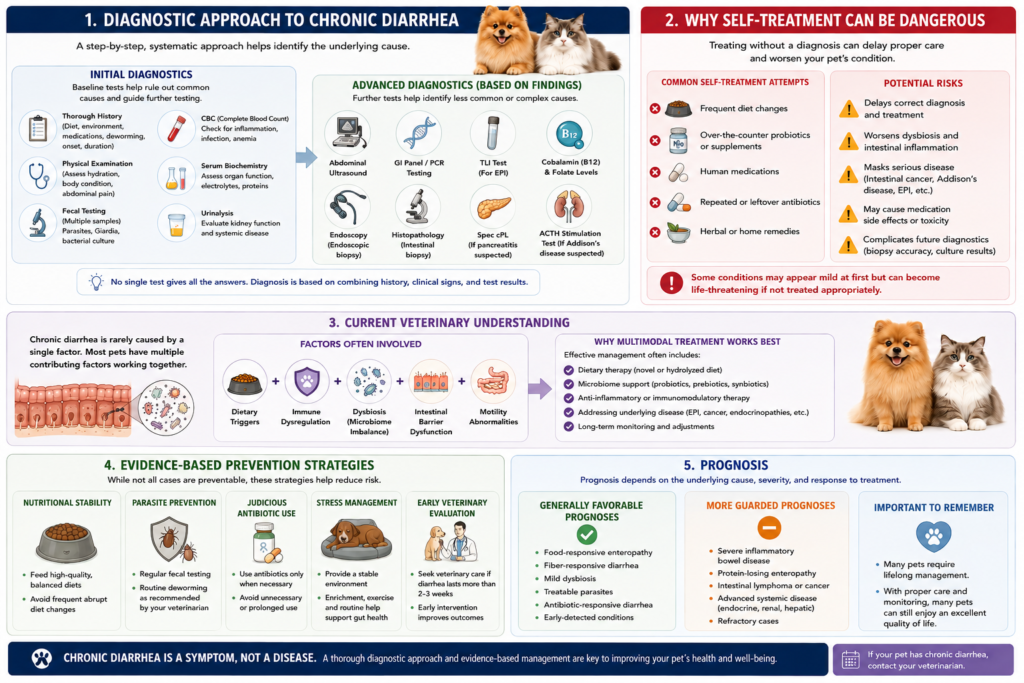
Diagnostic Approach to Chronic Diarrhea
Veterinarians usually investigate chronic diarrhea systematically.
Initial Diagnostics
- Thorough history
- Physical examination
- Multiple fecal tests
- CBC and biochemistry
- Urinalysis
Advanced Diagnostics
Depending on findings:
- Abdominal ultrasound
- GI panel testing
- TLI testing
- Cobalamin/folate assessment
- Endoscopy
- Intestinal biopsy
No single test diagnoses all chronic diarrhea cases.
Why Self-Treatment Can Be Dangerous
Many owners attempt:
- Frequent diet changes
- Over-the-counter probiotics
- Human medications
- Repeated antibiotics
This may:
- Delay diagnosis
- Worsen dysbiosis
- Mask serious disease
- Complicate future diagnostics
Conditions like intestinal lymphoma or Addison’s disease may initially appear mild but become life-threatening if untreated.
Current Veterinary Understanding
Modern veterinary gastroenterology increasingly recognizes that chronic diarrhea is often multifactorial.
A pet may simultaneously have:
- Food sensitivity
- Dysbiosis
- Immune dysregulation
- Motility abnormalities
This explains why treatment often requires:
- Dietary therapy
- Microbiome support
- Anti-inflammatory medication
- Long-term monitoring
Evidence-Based Prevention Strategies
While not all chronic diarrhea cases are preventable, risk may be reduced through:
Nutritional Stability
- Avoid frequent abrupt diet changes
- Feed balanced veterinary-approved diets
Parasite Prevention
- Routine fecal testing
- Regular deworming
Judicious Antibiotic Use
- Avoid unnecessary antibiotic exposure
Early Veterinary Evaluation
Persistent diarrhea beyond 2–3 weeks warrants medical evaluation.
Prognosis
Outcome depends entirely on the underlying cause.
Generally Favorable Prognoses
- Food-responsive enteropathy
- Fiber-responsive diarrhea
- Mild dysbiosis
- Treatable parasites
More Guarded Prognoses
- Severe inflammatory bowel disease
- Protein-losing enteropathy
- Intestinal lymphoma
- Advanced systemic disease
Many pets require lifelong dietary or medical management.
Final Thoughts
Chronic diarrhea in pets is not a diagnosis itself but a clinical sign with numerous potential causes ranging from mild food intolerance to severe inflammatory or neoplastic disease. Advances in veterinary gastroenterology have greatly improved understanding of the intestinal microbiome, immune dysfunction, and chronic enteropathies, allowing more targeted and effective treatment strategies.
Because symptoms often overlap between diseases, proper veterinary diagnostics remain essential. Early intervention significantly improves outcomes and reduces the risk of complications such as malnutrition, protein loss, and chronic intestinal damage.
References
- Volkmann M, et al. Chronic Diarrhea in Dogs – Retrospective Study in 136 Cases. PLoS One. 2017.
- Jergens AE, et al. Canine chronic enteropathy—Current state-of-the-art and emerging concepts. Frontiers in Veterinary Science. 2022.
- Cerquetella M, et al. Inflammatory bowel disease in the dog. World Journal of Gastroenterology. 2010.
- Leib MS. Diagnostic approach to chronic diarrhea in dogs and cats. DVM360 Proceedings.
- Prakash N. Chronic Diarrhea in Dogs. WSAVA Congress Proceedings. 2018.
- Dandrieux JRS. Inflammatory bowel disease versus chronic enteropathy in dogs. Journal of Small Animal Practice. 2016. Referenced within Purina Institute review.
- Procoli F. Inflammatory bowel disease, food-responsive, antibiotic-responsive diarrhoea, protein losing enteropathy. Advances in Small Animal Care. 2020.
- BVJA In Practice. Investigating and treating chronic diarrhoea in dogs. 2019.
- Tamura Y. Chronic Enteropathy and Vitamins in Dogs. Animals. 2025.
- Purina Institute. Food-Responsive Enteropathy (Diarrhea) in Dogs.
- Today’s Veterinary Practice. Multimodal Treatment Approach to Dogs With Chronic Diarrhea and the Role of the Microbiome. 2025.